
Thanksgiving’s Truth: Beyond Pilgrim Hats & Construction Paper
The Thanksgiving narrative etched in our collective memory, a quaint tableau of Pilgrims and Native Americans sharing a harmonious feast, is a far cry from historical reality. As families across the nation prepare for the annual turkey-laden celebration, it’s crucial to confront the complexities and uncomfortable truths behind the holiday’s origin story. The romanticized version, often perpetuated in elementary school pageants, glosses over the nuanced and often fraught relationship between the early settlers and the indigenous Wampanoag people.
The Alliance, Not Just Amity
History professor Troy Bickham from Texas A&M University sheds light on the actual context of the supposed “first Thanksgiving.” The Wampanoag’s presence at the event was likely driven by strategic alliance building, not simply a gesture of goodwill. This crucial detail highlights the power dynamics at play and challenges the simplistic narrative of mutual friendship and gratitude. The exchange was more complex than the elementary school plays suggest.
The Turkey’s Ascent to Thanksgiving Fame
But what about the iconic centerpiece of the Thanksgiving meal: the turkey? While the historical record confirms that fowl was indeed part of the 1621 harvest feast, its elevation to the undisputed star of Thanksgiving took centuries. It wasn’t until the mid-19th century, largely thanks to the influence of writers like Sarah Josepha Hale, that turkey became synonymous with the holiday. Hale, the editor of
Godey’s Lady’s Book
, campaigned tirelessly to establish Thanksgiving as a national holiday and promoted the turkey as the quintessential American dish.
A Time for Reflection and Understanding
Thanksgiving, in its modern form, is a complex tapestry woven with threads of historical fact, cultural myth, and national identity. While enjoying the traditions and culinary delights of the holiday, it’s also important to critically examine the historical context and acknowledge the perspectives of all involved, particularly the Native American communities whose stories have been marginalized for far too long. By acknowledging the complete picture, we can engage in a more meaningful and inclusive celebration of Thanksgiving.
SOURCE INFORMATION:
TITLE: When did Thanksgiving turkey become such a big deal?
DESCRIPTION: Thanksgiving didn’t happen the way a lot of us probably have learned it did back in elementary school. Kindergarteners in problematic construction paper headdresses, playacting with fifth graders in black hats and buckle shoes, holding hands and giving thanks for a plentiful harvest and new friends. Those pageants we performed in were inaccurate. The Wampanoag […]
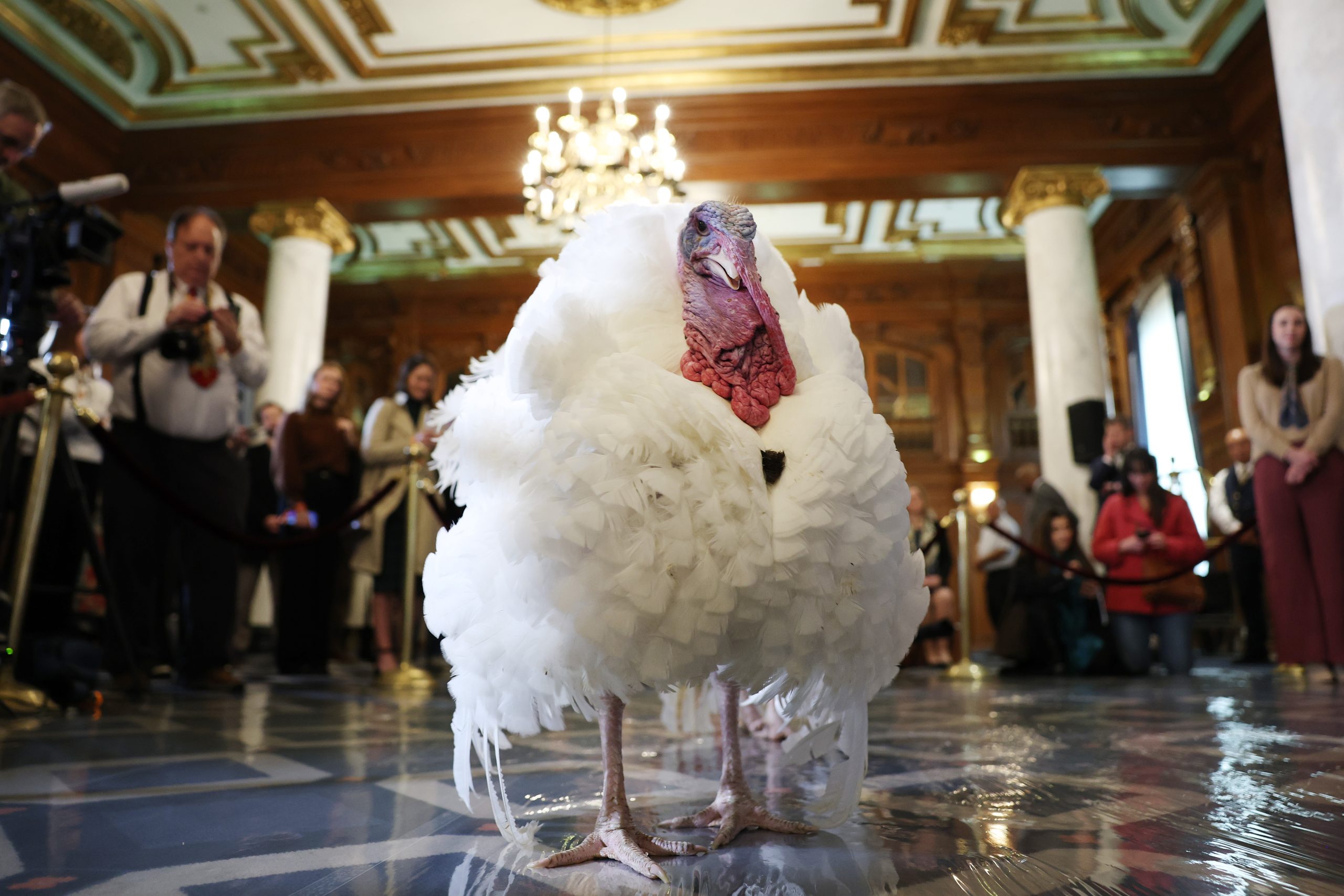
CONTENT: One of the two national Thanksgiving turkeys, Waddle and Gobble, are presented to journalists in the Willard Room of the Willard InterContinental on November 24, 2025, in Washington, DC. The Turkeys come from North Carolina and will participate in the 78th annual Turkey Pardoning at the White House. | Anna Moneymaker/Getty Images Thanksgiving didn’t happen the way a lot of us probably have learned it did back in elementary school. Kindergarteners in problematic construction paper headdresses, playacting with fifth graders in black hats and buckle shoes, holding hands and giving thanks for a plentiful harvest and new friends. Those pageants we performed in were inaccurate. The Wampanoag people were likely trying to form an alliance, not being friendly just for the sake of it. But what about the food? Was there at least turkey served? According to Troy Bickham, a history professor and director of the Melbourne Glasscock Center for Humanities Research at Texas A&M University
SOURCE: Vox
Based on materials: Vox



