
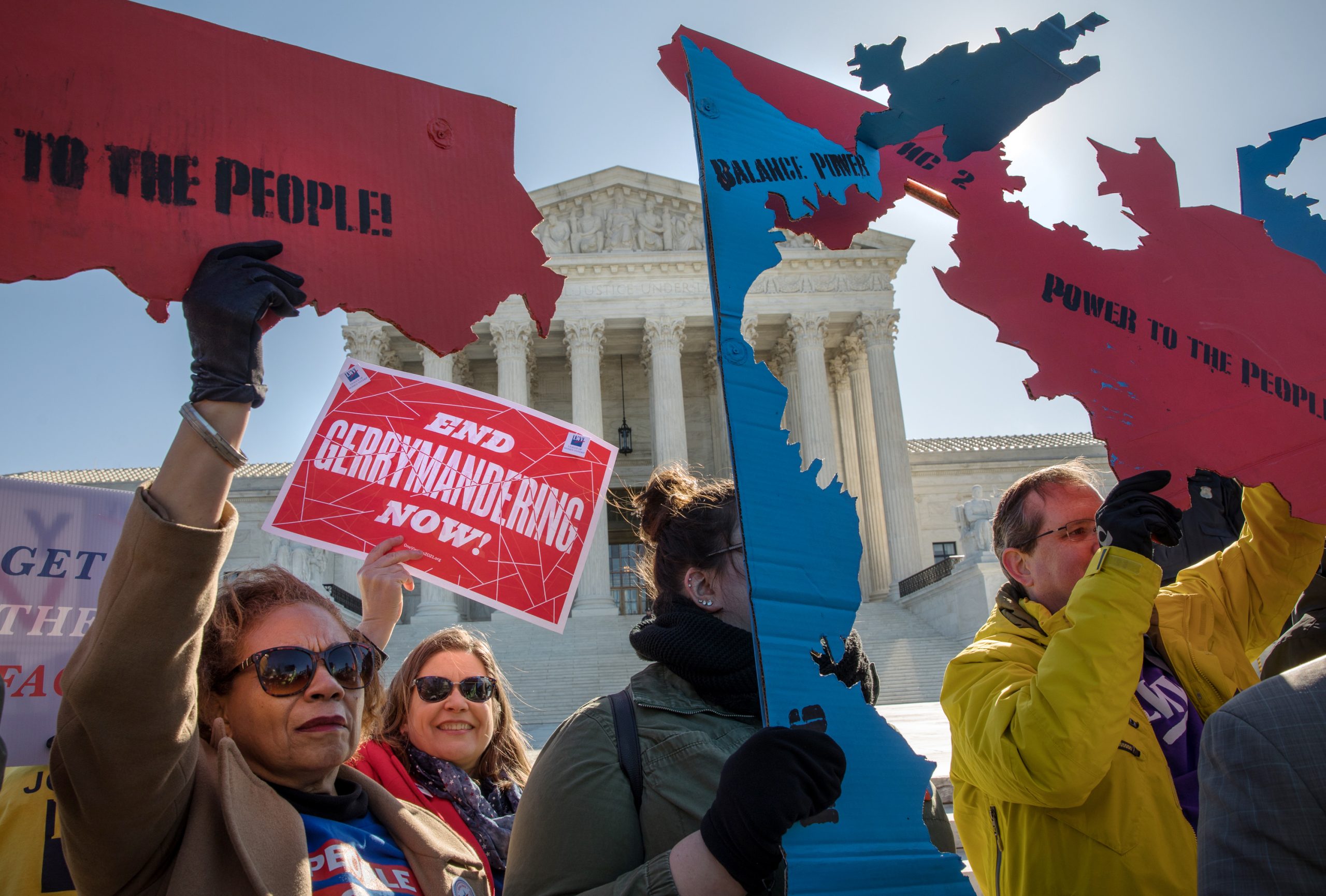
Texas Republicans are hoping the Supreme Court will bail them out of a self-inflicted wound: a botched gerrymandering attempt deemed unconstitutional by a federal court. The legal challenge, spurred by glaringly partisan redistricting maps, has exposed not only the deep entrenchment of gerrymandering tactics but also, ironically, alleged incompetence within the Trump-era Justice Department. The case underscores the escalating national battle over district lines, a struggle that could significantly reshape the political landscape.
Texas’s Redrawn Maps Face Scrutiny
Last August, under pressure from then-President Trump, Texas Republicans aggressively redrew their congressional maps, aiming to secure a significant advantage in future elections. The intended result was a congressional map designed to deliver as many as five additional seats to the GOP. However, a federal court struck down the redistricting plan, citing issues with the legal defense mounted by the Justice Department under the Trump administration. The court decision highlighted the potential for gerrymandering to undermine fair representation and democratic principles.
A National Gerrymandering Chess Match
The Texas situation has sparked a wider debate, with Democrats considering similar tactics in states where they hold power. California voters, for example, have already approved a ballot initiative that allows the state to redraw its maps in a way that favors Democratic candidates. Virginia is also considering similar moves as Democrats consolidate control of its government. This tit-for-tat approach underscores the increasingly polarized nature of American politics, with both parties seemingly willing to manipulate district lines for partisan gain.
The Rucho Ruling’s Long Shadow
The legal permissibility of these blatant attempts to rig elections stems, in part, from the Supreme Court’s 2019 decision in
Rucho v. Common Cause
. This ruling, authored by Republican justices, essentially declared that federal courts have no jurisdiction over partisan gerrymandering claims. While the Supreme Court did not endorse the practice, it effectively removed a significant legal check on partisan redistricting, opening the door for states to engage in increasingly aggressive gerrymandering strategies. Now, Texas Republicans are hoping that same court will step in and reverse the lower court’s decision, potentially setting a precedent with far-reaching consequences for the future of American elections.
The situation in Texas highlights the ongoing struggle to balance partisan interests with the principles of fair representation and democratic integrity. With the Supreme Court now involved, the stakes are higher than ever. The court’s decision could either embolden further partisan gerrymandering or provide a much-needed check on the practice, potentially reshaping the political map for years to come.
Based on materials: Vox



