
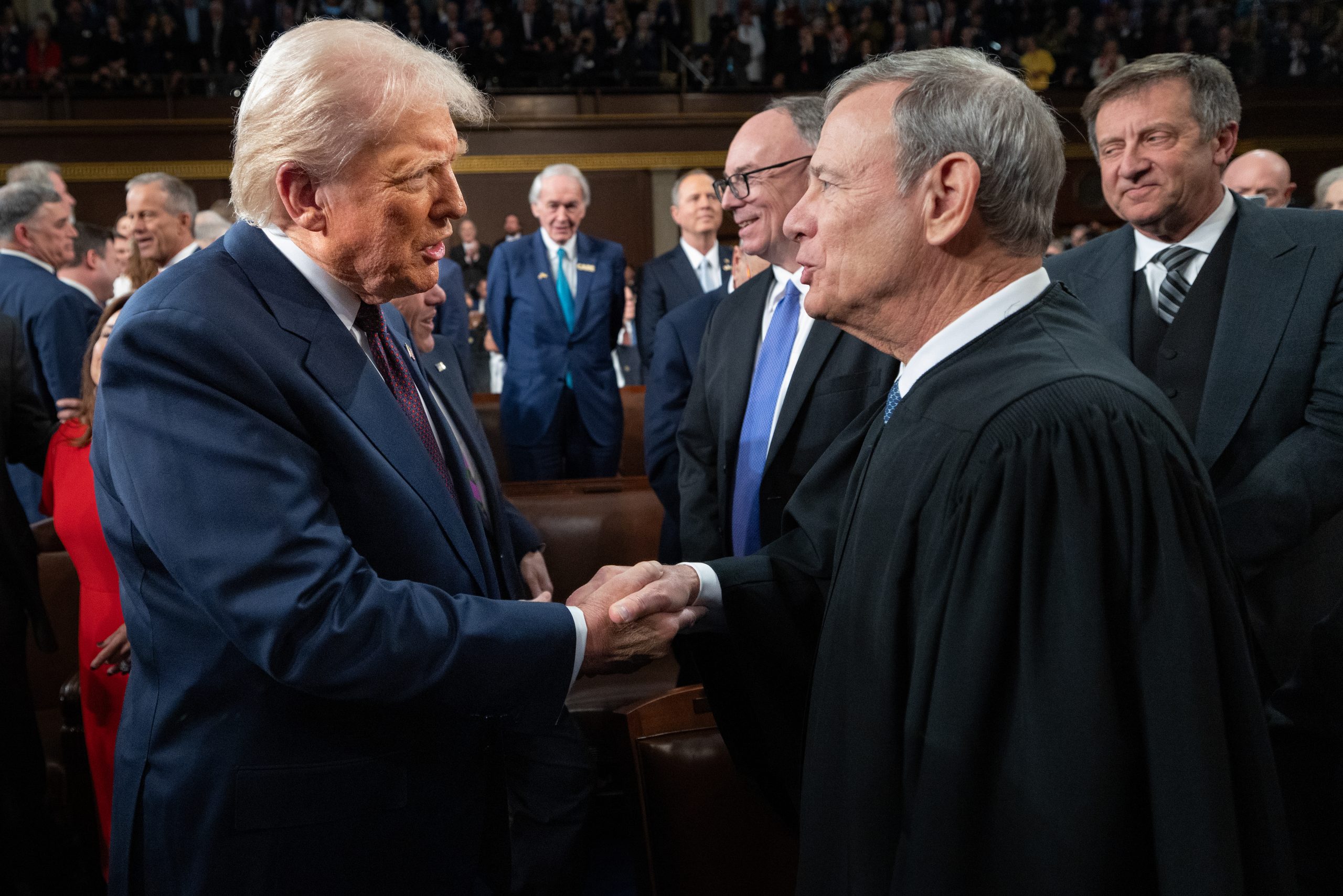
Supreme Court Poised to Expand Its Influence in Trump Case
The Supreme Court, often viewed as the final arbiter of legal disputes, is increasingly under scrutiny for its own pursuit of power. A forthcoming decision in
Trump v. Slaughter
, a case ostensibly about presidential authority, is now seen as a potential vehicle for the court to subtly but significantly expand its own influence over the executive branch.
The Unitary Executive Theory and *Trump v. Slaughter
*
At the heart of the matter lies the “unitary executive” theory, a legal concept embraced by the Supreme Court’s conservative majority. This theory posits that the president possesses broad authority to control the executive branch, including the power to remove officials leading federal agencies. The specific case in question,
Trump v. Slaughter
, centers on whether former President Trump had the constitutional authority to terminate Rebecca Slaughter, a commissioner on the Federal Trade Commission (FTC). The FTC, like many independent agencies, is designed to operate with some degree of autonomy from direct presidential control.
A Power Grab in Disguise?
While the case appears to be about the extent of presidential power, legal observers suggest that the Supreme Court is strategically using it to assert its own oversight role. By ruling on the limits of the President’s power, the Court inherently defines the scope of its own authority to review and potentially invalidate executive actions. This could lead to a future where the Court is more actively involved in shaping the day-to-day operations of the executive branch.
Implications for the Future
The implications of such a shift are far-reaching. A more assertive Supreme Court could create increased uncertainty for businesses and individuals, as executive actions become subject to greater judicial scrutiny. It could also lead to political battles over judicial appointments, as each branch seeks to maintain its power relative to the others. The decision in
Trump v. Slaughter
, therefore, represents a critical moment in the ongoing evolution of the balance of power within the U.S. government. The court’s ruling will likely set a precedent for future cases involving presidential authority and judicial oversight, shaping the relationship between the executive and judicial branches for years to come.
Based on materials: Vox



