
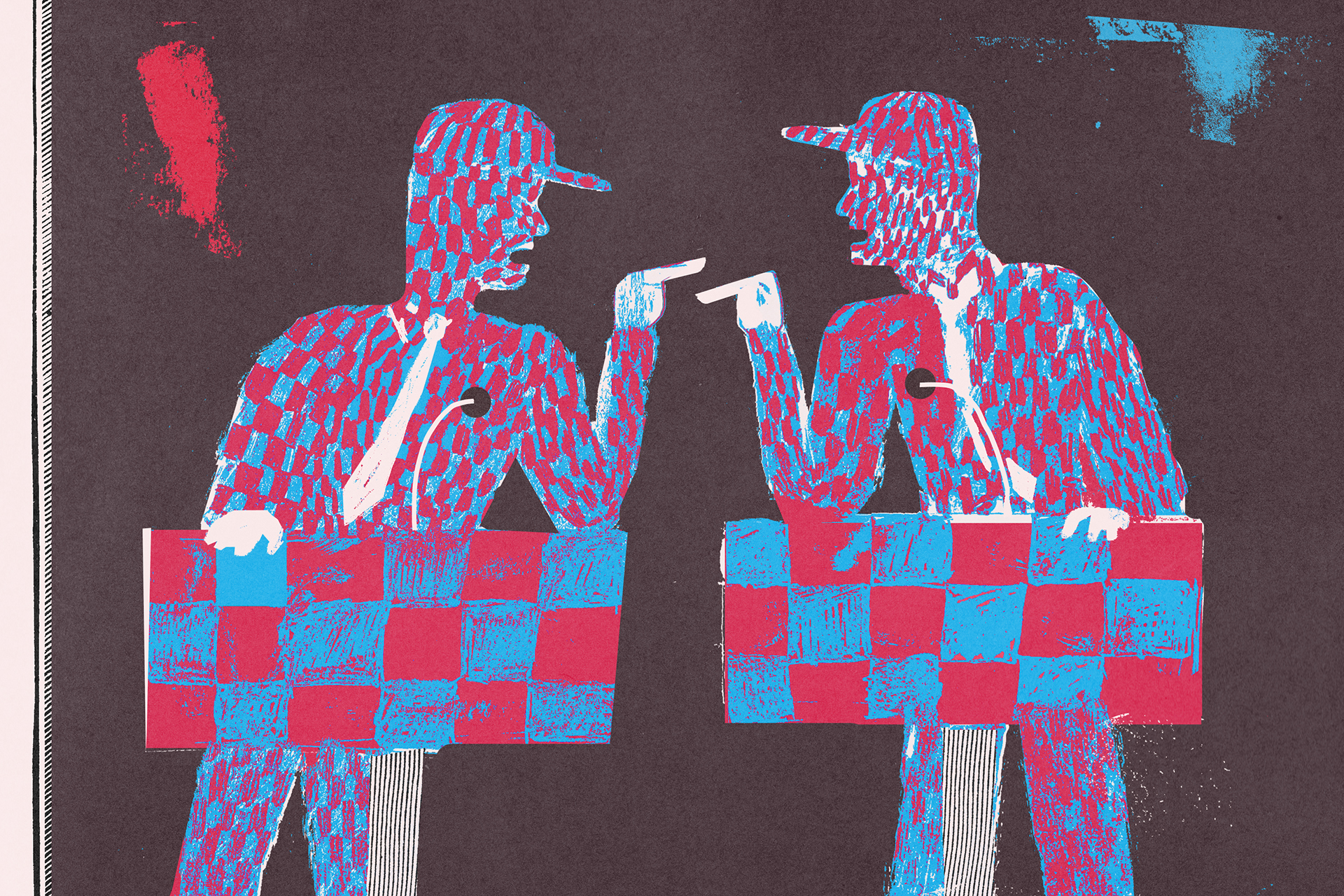
America’s Divide: Are We Arguing Facts or Just Fictions?
The United States is a nation seemingly fractured, its citizens deeply divided on a multitude of issues. From the rights of the unborn to immigration policy, transgender rights, climate change, vaccine efficacy, taxation, and gun control, the chasm between staunch Democrats and Republicans appears insurmountable. But is this divide rooted in genuine philosophical differences, or is something more insidious at play?
The Illusion of Philosophical Purity
Both sides often frame these disagreements as fundamental clashes between progressive and conservative ideologies, battles over political justice, truth, and human nature. However, a growing body of research from political scientists and social psychologists suggests a more nuanced, and potentially more troubling, reality. The article from Vox points out that some experts suggest that the real root of the problem is the different realities people choose to subscribe to.
The Rise of Parallel Realities
The internet has created an environment where people can selectively consume information that confirms their existing beliefs. Social media echo chambers reinforce these biases, leading to the formation of parallel realities. Within these echo chambers, facts become malleable, and narratives are crafted to support pre-determined conclusions.
This isn’t just about disagreeing on policy; it’s about disagreeing on the very nature of reality. When one side believes climate change is an existential threat while the other dismisses it as a hoax, or when one side sees Donald Trump as a savior and the other as a threat to democracy, it becomes nearly impossible to find common ground. This is because people are starting from different premises and using different sets of “facts.”
Bridging the Divide: A Call for Critical Thinking
Overcoming this division requires more than just political compromise; it demands a commitment to critical thinking and a willingness to engage with perspectives that challenge our own. It requires questioning the sources of our information and recognizing the potential for bias, both in ourselves and in the media we consume. It means understanding that complex issues rarely have simple answers, and that genuine dialogue is essential for finding solutions. The first step to solving the problem is to recognize it and start to have honest conversations with friends, family, and neighbors.
The future of American society depends on our ability to bridge this divide. If we remain entrenched in our own echo chambers, clinging to our own versions of reality, the prospect of finding common ground will become increasingly remote.
Based on materials: Vox



