
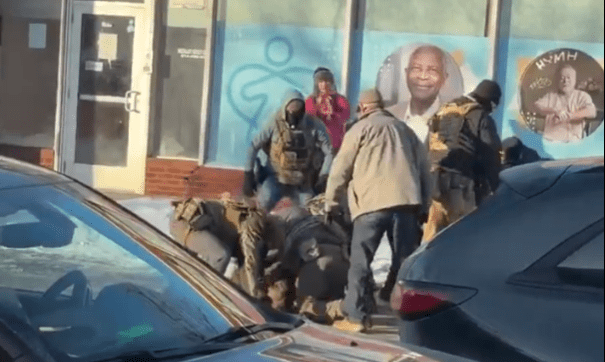
A shocking video has surfaced from Minneapolis, depicting a fatal encounter between federal officers and an unidentified man, raising critical questions about jurisdiction and accountability. The incident, which occurred recently, shows a group of individuals in military-style attire, purportedly federal immigration officers, subduing a man and ultimately shooting him dead.
Graphic Video Sparks Outrage, Legal Questions
The video, widely circulated online, shows several officers wrestling the man to the ground, followed by what appears to be multiple shots fired at close range. The gunfire continues even after the man is motionless. Minneapolis Police Chief Brian O’Hara has confirmed the man’s death. The graphic nature of the video has ignited public outrage and sparked intense debate about the use of force and the limits of federal authority.
Jurisdictional Complexities and Potential Charges
While a police investigation is underway, the key question remains: can Minnesota authorities prosecute federal officers for actions taken within the state? This involves navigating a complex web of jurisdictional laws. Typically, federal officers are subject to federal laws, but state laws can apply, particularly in cases of alleged criminal activity. The investigation will need to determine if the officers were acting within the scope of their duties and whether their actions constituted excessive force or a criminal offense under Minnesota law. The absence of footage preceding the altercation further complicates the situation, leaving investigators to piece together the events leading up to the shooting.
The Road Ahead: Investigation and Accountability
The investigation will be crucial in determining the facts of the case and whether the officers’ actions were justified. Factors such as the man’s behavior prior to the altercation, the level of threat he posed, and the officers’ adherence to established protocols will all be scrutinized. Depending on the findings, the officers could face a range of charges, from manslaughter to murder, under state law. However, any potential prosecution will likely face significant legal challenges, given the federal status of the individuals involved. This incident serves as a stark reminder of the need for transparency and accountability in law enforcement, particularly when federal agents operate within state boundaries. The outcome of this case could have far-reaching implications for the relationship between federal and state authorities and the application of justice.
Based on materials: Vox



