


While Washington buzzes with political headlines, American families are focusing on one of the most significant financial initiatives in recent history. To mark the 250th anniversary of the United States, the Trump administration has introduced Trump Accounts (formerly referred to as “Baby Bonds”)—an ambitious plan to provide a financial head start for the next generation of Americans.
Who is Eligible for the $1,000?
The program’s primary benefit—a non-repayable $1,000 contribution from the government—is targeted at specific recipients. To qualify, three main criteria must be met:
- Birth Date: The child must be born between January 1, 2025, and December 31, 2028.
- Citizenship: The recipient must be a U.S. citizen.
- Documentation: A valid Social Security Number (SSN) is required for registration.
How to “Activate” the Payment
It is a common misconception that these funds are delivered automatically. Parents must take proactive steps to secure the grant:
- IRS Form 4547: The simplest way to apply is by checking a box on the new IRS Form 4547 when filing your tax return.
- Online Portal: Starting in the summer of 2026, parents can register their children through the official trumpaccounts.gov website.
- Key Deadlines: While registration can begin during this tax season, the actual opening of accounts and the disbursement of funds are scheduled to begin after July 5, 2026.
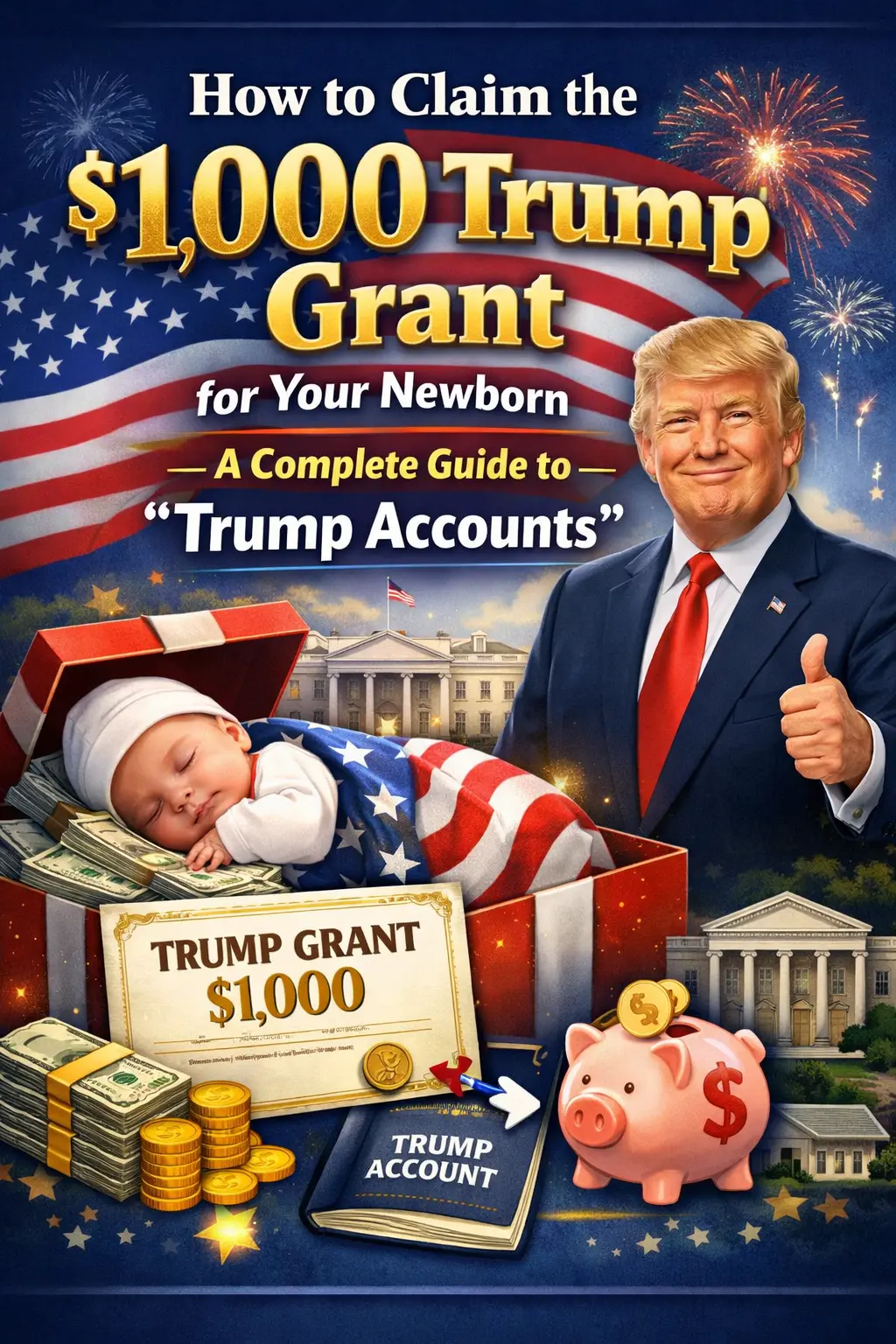
The Strategy: Turning $1,000 into Wealth
This program is designed as a long-term investment rather than a simple cash gift. Here is how the account grows:
- Automatic Investing: The initial $1,000 is immediately placed into index funds (such as the S&P 500), which historically offer stable long-term growth.
- Compound Interest: Experts estimate that if left untouched, the $1,000 could grow to $5,800 by age 18. By the time the child reaches retirement age, that same $1,000 could potentially turn into half a million dollars solely through market growth.
- Additional Contributions: Parents, relatives, and even employers can contribute up to $5,000 annually to the account. With maximum contributions, a child could have a nest egg of approximately $300,000 by age 18.
Usage Restrictions: What Can the Money Buy?
Funds can only be withdrawn once the child reaches 18 years of age. To ensure the program builds lasting value, the money is restricted to three specific purposes:
- Education: Paying for college, university, or vocational training.
- Home Ownership: A down payment on a first home.
- Entrepreneurship: Capital to start a new business.
Note: Early withdrawals for other purposes will incur significant tax penalties and fees.



