Brazil’s Fragile Democracy: Echoes of Dictatorship Still Resonate
Brazil, a nation grappling with its past, continues to navigate the complexities of democracy, haunted by the specter of its former military dictatorship. The period between 1964 and 1985 saw the country under the iron fist of a regime known for its censorship, political persecution, and suppression of dissenting voices. Even today, the stories of those years serve as stark reminders of the fragility of democratic institutions.
The Weight of History: A Personal Account
André Borges, a political scientist studying polarization and the Latin American right, recounts a chilling story from his childhood. His pregnant aunt was arrested for the simple act of owning a book by a Marxist author. While her detention was fortunately brief, thanks to a well-connected relative, the incident underscores the arbitrary power wielded by the regime and the vulnerability of individual liberties. This anecdote, shared in a left-wing bookstore in Brasília, highlights the enduring impact of the dictatorship on the Brazilian psyche. Borges, along with many others, believes that Brazil has yet to fully confront and overcome the legacy of its authoritarian past.
Challenges to Democracy: Polarization and the Far Right
The rise of right-wing extremism in recent years has further complicated Brazil’s democratic journey. The January 8, 2023, attacks on government buildings in Brasília, inspired by false claims of election fraud, served as a stark warning about the threats to democratic stability. These events, reminiscent of the January 6th insurrection in the United States, exposed the deep divisions within Brazilian society and the potential for political violence. The polarization of the political landscape, fueled by misinformation and extremist rhetoric, poses a significant challenge to the consolidation of democratic norms and values.
Looking Ahead: A Call for Vigilance
Brazil’s path forward requires a concerted effort to strengthen democratic institutions, promote civic education, and combat the spread of disinformation. Overcoming the legacy of the dictatorship necessitates a commitment to truth, justice, and reconciliation. While the country has made significant progress in consolidating its democracy since the end of military rule, the echoes of the past serve as a constant reminder of the need for vigilance and the importance of safeguarding democratic principles. The story of André Borges’s aunt serves as a powerful illustration of the fragility of freedom and the enduring relevance of the struggle for democracy in Brazil.
SOURCE INFORMATION:
TITLE: The country that beat its Trump
DESCRIPTION: BRASÍLIA, Brazil — André Borges’s aunt was pregnant when they took her. Borges, now 50, grew up under Brazil’s military dictatorship. In power from 1964–1985, the regime was violently censorial — banning any speech it deemed subversive or leftist. Borges’s aunt was arrested simply for owning a book by a Marxist author. Unlike many others, her […]
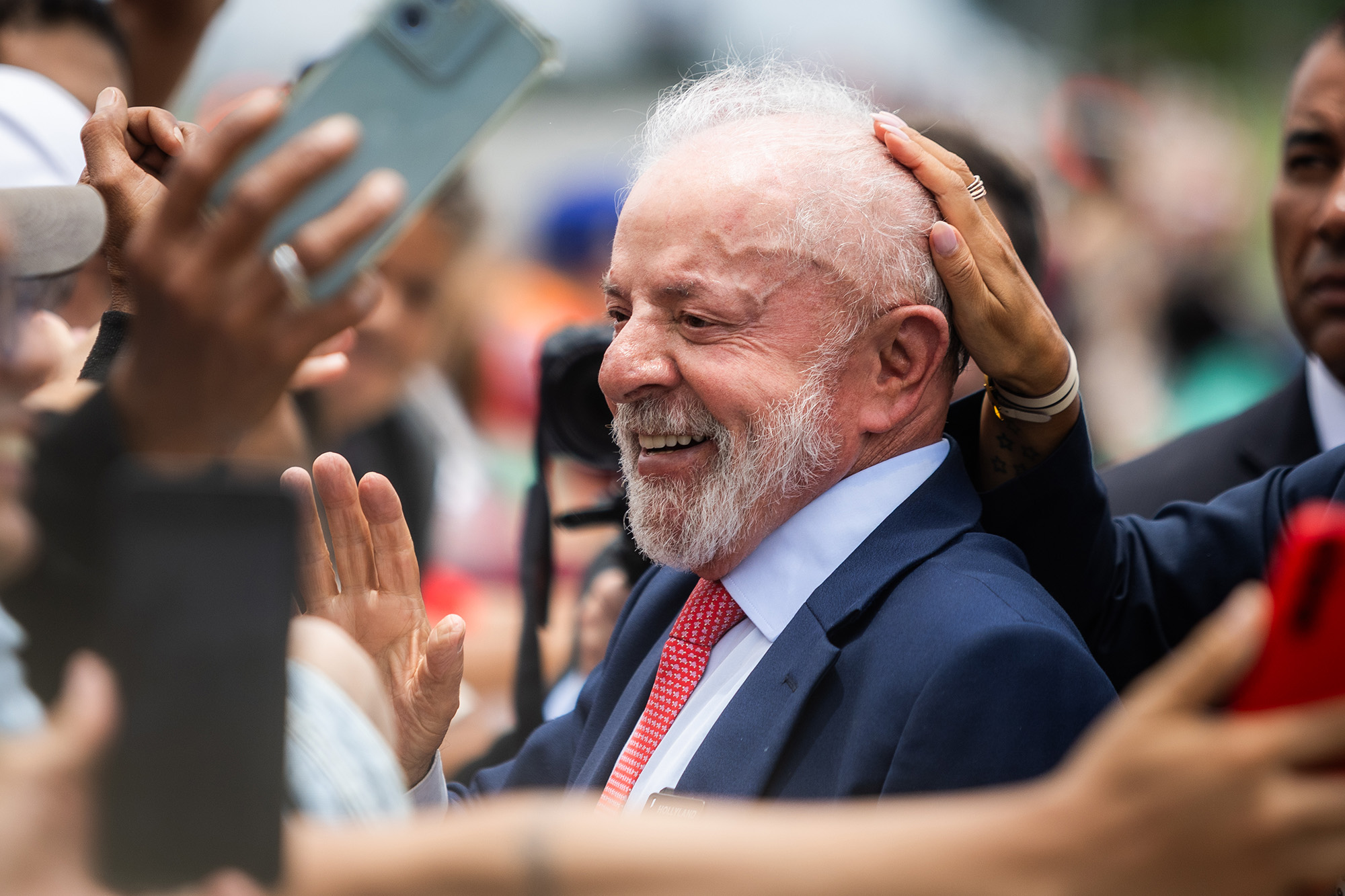
CONTENT: Brazilian President Luiz Inácio Lula da Silva greets supporters after a ceremony marking three years since the attacks on Brazil’s institutions. Brasília, Brazil, January 8, 2026. | Arthur Menescal for Vox BRASÍLIA, Brazil — André Borges’s aunt was pregnant when they took her. Borges, now 50, grew up under Brazil’s military dictatorship. In power from 1964–1985, the regime was violently censorial — banning any speech it deemed subversive or leftist. Borges’s aunt was arrested simply for owning a book by a Marxist author. Unlike many others, her detention was brief; her father knew someone with pull in the regime, who made a phone call and got her released within a day. Sitting in a left-wing bookshop in the capital city of Brasília, Borges tells me this story to underscore the fragility of Brazilian democracy. A political scientist who studies polarization and the Latin American right, he does not believe that Brazil has truly exorcised the demons of the past
SOURCE: Vox
Based on materials: Vox