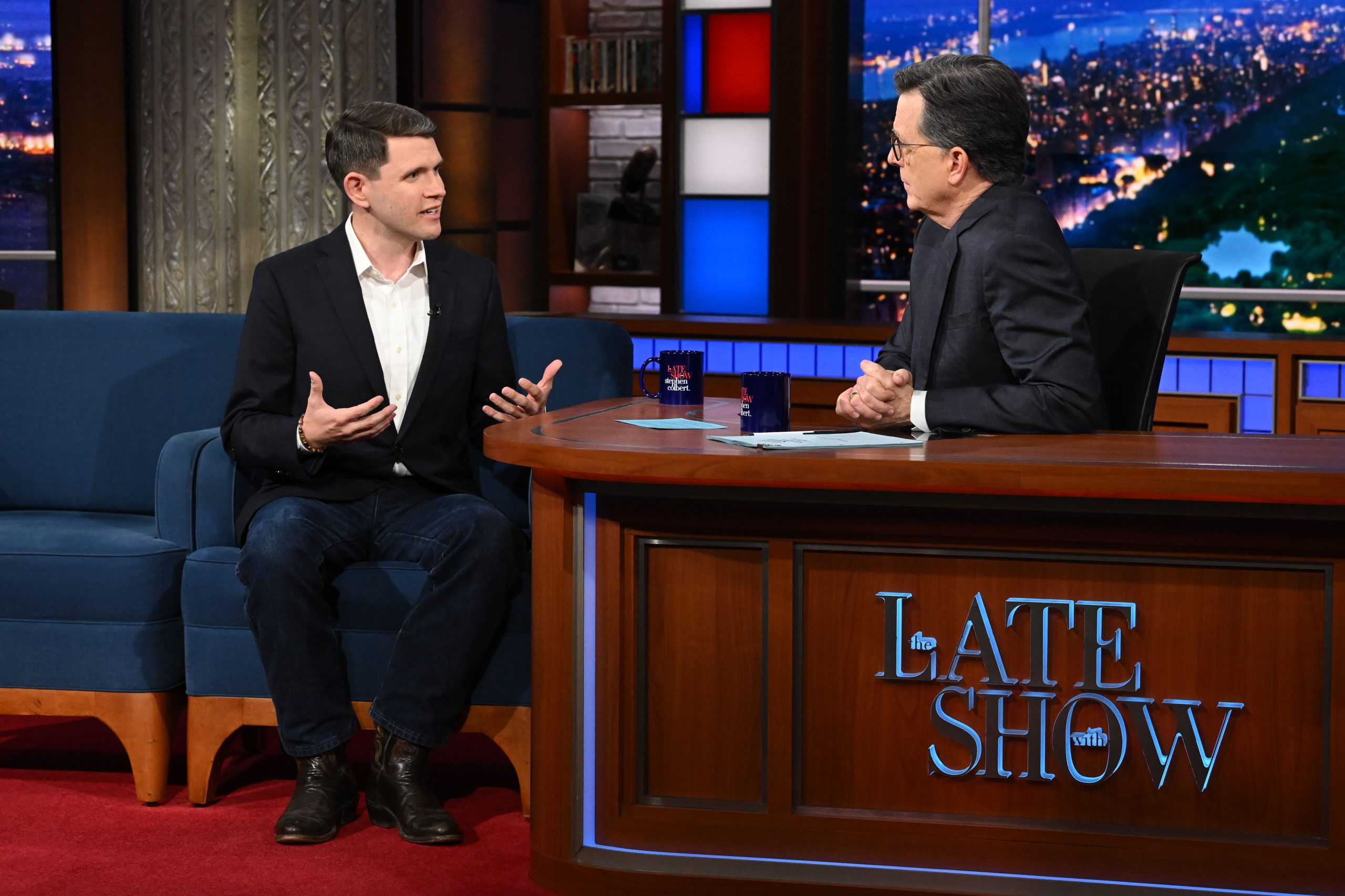
Stephen Colbert, the late-night king of pointed political satire, ignited a media firestorm this week, accusing his own network, CBS, of censoring an interview with Texas Democratic Senate candidate James Talarico. The comedian’s on-air rant, a thinly veiled jab at CBS’s legal team, has raised eyebrows and sparked debate about the boundaries of free speech in broadcasting and the potential influence of the Federal Communications Commission (FCC). But is this a genuine case of corporate censorship, or a cleverly crafted comedic bit designed to generate buzz?
The Alleged Gag Order
Colbert, addressing his audience on Monday night’s “The Late Show,” claimed he was explicitly prohibited from airing the Talarico interview. According to Colbert, network lawyers contacted the show directly, forbidding both the interview and any mention of its cancellation. This alleged “gag order,” as Colbert framed it, was attributed to fear of repercussions from the FCC, the federal agency responsible for regulating broadcast content. “Not only could I not have him on, I could not mention me not having him on. And because my network clearly does not want us to talk about this, let’s talk about this,” Colbert quipped, turning the alleged censorship into prime-time comedy.
Decoding the Comedy: Is It Real or Satire?
While Colbert’s claim initially sparked outrage among viewers concerned about potential censorship, a closer look suggests a more nuanced situation. The FCC’s authority to directly censor specific guests is limited. Regulations primarily focus on indecency and obscenity, not political viewpoints. It’s more likely that CBS’s legal team was concerned about potential equal-time rule violations. This rule, mandated by the FCC, requires broadcasters to provide equal opportunities to opposing political candidates during election periods. Interviewing a Democratic candidate without offering similar airtime to Republican counterparts could potentially trigger legal challenges.
Comedy, Controversy, and the Court of Public Opinion
Whether the FCC directly pressured CBS or the network simply exercised caution to avoid legal pitfalls, Colbert has successfully leveraged the controversy to his advantage. The comedian’s on-air defiance has generated significant media attention, boosting viewership and further solidifying his reputation as a fearless commentator. This incident serves as a reminder of the complex interplay between comedy, politics, and media regulation. While the true motives behind the interview’s cancellation may remain shrouded in mystery, one thing is clear: Colbert’s comedic spin has turned a potential setback into a resounding success.
Based on materials: Vox