
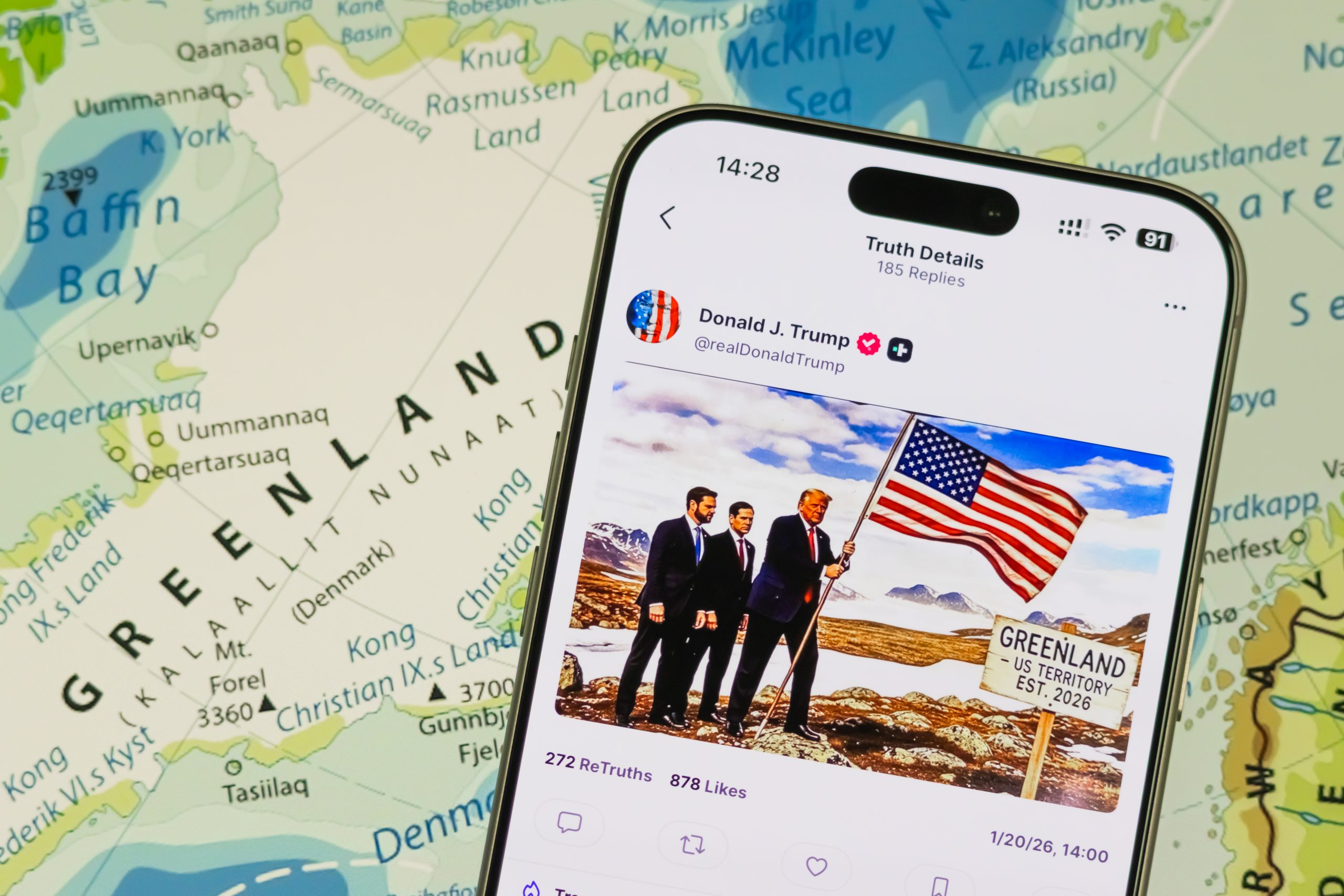
Donald Trump’s renewed interest in Greenland has once again thrust the autonomous Danish territory into the center of US foreign policy, reigniting a long-standing ambition that has ruffled feathers amongst allies and sparked questions about international sovereignty. The appointment of Louisiana Governor Jeff Landry as special envoy signals a clear intention: to pursue Trump’s vision of bringing Greenland under some form of US influence, a move justified by claims of vital national security interests.
A Cold Reception to a Bold Proposal
This renewed push has been met with swift and firm resistance. Denmark and Greenland issued a joint statement reaffirming their commitment to Greenland’s sovereignty, emphasizing that international law protects its borders. This united front underscores the deep-seated opposition to any external interference in the territory’s affairs. Other European leaders, including French President Emmanuel Macron, have voiced their support for Denmark and Greenland, further isolating Trump’s position on the international stage.
Echoes of a Long-Held Desire
Trump’s fascination with Greenland is not new. Since his first term, he has openly discussed the possibility of purchasing or annexing the island. This renewed rhetoric reflects a broader strategic vision outlined in his administration’s National Security Strategy. The strategy prioritizes US dominance in the Western Hemisphere and aims to limit the growing influence of China and Russia, particularly in the strategically important Arctic region. Greenland, with its vast resources and geographic location, is seen as a key piece in this geopolitical puzzle.
Geopolitics and the Arctic’s Future
The Arctic is becoming an increasingly contested space, with nations vying for control of its resources and strategic waterways. Trump’s renewed focus on Greenland highlights the growing importance of the region in global power dynamics. Whether through purchase, annexation, or other forms of influence, the US aims to secure its position in the Arctic and counter the expanding presence of its rivals. However, the strong opposition from Denmark and Greenland, coupled with international legal frameworks, presents significant obstacles to Trump’s ambitious plans. The situation underscores the complex interplay of sovereignty, national security, and resource competition in the rapidly changing Arctic landscape.
In conclusion, Trump’s renewed pursuit of influence over Greenland has triggered a diplomatic standoff, revealing the tensions between US strategic ambitions and the principles of international law and sovereignty. The future of Greenland remains uncertain, but one thing is clear: the Arctic region will continue to be a focal point of geopolitical competition in the years to come.
Based on materials: Vox



