
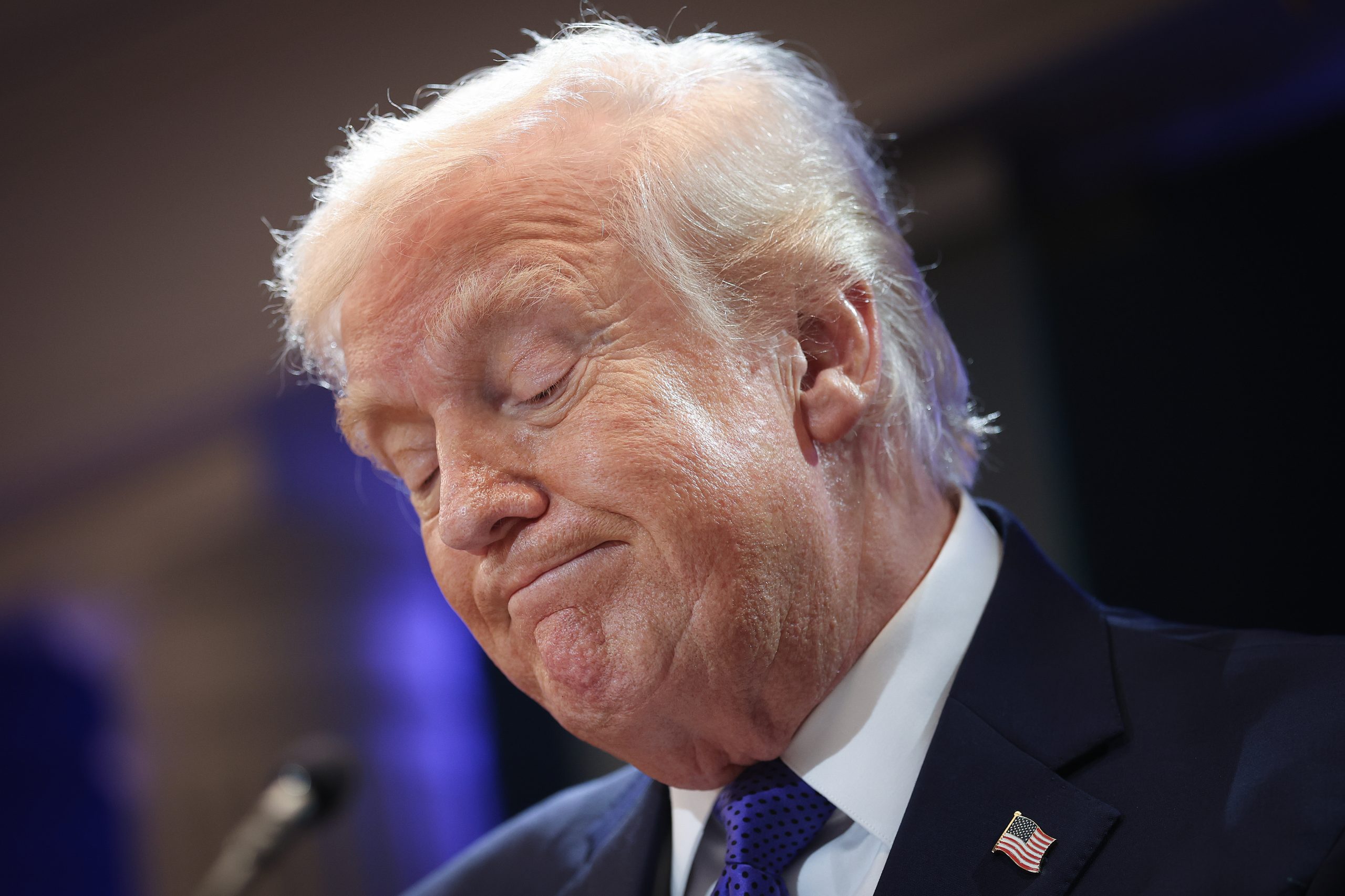
Supreme Court Deals Blow to Trump’s Tariff Regime: Here’s Why
In a significant rebuke to former President Donald Trump’s trade policies, the Supreme Court has ruled against his administration’s sweeping tariff regime. In a 6-3 decision handed down Friday, the court determined that Trump’s use of the International Emergency Economic Powers Act (IEEPA) to impose tariffs was unlawful, effectively blocking a key pillar of his second-term foreign policy. This ruling raises questions about the future of trade relations and the limits of presidential power in economic matters.
IEEPA Overreach: A Tax in Disguise?
The heart of the Supreme Court’s decision lies in its interpretation of the IEEPA. The court argued that Trump’s tariffs, while presented as a tool of foreign policy, effectively functioned as a tax on imports. Under the U.S. Constitution, Congress holds the power to levy taxes, and the court found that Trump’s use of the IEEPA to unilaterally impose these tariffs circumvented this fundamental principle. This distinction between tariffs as a regulatory tool and tariffs as a revenue-generating tax was crucial to the court’s reasoning. This ruling sends a clear message about the separation of powers and the limitations placed on the executive branch in matters of taxation.
Trump Vows to Fight Back: The Future of Tariffs
Despite the Supreme Court’s decision, Trump has signaled his intention to find ways to reimpose a universal 10 percent tariff. This indicates that the debate over tariffs is far from over and that the issue may continue to be a point of contention in U.S. economic policy. Whether Trump can successfully navigate the legal hurdles to reimpose tariffs remains to be seen, but his determination suggests that this is an issue he intends to pursue. His persistence underscores the enduring appeal of protectionist measures to certain segments of the electorate and the ongoing debate about the role of tariffs in promoting domestic industry.
Impact on Consumers and the Economy
While the immediate impact on consumers may be minimal, the long-term implications of the Supreme Court’s decision could be significant. Just as prices gradually increased following the implementation of Trump’s tariffs, a rollback could lead to a decrease in import costs over time. However, the complex nature of global supply chains means that these effects may not be immediately apparent. The ruling also has broader implications for international trade relations, signaling a potential shift away from the protectionist policies that characterized the Trump era.
CONCLUSION:
The Supreme Court’s decision to strike down Trump’s tariff regime marks a pivotal moment in the ongoing debate over trade policy. While the immediate effects may be limited, the ruling has significant implications for the balance of power between the executive and legislative branches and the future of international trade relations. Trump’s vow to find ways to reimpose tariffs suggests that this issue will remain a focal point of political and economic discussion for the foreseeable future.
Based on materials: Vox



