
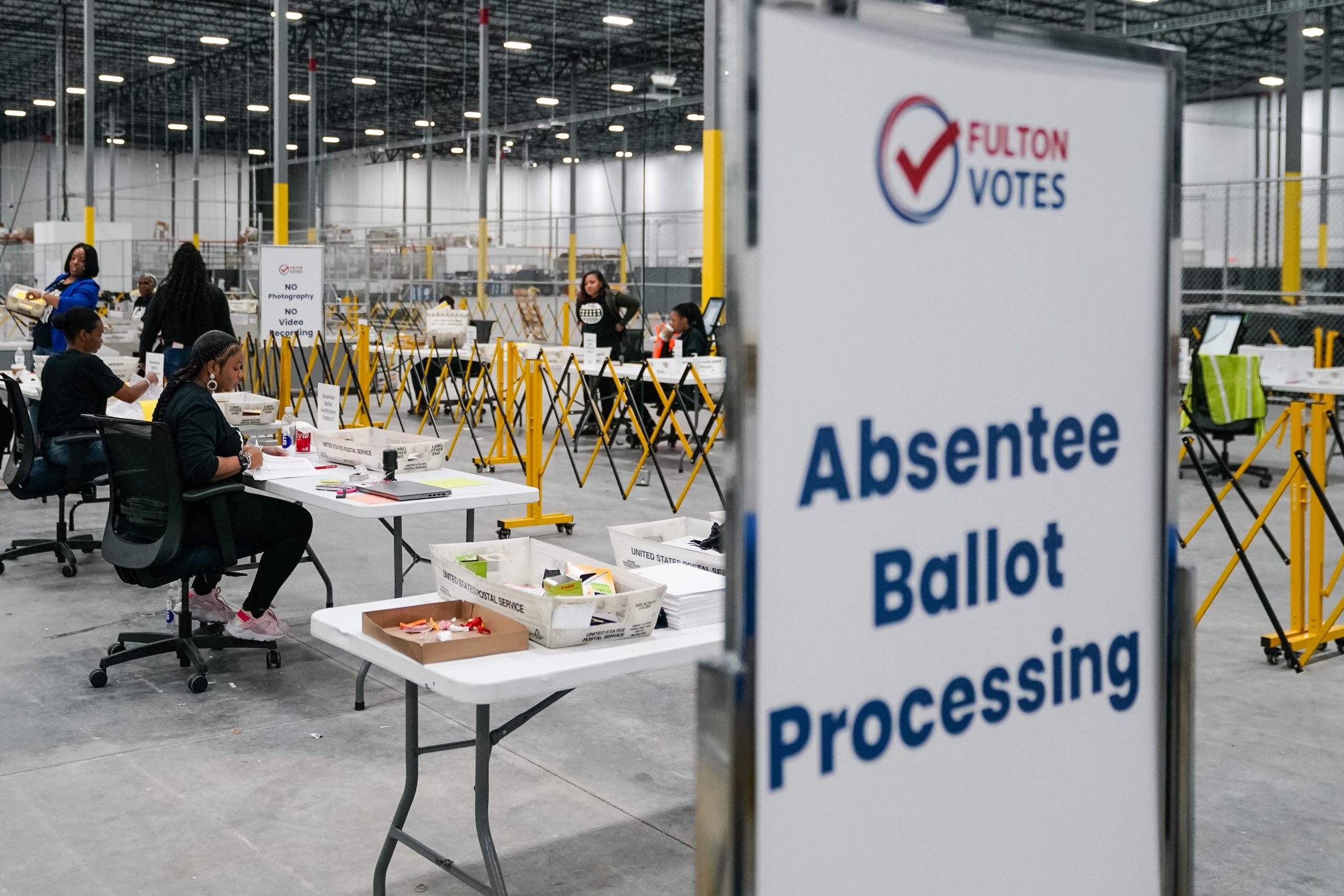
SCOTUS Weighs Radical Challenge to Mail-In Voting’s Future
The Supreme Court is currently considering a case,
Watson v. Republican National Committee
, that could dramatically reshape the landscape of mail-in voting in the United States. At its core, the Republican Party’s argument hinges on a controversial interpretation of federal laws dating back nearly two centuries. Their claim? That these laws, enacted in the mid-1800s, effectively prohibit states from counting thousands of mail-in ballots cast in modern elections – a fact, they argue, that has somehow gone unnoticed for almost 200 years.
A Century-Old Law Under Scrutiny
The case revolves around three federal statutes that establish the dates for presidential, House, and Senate elections. While worded differently and passed at various times, these laws essentially mandate a specific election day. The statute governing House elections, for example, designates “the Tuesday next after the 1st Monday in November, in every even numbered year” as the day for the election.
The initial version of these laws was enacted in 1845, a time when mail-in voting was virtually non-existent. The Republican National Committee now contends that these laws were intended to create a uniform federal election day. According to their interpretation, any ballots received after this specific date, regardless of when they were mailed, should be deemed invalid and not counted.
Implications and Potential Outcomes
The implications of this case are far-reaching. If the Supreme Court were to side with the RNC, it could effectively disenfranchise countless voters who rely on mail-in ballots, particularly those in rural areas or with limited mobility. It would also inject significant uncertainty into election administration, potentially leading to legal challenges and delayed results.
This case also raises fundamental questions about the role of the courts in election administration. Critics argue that the RNC’s lawsuit is a politically motivated attempt to suppress voter turnout and undermine the legitimacy of elections. They point out that mail-in voting has been a long-standing practice in the United States, and that attempts to restrict it are often based on unsubstantiated claims of widespread fraud. The other side of the debate argues that the case is not based on fraud, but instead based on following the law as written.
A Pivotal Moment for American Democracy
The Supreme Court’s decision in
Watson v. Republican National Committee
could have a profound impact on American democracy. The case highlights the ongoing debate over voting rights and the balance between ensuring secure elections and maximizing voter participation. Regardless of the outcome, the ruling will likely fuel further legal battles and political polarization surrounding election administration in the years to come. The court’s decision will not only shape the future of mail-in voting but also influence the broader landscape of American elections.
Based on materials: Vox



