
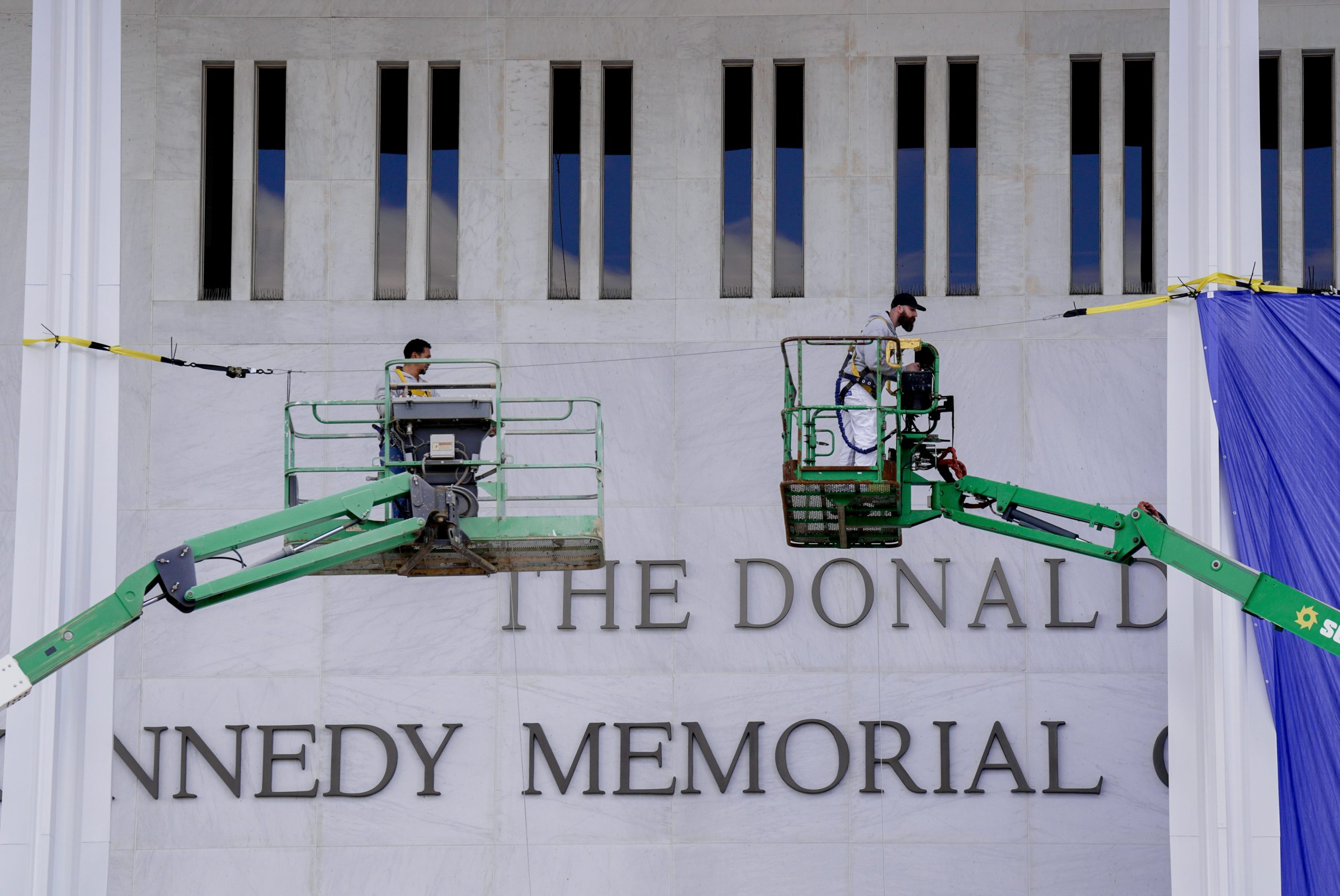
Donald Trump’s presidency wasn’t just about international policy; it also left an indelible mark on the nation’s capital. Beyond the headlines of political battles, Trump actively sought to reshape Washington D.C.’s physical landscape, sparking controversy and raising questions about the limits of presidential influence on the city’s iconic architecture and public spaces.
A Legacy in Stone and Steel
Trump’s interventions in D.C.’s built environment were ambitious, to say the least. Projects ranged from relatively minor aesthetic tweaks to large-scale construction. The Rose Garden received a significant makeover, and the East Wing of the White House was reportedly bulldozed to make room for a new ballroom. However, these were just the beginning. The Kennedy Center was slated for a two-year closure for extensive renovations, and even more audacious plans were floated, including a colossal 250-foot arch near Arlington National Cemetery, a new paint job for the Eisenhower Executive Office Building, and a sculpture park adjacent to the National Mall.
Beyond Aesthetics: Power and Legacy
While past presidents have certainly left their mark on Washington D.C., Trump’s approach was characterized by a perceived disregard for established design review processes and historical preservation. Critics argued that these interventions were less about enhancing the city and more about projecting power and solidifying a personal legacy. The proposed arch, in particular, drew sharp criticism for its scale and potential impact on the surrounding area, seen by some as an imposition rather than an integration into the city’s existing fabric. The debate highlights a fundamental tension: to what extent should a president be allowed to reshape the nation’s capital to reflect their own vision?
A City in Constant Evolution
The changes implemented and proposed under Trump serve as a reminder that Washington D.C., despite its historical significance, is a living, breathing city that is constantly evolving. Each administration leaves its mark, whether through policy, personnel, or physical alterations. The question remains whether these changes are thoughtful additions that enhance the city’s beauty and functionality, or self-serving gestures that prioritize legacy over the needs and desires of its residents and visitors. As Washington D.C. continues to evolve, the impact of Trump’s urban interventions will undoubtedly be debated and re-evaluated for years to come.
Based on materials: Vox



