
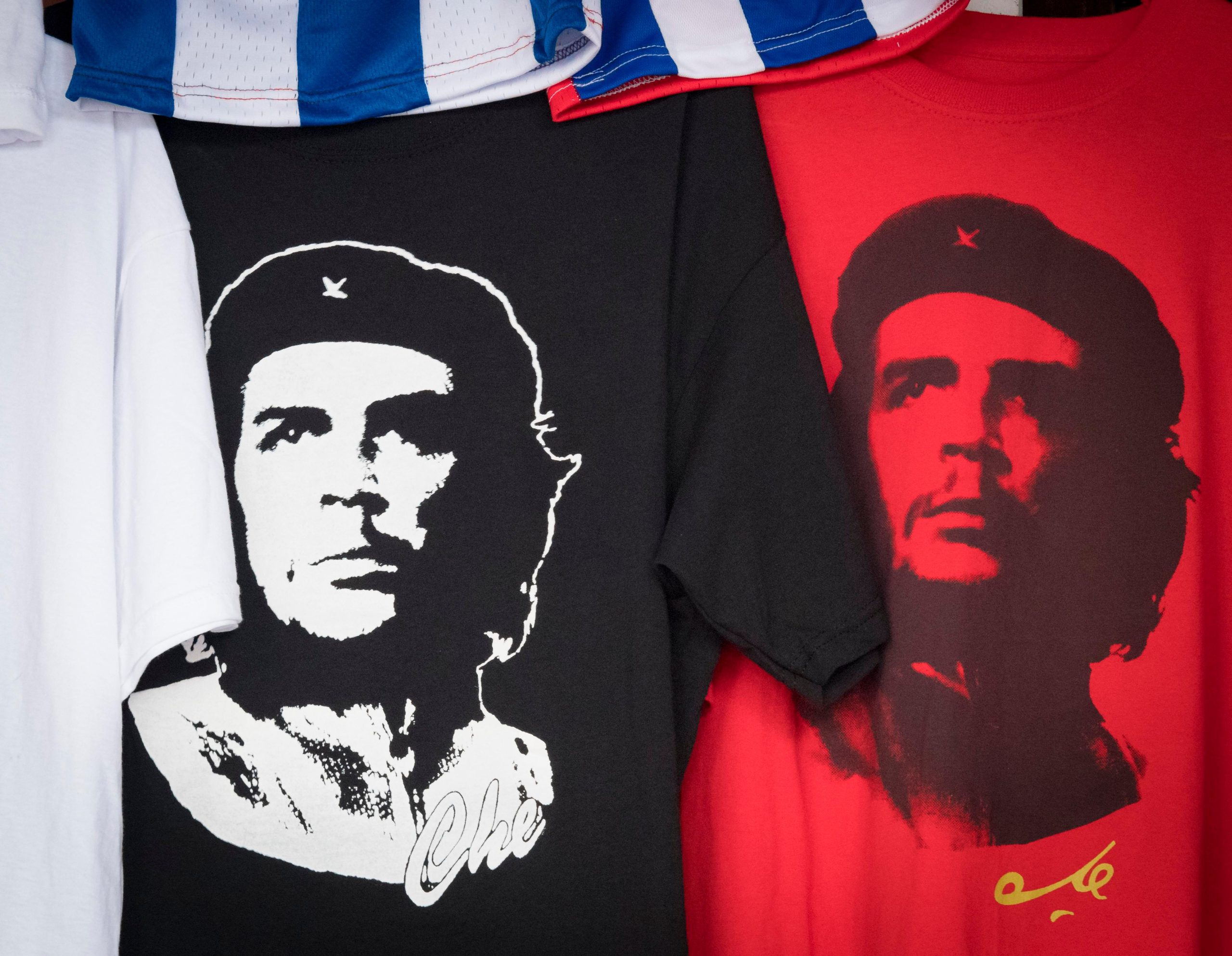
A new ideological battleground is emerging on the American right, centered on a concept termed “Third Worldism.” This emerging focus, highlighted in a recent State Department report on Cuba, positions Havana as the nexus of a distinct Marxist ideology that some conservative figures fear is actively being propagated with the intent to destabilize the United States.
The State Department’s assessment, which labels this Cuban-driven ideology as “Third Worldism,” has resonated with a segment of the American right, including influential conservative commentators and activists. This concern is not solely a government-level observation; it appears to be a growing preoccupation among prominent conservative voices who see this doctrine as a significant threat.
The Shifting Narrative: From “Woke” to “Third Worldism”
Activists like Chris Rufo, a prominent figure in conservative circles, have articulated this shift, suggesting that “Third Worldism” represents a more profound danger than previous concerns like “wokeness.” Rufo has publicly stated that “Third-Worldism is a more serious threat to life, liberty, and property.” This framing elevates the perceived menace, implying a direct assault on fundamental American values and economic principles.
This sentiment is echoed by leading media personalities. Ben Shapiro, a widely recognized voice in conservative media, declared in April that “the future of the Democratic Party is radical third worldism.” Such statements suggest a belief that elements within the Democratic Party are embracing or being influenced by this perceived Marxist doctrine emanating from Cuba. Reihan Salam, president of the Manhattan Institute, an influential conservative think tank, has also engaged with this narrative, underscoring its growing prominence within policy and intellectual discourse on the right.
Geopolitical Roots and Domestic Implications
The concern over “Third Worldism” appears to be rooted in a perception that Cuba is actively exporting its revolutionary ideology. The source material suggests that this is being done with the “explicit intent of fomenting revolution in America.” This accusation points to a geopolitical dimension, where ideological competition is seen as spilling over into domestic political arenas.
For the American right, the specter of “Third Worldism” taps into long-standing anxieties about foreign influence and socialist or Marxist ideologies gaining traction within the United States. The narrative suggests a deliberate effort by an external actor to undermine American institutions and values. This framing allows for the consolidation of various conservative grievances under a single, overarching threat, potentially simplifying complex political issues into a clear us-versus-them dynamic.
Analyzing the “Third Worldism” Phenomenon
The concept of “Third Worldism” itself is complex and historically rooted in post-colonial movements seeking autonomy and challenging Western dominance. However, its re-emergence in American political discourse, framed as a Marxist threat, signifies a particular interpretation by the right. It’s a rhetorical tool that can be used to critique progressive policies, foreign relations, and domestic political opponents by associating them with a perceived radical and foreign ideology.
Whether “Third Worldism” represents a genuine, organized ideological movement with significant influence in the US, or a symbolic construct used by the right to galvanize its base and critique opposing viewpoints, remains a subject of ongoing debate. However, its increasing prominence in conservative discourse signals a notable shift in the ideological landscape and a new focal point for political anxieties.
CONCLUSION:
The burgeoning concern over “Third Worldism” among the American right represents a significant development in contemporary political rhetoric. By identifying a new ideological adversary with perceived links to Cuba and Marxist principles, conservative figures are constructing a narrative that frames progressive movements and policies as existential threats. This evolving discourse highlights the dynamic nature of ideological battles and the ways in which historical concepts can be reinterpreted and weaponized in modern political arenas.
Based on materials: Vox



