
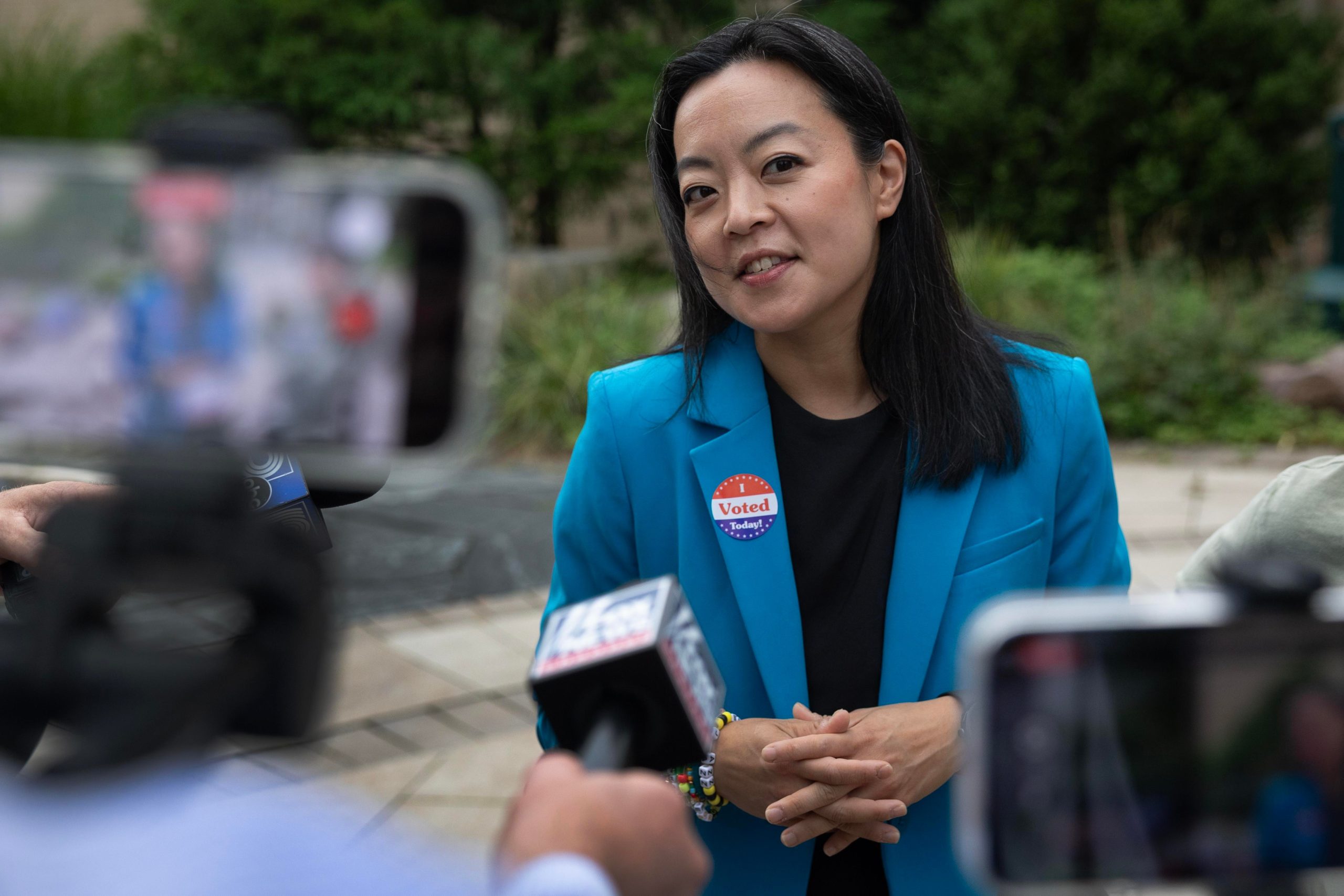
Wisconsin’s Democratic gubernatorial primary has delivered a stark message: while the party may embrace progressive ideals, there are clear boundaries when a crucial swing state’s future is on the line. Francesca Hong, a prominent progressive candidate, failed to secure the nomination on Tuesday, falling short against Milwaukee County Executive David Crowley. This outcome signals a potential ceiling for how far left the Democratic Party is willing to push in electorally competitive territories.
Hong’s loss is significant given her strong showing in recent polls, where she held a double-digit lead. Her campaign was seen as a potential watershed moment, aiming to elect the nation’s first democratic socialist governor. However, the electorate ultimately opted for Crowley, who will now face Republican Rep. Tom Tiffany, a candidate closely aligned with former President Donald Trump’s “MAGA” movement. This pairing sets the stage for a stark ideological contrast in a state historically decided by razor-thin margins, making Wisconsin a key battleground in the upcoming general election.
A Progressive Vision Stalls
Hong’s platform resonated with a segment of the Democratic base, advocating for policies often associated with the progressive wing of the party. Her campaign highlighted issues such as universal healthcare, climate action, and economic reforms. For her supporters, a victory would have represented a significant shift in state-level governance, pushing Wisconsin further left than it has been in recent memory. The narrative surrounding Hong’s candidacy had captured national attention, with many anticipating her potential to redefine the Democratic Party’s trajectory in a pivotal swing state. The fact that her lead in the polls evaporated suggests that a significant portion of the electorate, even within the Democratic Party, harbors reservations about such a pronounced ideological shift when faced with the prospect of a general election contest.
The Pragmatic Middle Ground
The primary’s outcome suggests a prevailing sentiment within Wisconsin’s Democratic Party that prioritizes electability in the general election. David Crowley’s victory can be interpreted as a strategic choice by voters to select a candidate perceived as more capable of uniting a broader coalition and appealing to moderate voters. In a state where partisan divides are deeply entrenched, the Democratic nomination often requires a delicate balance between progressive ideals and broader appeal. Crowley’s win indicates that, for many, this balance was more achievable with his candidacy than with Hong’s more overtly progressive platform. This pragmatic approach is often seen as essential for Democrats to compete effectively in swing states like Wisconsin, where winning over undecided or moderate voters is paramount to electoral success.
Implications for the General Election and Beyond
The loss of Francesca Hong presents a clear challenge for progressives seeking to expand their influence within the Democratic Party. It underscores the ongoing tension between ideological purity and electoral strategy. While Hong’s campaign generated enthusiasm and brought attention to progressive causes, her defeat suggests that the path to power in many key states may still lie through more centrist or pragmatic candidates. The general election battle between Crowley and Tiffany is now framed as a referendum on the direction of both the Democratic Party and the state of Wisconsin. The outcome will likely offer further insights into the electorate’s appetite for progressive policies versus more traditional political approaches in a highly polarized political landscape. For Democrats nationwide, Wisconsin’s primary serves as a crucial case study in navigating the complexities of progressive ambition within the realities of electoral politics.
Based on materials: Vox



