
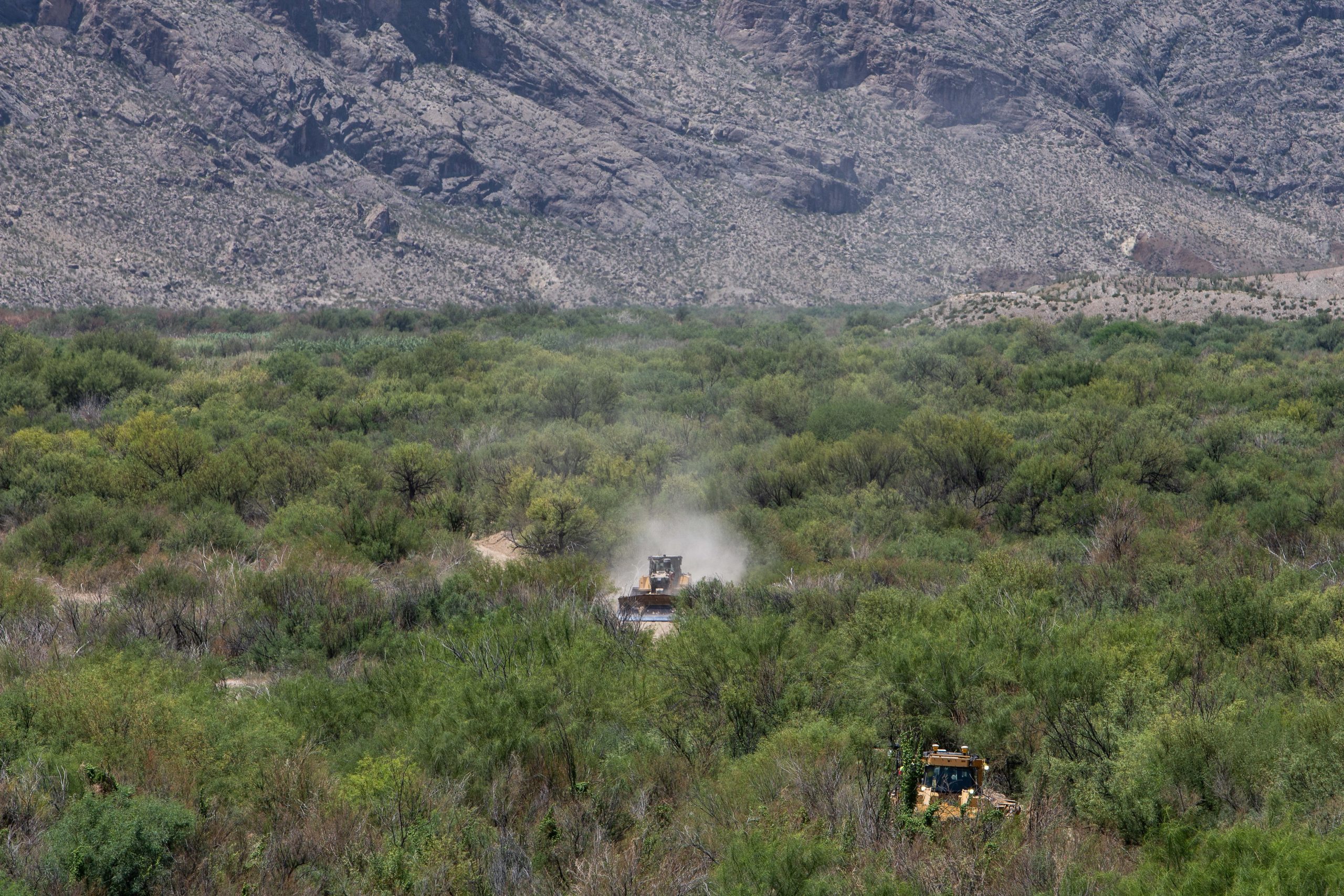
Bulldozers are once again carving paths through a cherished American landscape, this time within the breathtaking expanse of Big Bend National Park in southwest Texas. Despite widespread opposition, the Trump administration is pushing forward with a controversial border security project that promises to permanently alter the park’s delicate ecosystem and natural beauty. The initiative involves the construction of hundreds of miles of new roads, border barriers, and surveillance infrastructure along the park’s 118-mile stretch bordering Mexico.
Environmental Concerns Mount
The proposed construction, which began in earnest last week with the deployment of heavy machinery, has ignited a firestorm of criticism from environmentalists, park advocates, and even some lawmakers. Big Bend National Park is renowned for its dramatic desert landscapes, diverse wildlife, and significant historical and cultural resources. Critics argue that the construction of extensive road networks and barriers will lead to irreversible habitat fragmentation, soil erosion, and the disruption of vital wildlife corridors. The very essence of a national park – its preservation for future generations – appears to be at stake. The project’s scale suggests a significant and lasting impact on the park’s natural state, a stark contrast to the conservationist ideals typically associated with these protected lands.
A Bipartisan Outcry
The push to build through Big Bend has transcended typical political divides, drawing condemnation from both sides of the aisle. Lawmakers have voiced concerns over the potential environmental damage and the perceived prioritization of border security over conservation. The park’s unique geological features and its role as a sanctuary for numerous species are seen as invaluable assets that should be protected, not encroached upon. The administration’s decision to proceed, despite this bipartisan outcry, raises questions about the decision-making process and the weight given to expert opinions and public sentiment. This project highlights a recurring tension between national security objectives and environmental stewardship, a debate that often plays out in the management of public lands.
The Future of Big Bend
The construction of these new roads and barriers represents a significant shift in how Big Bend National Park is managed. While the stated aim is to enhance border security, the long-term consequences for the park’s ecology and visitor experience are a major concern. The administration’s commitment to this project underscores its broader border security agenda, even when it intersects with highly sensitive and protected natural areas. As bulldozers continue their work, the future of this beloved national park hangs in the balance, serving as a potent symbol of the ongoing debate over land use, conservation, and national priorities in the United States. The precedent set by this construction could have far-reaching implications for other protected lands facing similar pressures.
Based on materials: Vox



