
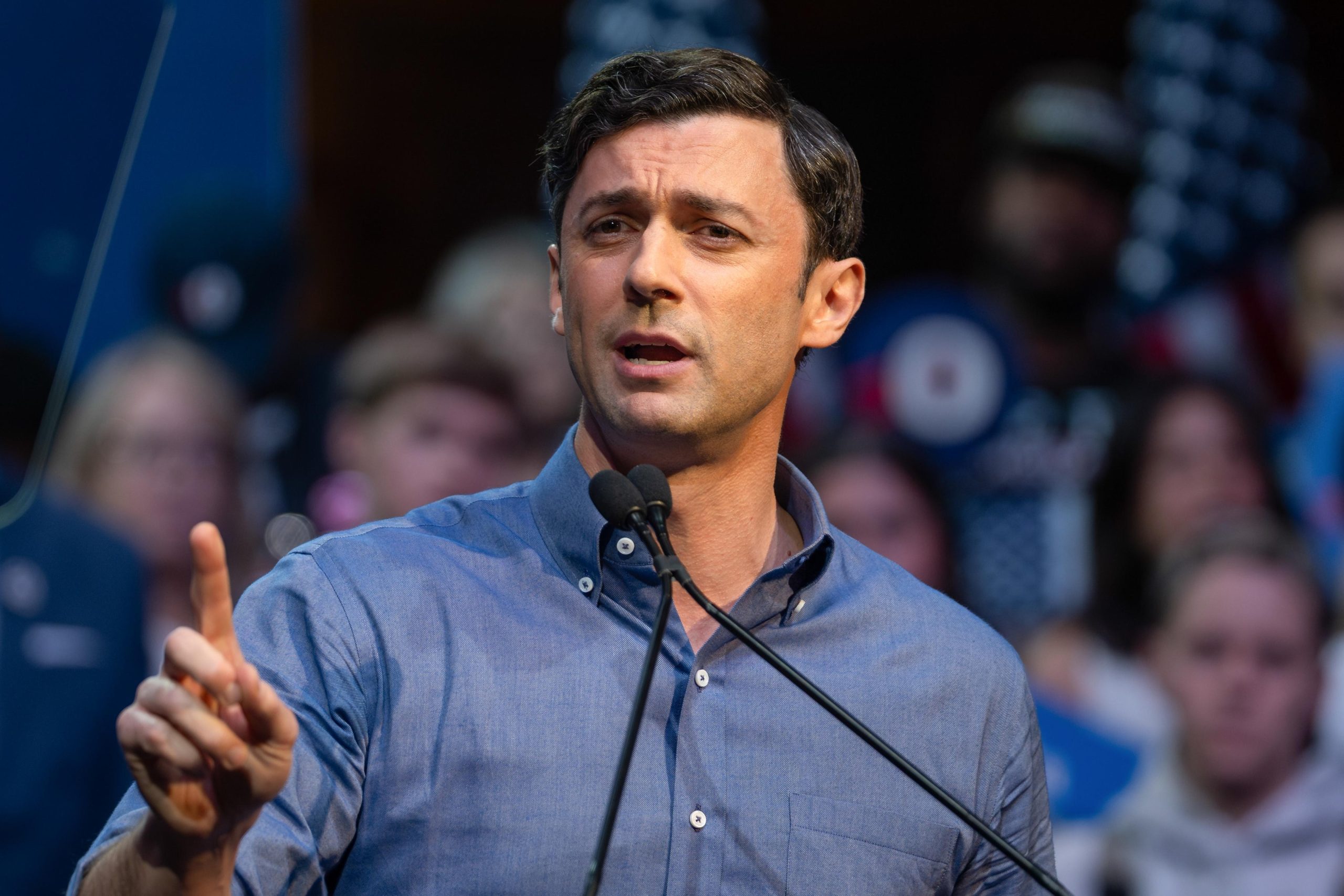
Senator Jon Ossoff’s recent campaign rally in Atlanta took an unexpected turn when he delivered a pointed jab at former President Donald Trump, singling out an aide named Natalie Harp. The remark, intended to highlight alleged extravagance and a perceived lack of focus on presidential duties, has ignited a discussion about the effectiveness and appropriateness of such personal attacks in political discourse.
A Subtle Jab Goes Viral
For a considerable time, Natalie Harp operated as a quiet but consistently present figure within Donald Trump’s inner circle. Her role as an aide meant she was often in the background, an observer rather than a subject of public attention. This low-profile existence was dramatically altered when Senator Ossoff, currently seeking reelection in Georgia, decided to weave her into his campaign narrative. During a recent rally, Ossoff stated, “Trump doesn’t want to do the job. He wants to build his ballroom and travel with Natalie on their apparently defenseless flying palace gifted by the Emir of Qatar.”
This seemingly obscure reference quickly gained traction, drawing attention to a previous report concerning a peculiar travel arrangement. The incident involved Trump returning from Turkey in July, where Harp and other aides reportedly joined the former president on a separate aircraft via a catering cart. Notably, Secretary of State Marco Rubio was allegedly left behind on Air Force One. Ossoff’s mention of “Natalie” served as a veiled allusion to this event, framing it as evidence of Trump’s alleged misplaced priorities and a penchant for luxury over substance.
The Art of the Political Insult
The “Natalie” jab, as it has become known, has transcended its initial context, amplified by media coverage and social media engagement. This incident underscores a recurring theme in modern politics: the strategic use of personal anecdotes and seemingly minor details to construct a broader narrative about an opponent’s character or fitness for office. Political strategists often employ such tactics, believing that relatable, albeit sometimes petty, stories can be more impactful than abstract policy debates.
However, the effectiveness and ethical implications of using aides as rhetorical pawns are debatable. Critics argue that such attacks can be seen as bullying or unprofessional, diverting attention from substantive issues. Supporters, on the other hand, might view it as a clever way to expose perceived hypocrisy or highlight a candidate’s perceived detachment from the realities faced by ordinary citizens. Ossoff’s move, regardless of one’s opinion, has certainly succeeded in generating buzz and potentially influencing voter perception.
Beyond the Anecdote: A Look at Campaign Strategy
The incident involving Natalie Harp offers a glimpse into the evolving landscape of political campaigning. In an era of 24/7 news cycles and a constant demand for engaging content, candidates are increasingly looking for memorable hooks to capture public attention. The use of specific names, even those not widely known, can create a sense of insider knowledge or expose a perceived vulnerability in an opponent’s camp. This approach risks trivializing serious political discourse, but its prevalence suggests a perceived effectiveness among campaign strategists.
As the election season progresses, the “Natalie” jab will likely fade, but the underlying strategy it represents will persist. It serves as a reminder that in the pursuit of political victory, candidates will continue to explore creative, and at times controversial, methods to connect with voters and define their opponents. The question remains whether these personal digs ultimately resonate with the electorate or simply serve as fleeting distractions from the critical issues facing the nation.
Based on materials: Vox



