
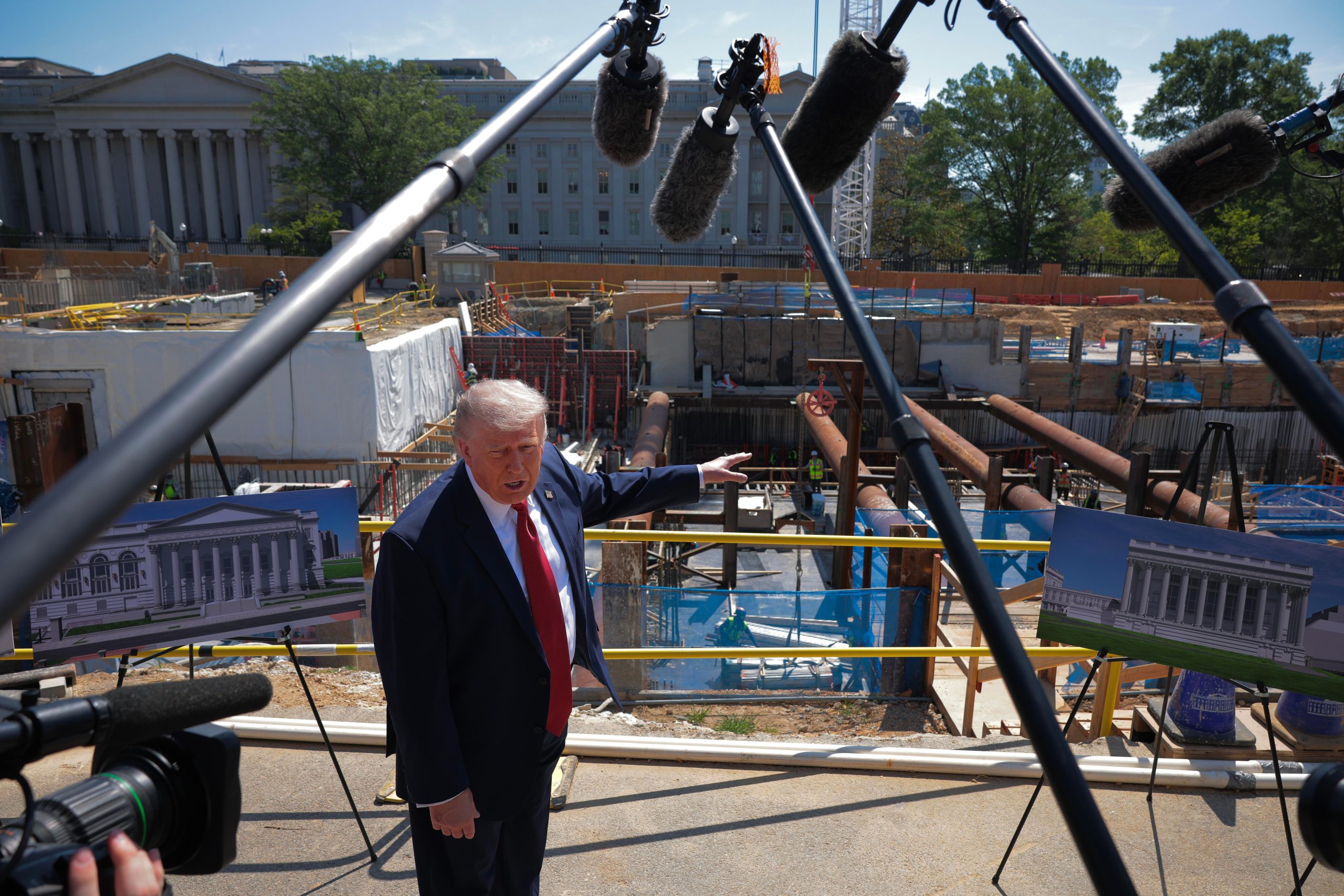
In a significant 5-4 ruling, the U.S. Supreme Court has greenlit the construction of a controversial ballroom project proposed by President Donald Trump, overturning a previous injunction. The decision, stemming from the case
National Park Service v. National Trust for Historic Preservation
, saw Chief Justice John Roberts align with the three Democratic-appointed justices in dissent, highlighting a stark division on the highest court.
The ruling allows for the development of a substantial structure on the former site of the White House’s East Wing. However, the core of the legal contention centers on a federal statute that strictly prohibits the erection of any “building or structure… on any reservation, park, or public grounds of the Federal Government in the District of Columbia without express authority of Congress.” Chief Justice Roberts, in his dissenting opinion, emphasized that Congress has not granted such explicit authorization for this particular project, raising questions about the legality of the Executive Branch’s actions.
The Legal Tightrope
The Supreme Court’s decision has ignited a vigorous debate within legal circles, particularly concerning the interpretation of federal land use laws and the extent of executive authority. Critics argue that the ruling sets a potentially dangerous precedent, allowing executive-branch projects to bypass the necessary legislative oversight intended to protect public spaces and historic sites. The dissenting justices and legal scholars point to the clear language of the federal statute, suggesting that the court may have prioritized executive prerogative over established legal protections.
Conversely, proponents of the ruling may argue that the project falls within the inherent powers of the presidency to manage and enhance the White House complex. The specific details of how the majority justices arrived at their decision, beyond the 5-4 split, are crucial for understanding the legal reasoning. However, the lack of explicit argument from any justice supporting the
legality
of the ballroom itself, as noted in the original description, suggests the decision may hinge on procedural or jurisdictional grounds rather than an endorsement of the project’s compliance with the federal statute.
Implications for Public Spaces and Executive Power
This ruling has far-reaching implications, not only for the immediate future of the White House grounds but also for how executive power interacts with environmental and historic preservation laws. The case underscores the ongoing tension between presidential authority and the congressional intent to safeguard federal lands. As the project moves forward, public scrutiny is expected to remain high, with ongoing discussions likely to revolve around the balance of power and the preservation of historically significant areas. The dissent’s emphasis on the lack of express congressional authority serves as a potent reminder of the legal framework designed to prevent unilateral executive action on public grounds. This decision will undoubtedly be a subject of further legal analysis and public discourse for years to come.
CONCLUSION:
The Supreme Court’s decision to permit President Trump’s ballroom construction, despite significant legal challenges and a divided court, raises critical questions about the application of federal land use laws and the scope of executive power. While the project may proceed, the dissenting opinions and the underlying legal statute ensure that this controversial decision will continue to fuel debate about oversight, preservation, and the balance of authority in the nation’s capital.
Based on materials: Vox



