
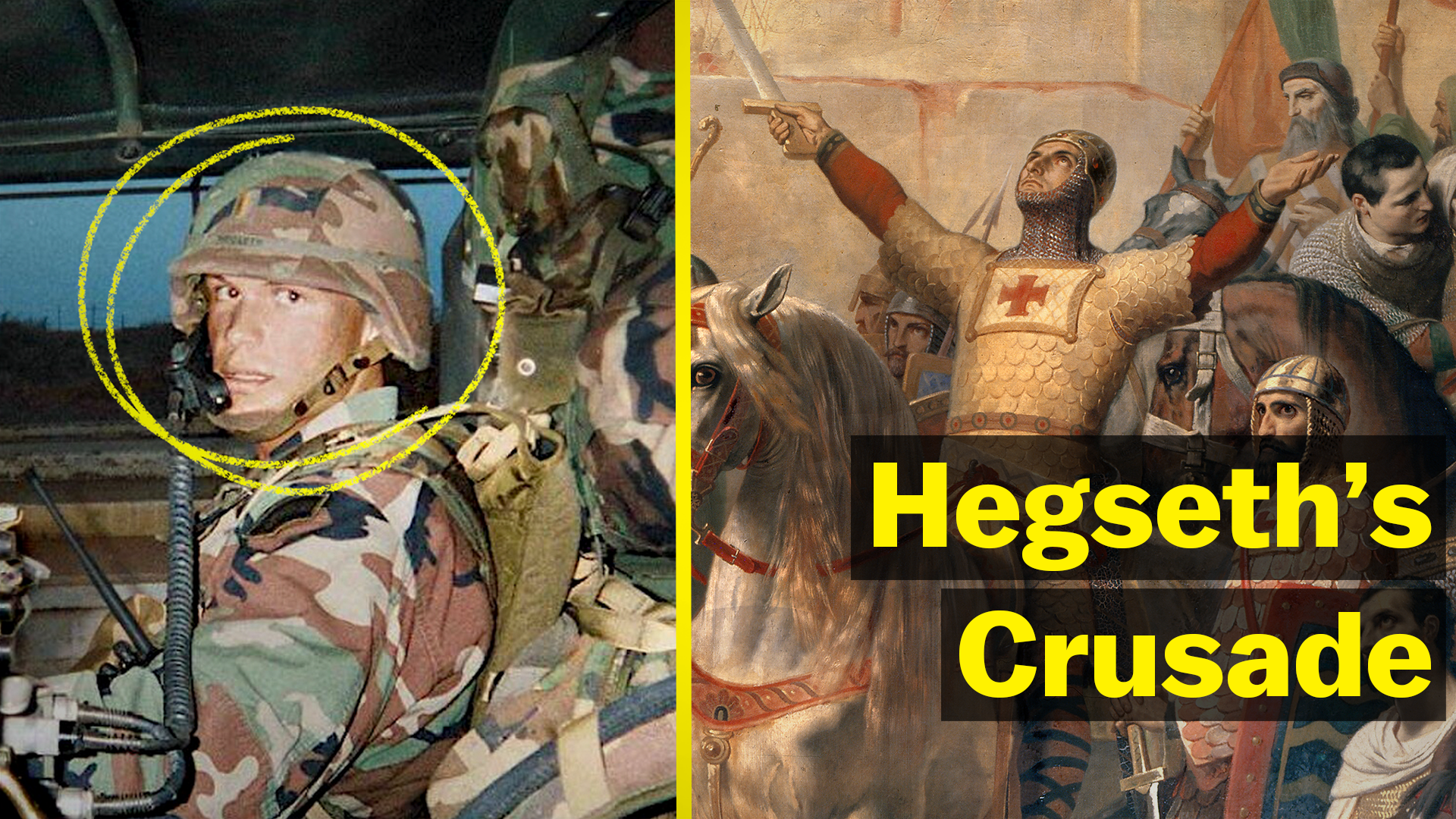
Crusades in the Cabinet? Defense Secretary’s Past Sparks Concern
Secretary of Defense Pete Hegseth’s well-documented fascination with the Crusades is drawing scrutiny, raising questions about how his historical interpretations might influence his approach to modern geopolitical challenges, particularly concerning Iran. While historical interests are common, the depth and nature of Hegseth’s connection to this specific historical period are prompting debate.
A Secretary Steeped in Crusader Lore
Hegseth’s interest in the Crusades, the series of medieval wars fought between the late 11th and 13th centuries over control of the Holy Land, isn’t a secret. He sports tattoos referencing the Crusades, a detail that even surfaced during his 2025 confirmation hearing. Furthermore, his 2020 book, “American Crusade,” culminates with a chapter titled “Make the Crusade Great Again,” further illustrating the significance of this historical period in his thinking.
Hegseth frames the Crusades as a defensive maneuver, arguing that Christianity was forced to react to avoid being overwhelmed by Islam. This perspective, however, is contested by historians.
Historical Views and Modern Ramifications
Matthew Gabriele, a professor of medieval history, argues that Hegseth’s interpretation represents a significant oversimplification of the complex historical reality. He cautions that viewing the past through this lens could have potentially dangerous consequences for the current political landscape, particularly in relation to the ongoing tensions with Iran.
The concern isn’t simply about historical accuracy, but about the potential for these historical interpretations to shape policy decisions and influence the Secretary’s understanding of current conflicts. Does a worldview that sees historical conflicts in stark, religiously defined terms impact his judgment when addressing contemporary challenges? This is the central question being raised.
Navigating the Present with Historical Awareness
While understanding history is crucial for informed decision-making, it’s equally important to approach the past with nuance and avoid imposing simplistic narratives onto complex situations. The debate surrounding Hegseth’s views highlights the importance of considering how personal beliefs and historical interpretations can influence those in positions of power, especially when dealing with matters of national security and international relations. Whether these concerns are justified remains to be seen, but the discussion underscores the need for vigilance and critical examination of the perspectives shaping our nation’s defense policies.
Based on materials: Vox



