
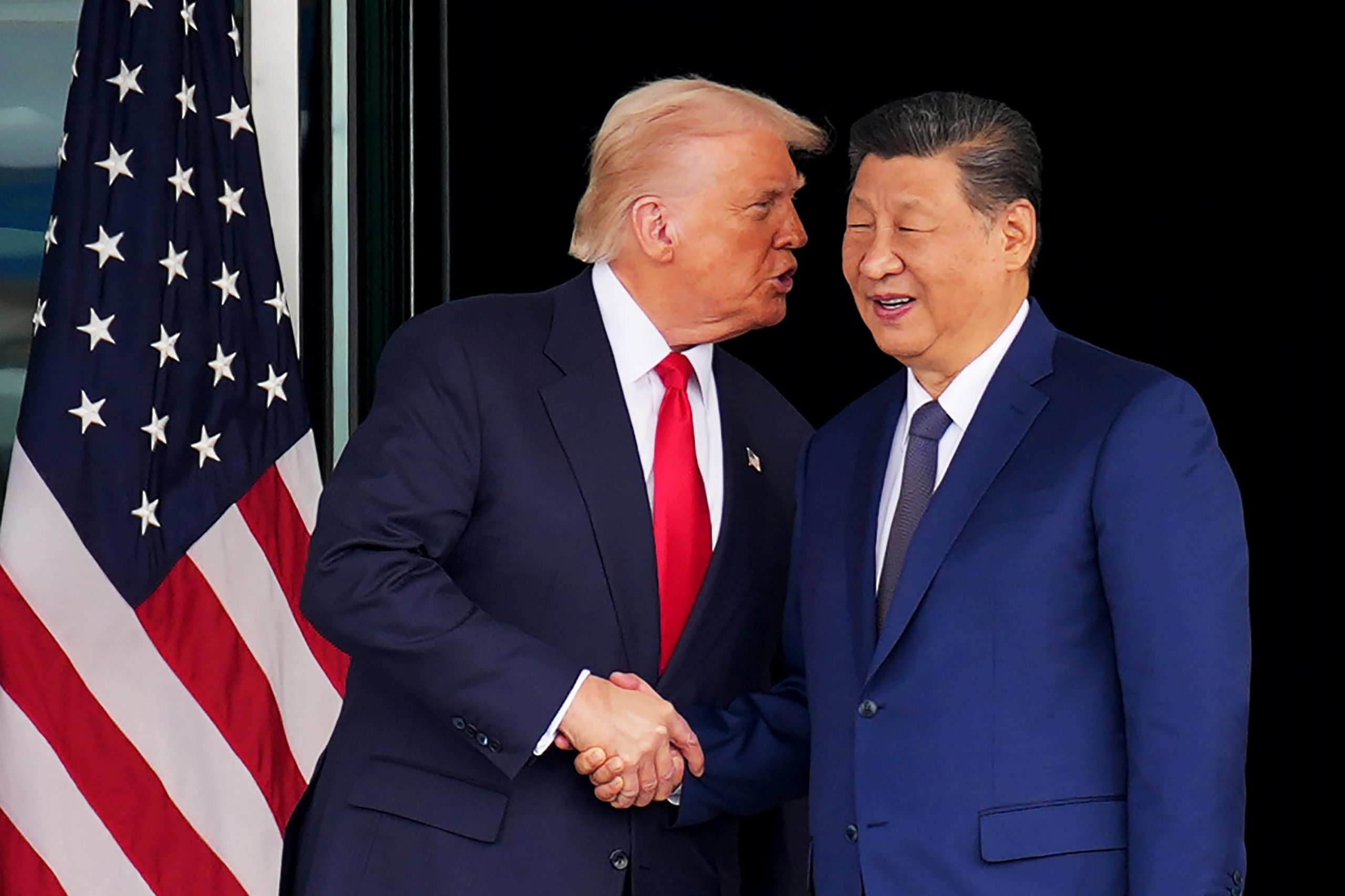
Trump’s China Shift: From Hawk Talk to Pragmatic Partnership?
Donald Trump’s foreign policy has always been a moving target, defying easy categorization. Entering his potential second term, experts predicted a clash between three distinct factions vying for influence: the “primacists,” advocating for assertive American dominance; the “restrainers,” pushing for reduced foreign entanglements; and the “prioritizers,” who saw China as the primary threat, urging a pivot away from the Middle East and Ukraine. But what’s actually unfolding may surprise them all.
A Foreign Policy Doctrine in Flux
During Trump’s first term, fiery rhetoric painted China as an economic adversary and a geopolitical rival. He threatened tariffs, criticized China’s trade practices, and challenged its territorial claims in the South China Sea. This hawkish stance led many to believe that a second Trump administration would double down on this confrontational approach. However, recent events suggest a more nuanced, perhaps even pragmatic, shift may be underway.
While the initial expectation was a laser focus on containing China’s rise, Trump’s actual policy seems to be evolving. The administration may recognize the complexities of the US-China relationship, understanding that complete decoupling is not only unrealistic but potentially damaging to the American economy. Perhaps, the tariffs were more of a negotiating tactic than a long-term strategy.
Reading the Tea Leaves: Is Cooperation on the Horizon?
Instead of a purely adversarial approach, there are signs suggesting a willingness to cooperate with China on specific issues. Climate change, for example, could be one area where both countries find common ground, driven by mutual self-interest. Similarly, containing North Korea’s nuclear ambitions requires a degree of coordination between Washington and Beijing.
This doesn’t necessarily signal a complete reversal of Trump’s China policy. The US will likely continue to push back against unfair trade practices and human rights abuses. However, a more pragmatic approach could involve targeted actions and diplomatic engagement rather than broad-based confrontation.
Beyond Ideology: A Focus on National Interest
Ultimately, Trump’s foreign policy decisions often appear driven by a transactional logic – a focus on perceived national interests rather than ideological consistency. This means that the future of US-China relations will depend on a complex interplay of economic, strategic, and political considerations.
Whether this evolving approach will lead to a more stable and productive relationship remains to be seen. However, one thing is clear: the simplistic predictions of a purely hawkish China policy have so far missed the mark. The reality is more complex, fluid, and ultimately, unpredictable.
Based on materials: Vox



