
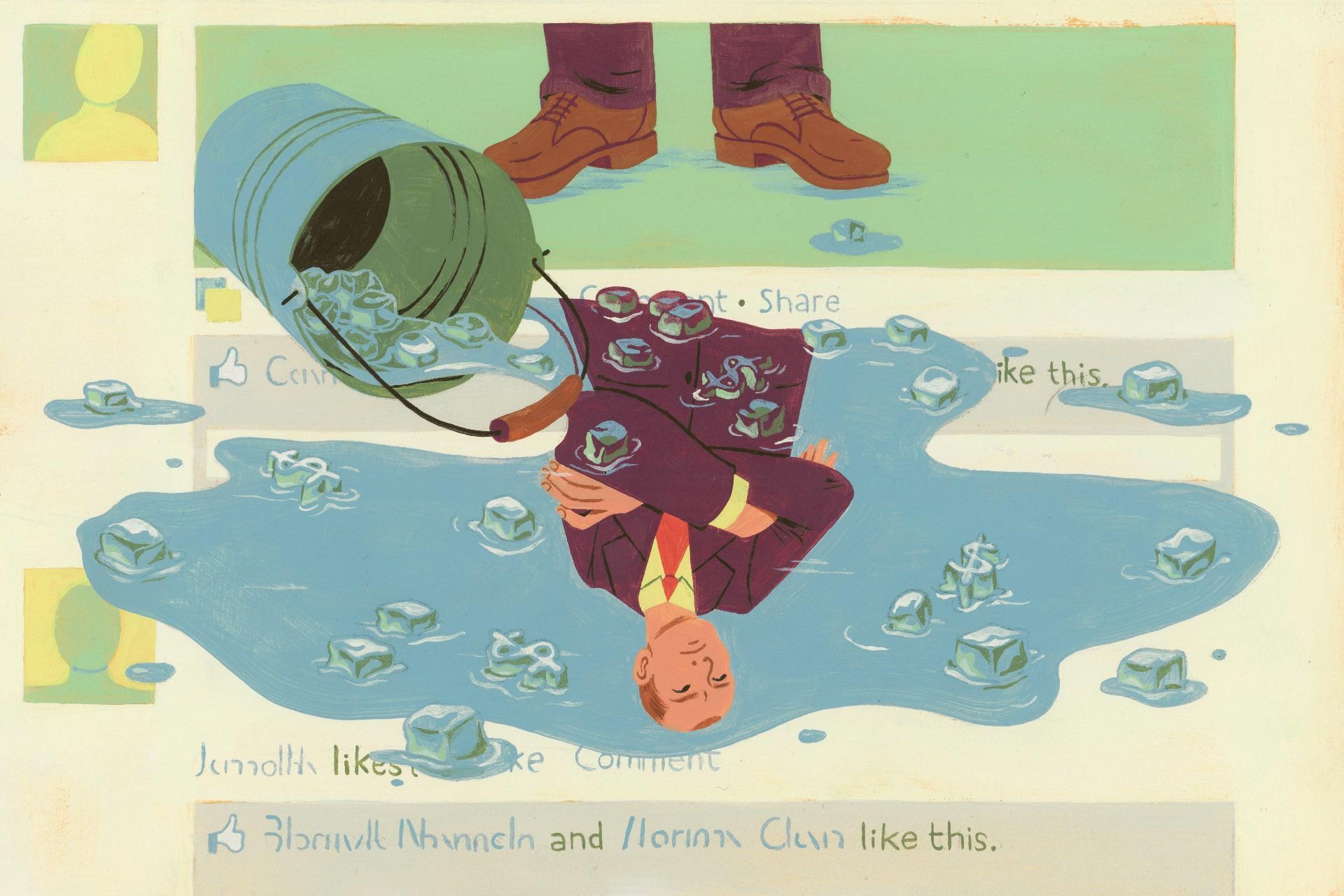
The summer of 2014 brought a peculiar phenomenon to the forefront of social media: the Ice Bucket Challenge. What began as a genuine effort to raise awareness and funds for amyotrophic lateral sclerosis (ALS) research, this viral trend saw participants drenching themselves in icy water, often nominating friends and public figures to do the same within 24 hours. While its intentions were noble, the challenge’s ubiquity eventually led to a shift in public perception, where acts of public generosity, particularly those with a performative element, started to be viewed with a degree of skepticism and even embarrassment – a phenomenon that has been dubbed “cringe.”
The Rise and Fall of a Viral Sensation
The Ice Bucket Challenge was a masterclass in viral marketing, leveraging social pressure and the inherent appeal of spectacle. It began its ascent when prominent figures, including tech titans like Mark Zuckerberg and Bill Gates, participated and nominated others. Gates, for instance, publicly challenged Elon Musk, Ryan Seacrest, and Chris Anderson of TED, playfully drawing attention to the cause from his own garden. This chain reaction, amplified by a then-scorching summer heatwave, propelled the challenge into a global sensation. Millions of dollars were raised for ALS research, a significant feat that underscored the power of collective online action. However, as the challenge permeated every corner of the internet and extended beyond its initial celebrity endorsements, a subtle shift occurred. The once-celebrated act of public participation started to feel less like genuine altruism and more like a performative display, inviting scrutiny and, for some, a sense of awkwardness.
The “Cringe” Factor: A Modern Dilemma
The evolution of the Ice Bucket Challenge from a heartwarming charitable endeavor to something perceived as “cringe” highlights a complex interplay of social dynamics and online culture. The very virality that made it successful also contributed to its eventual saturation. When an act of kindness becomes a ubiquitous meme, its authenticity can be diluted. The pressure to participate, coupled with the often exaggerated or staged nature of some videos, created an environment where genuine generosity could be overshadowed by a perception of seeking attention or conforming to a trend. This “cringe” factor, as some observers have termed it, reflects a contemporary discomfort with overt displays of virtue signaling or what might be perceived as insincere acts in the public eye, particularly when amplified through social media.
The Enduring Legacy of Public Philanthropy
Despite the shift in perception, the Ice Bucket Challenge’s impact on ALS research is undeniable and positive. It demonstrated the immense potential of social media to mobilize large-scale charitable giving and raise crucial awareness for often-overlooked diseases. The challenge served as a powerful case study, illustrating how a simple, engaging concept, coupled with the right social dynamics, can achieve remarkable real-world outcomes. While the era of its peak popularity has passed, and the public may have grown more discerning about performative acts of generosity, the underlying principle remains potent. The desire to contribute and make a difference is a fundamental human trait, and the digital age continues to offer new, albeit evolving, avenues for its expression, prompting ongoing conversations about authenticity, motivation, and the true meaning of altruism in a connected world.
SOURCE INFORMATION:
TITLE: How generosity became cringe
DESCRIPTION: This story was originally published in The Highlight. To get access to member-exclusive stories like this every month, become a Vox Member today. “Elon Musk, Ryan Seacrest, and Chris Anderson of TED, consider yourself challenged,” Bill Gates bellowed from his garden. Beaming, he tugged on a candy cane-colored rope that dumped a barrel of icy cold water […]
CONTENT: This story was originally published in The Highlight. To get access to member-exclusive stories like this every month, become a Vox Member today. “Elon Musk, Ryan Seacrest, and Chris Anderson of TED, consider yourself challenged,” Bill Gates bellowed from his garden. Beaming, he tugged on a candy cane-colored rope that dumped a barrel of icy cold water over his head. “You have 24 hours. Good luck.” It was the scorching hot summer of 2014, and the ice bucket challenge — a viral social media trend to raise money for amyotrophic lateral sclerosis (ALS) research that involved soaking yourself with ice water and pressuring others to do the same — was in full swing. Gates had been challenged by Mark Zuckerberg, who’d been challenged by then-New Jersey Gov. Chris Christie, with whom Zuckerberg had appeared on Oprah a few years prior to announce a $100 million donation to Newark schools. By the time Musk tweeted out a video of his kids drenching him with their own makeshi
SOURCE: Vox
Based on materials: Vox



