
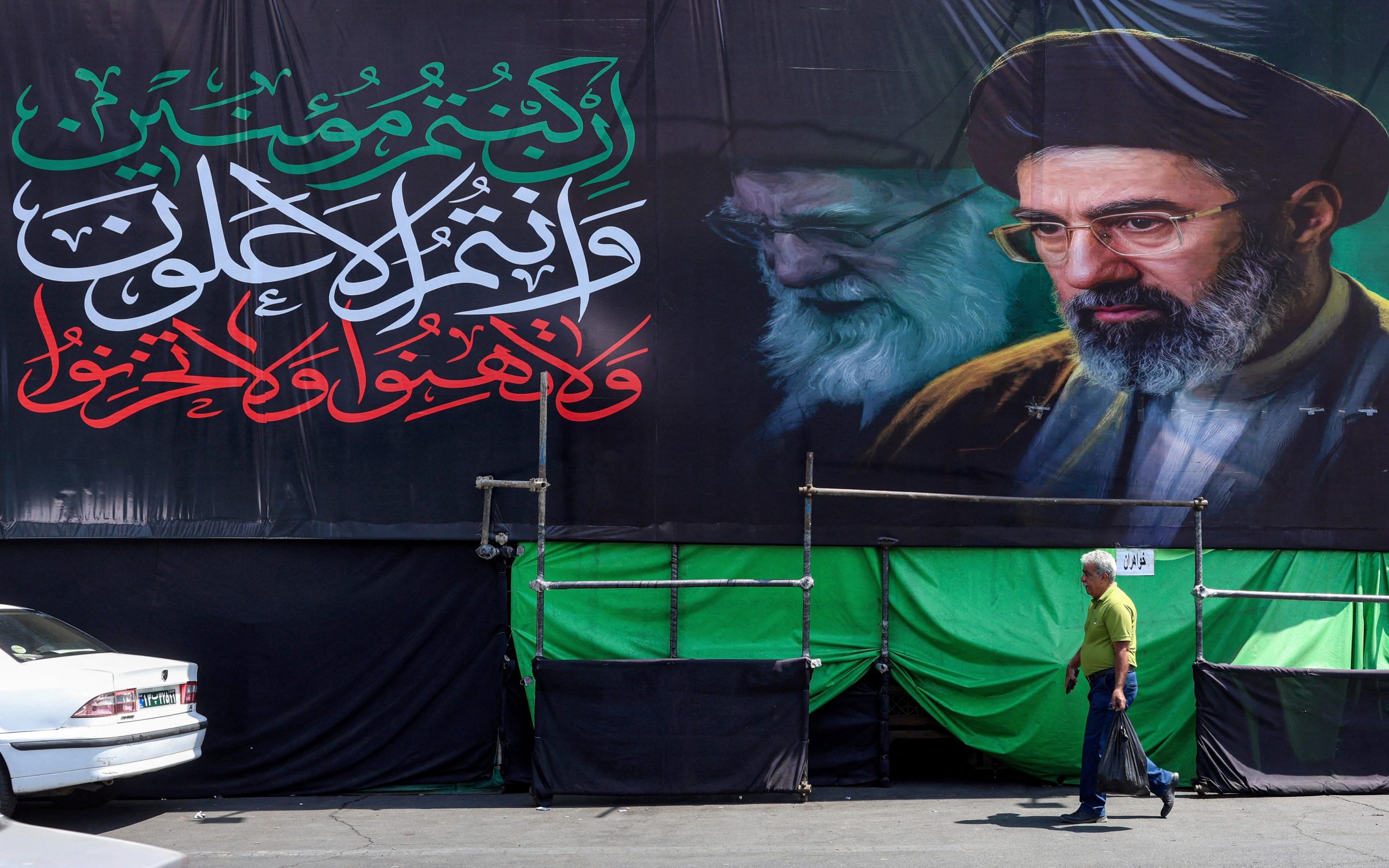
The long-standing question of ultimate authority in Iran, for decades definitively answered by Supreme Leader Ayatollah Ali Khamenei, has become a subject of intense speculation. Khamenei, who held sway over all foreign and domestic policy, commanded the military, and served as the ultimate decision-maker for 36 years, is reportedly no longer in power. This shift, precipitated by joint US-Israeli airstrikes on the first day of a recent war, has left a significant power vacuum, prompting questions about the nation’s future leadership.
A New Era Dawns in Tehran
For over three decades, the United States and its allies understood that any confrontation with Iran would ultimately be directed by Supreme Leader Khamenei. His word was law, superseding that of the elected president and legislature. This centralized power structure provided a clear point of contact and decision-making, however adversarial. The reported end of Khamenei’s rule on February 28, 2026, the first day of a conflict that concluded four months later, marks a seismic change in Iran’s political landscape. His public funeral, scheduled for July 4 in Tehran, signifies the end of an era, but the question of succession is far from settled.
Navigating the Uncertainty
The immediate aftermath of Khamenei’s reported demise has thrown Iran into a state of uncertainty, both domestically and on the international stage. The absence of a clearly established successor means that the intricate web of power within the Iranian regime must now be untangled and reconfigured. Analysts are closely watching the maneuvers of various factions within the ruling elite, including the influential Revolutionary Guard Corps, and the potential rise of figures like Mojtaba Khamenei, the son of the former Supreme Leader, who is already being depicted in public mourning banners alongside his father. This transition period is critical, as it will determine the direction of Iran’s foreign policy, its approach to regional conflicts, and its internal governance for years to come.
Implications for Global Affairs
The leadership transition in Iran carries significant implications for global affairs. The ambiguity surrounding who holds the reins of power makes it challenging for international actors to engage with the country. Will a new Supreme Leader emerge with a similar hardline stance, or will there be an opportunity for a more moderate approach? The response of regional powers and the international community to this unfolding situation will undoubtedly shape the geopolitical dynamics of the Middle East. The coming weeks and months will be crucial in understanding the new contours of power in Iran and what they portend for regional stability and international relations.
SOURCE INFORMATION:
TITLE: Who is actually ruling Iran right now?
DESCRIPTION: For 36 years, the question of who ultimately ruled Iran had one answer: Supreme Leader Ayatollah Ali Khamenei. While Iran has an elected president and legislature, that power is subordinate to the religious supreme leader, who has the last say over all foreign and domestic policies and is the commander in chief of Iran’s conventional […]
CONTENT: A man walks past a huge mourning banner depicting Iran’s current supreme leader Mojtaba Khamenei and his late father Ali Khamenei, who was killed in a strike on the first day of the US-Israeli war against the Iran on February 28, 2026. | AFP via Getty Images For 36 years, the question of who ultimately ruled Iran had one answer: Supreme Leader Ayatollah Ali Khamenei. While Iran has an elected president and legislature, that power is subordinate to the religious supreme leader, who has the last say over all foreign and domestic policies and is the commander in chief of Iran’s conventional military and the paramilitary Revolutionary Guard Corps. Whenever the US confronted Iran, American policymakers knew it was Khamenei who would make the final decision. They’re no longer so sure, however. Joint US-Israeli airstrikes on the first day of the war four months ended Khamenei’s rule, and on July 4, the former supreme leader will be given a public funeral in Tehran. And while the Aya
SOURCE: Vox
Based on materials: Vox



