
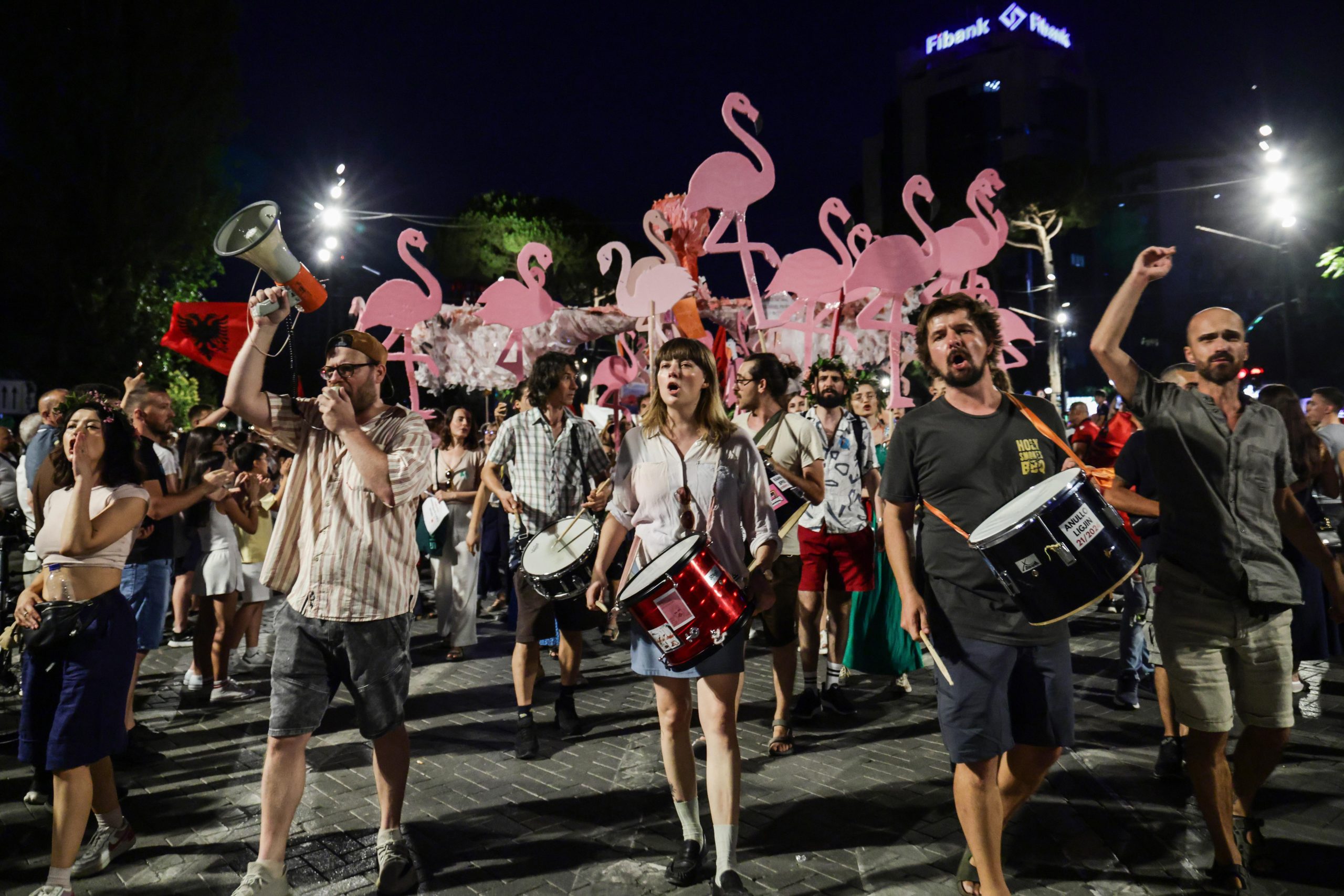
TIRANA, ALBANIA – A proposed luxury tourism development on Albania’s Adriatic coast, linked to former President Donald Trump’s son-in-law Jared Kushner, has ignited widespread public anger, morphing into Albania’s most significant civic protest movement since the fall of communism. Dubbed the “Flamingo Revolution,” demonstrations have gripped the capital city of Tirana for over a month, highlighting deep-seated frustrations with government corruption and a perceived political system that shields the elite.
The unrest, which began in late May, was directly triggered by plans to develop a pristine island into a high-end resort. While official announcements have been somewhat veiled, the project’s association with Jared Kushner, a former White House advisor and key figure in the Trump administration’s Middle East peace initiatives, has placed the development under intense scrutiny. The involvement of Ivanka Trump, Kushner’s wife and also a former White House advisor, has further amplified public attention and indignation.
From Luxury Resort to Anti-Corruption Uprising
What started as opposition to a specific real estate venture has rapidly evolved into a broader indictment of Albania’s governance. Protesters are not just voicing concerns about environmental impact or the scale of the proposed development; they are channeling deep-seated grievances against what they describe as a pervasive culture of corruption and cronyism. The perception is that such lucrative projects are often facilitated through opaque deals that benefit well-connected individuals, both foreign and domestic, at the expense of the public good and transparent governance.
The scale and duration of the “Flamingo Revolution” are notable. For over 35 consecutive days, citizens have taken to the streets, their numbers swelling with each passing week. This sustained mobilization suggests a level of public disillusionment that transcends a single development. It points to a broader demand for accountability, a fairer distribution of national resources, and a political system that prioritizes its citizens over powerful investors and their political connections. Observers are drawing parallels to the early 1990s, a period of immense societal upheaval in Albania, underscoring the potential significance of these ongoing demonstrations.
A Symbol of Broader Discontent
The “Flamingo Revolution” serves as a potent symbol of growing citizen activism in the face of perceived political inertia and corruption. The project’s links to a prominent political family from the United States have inadvertently cast an international spotlight on Albania’s internal struggles. This international dimension adds another layer of complexity, potentially influencing both the government’s response and the investors’ considerations.
As the protests continue, the Albanian government faces mounting pressure to address the underlying issues of corruption and transparency. The “Flamingo Revolution” is more than just a local dispute; it represents a powerful assertion of civic will, demonstrating that when citizens feel their interests are being sidelined for the benefit of a select few, they will mobilize to demand change. The long-term impact of these demonstrations on Albania’s political landscape and its attractiveness for foreign investment remains to be seen, but the current momentum signals a significant challenge to the status quo.
Based on materials: Vox



