
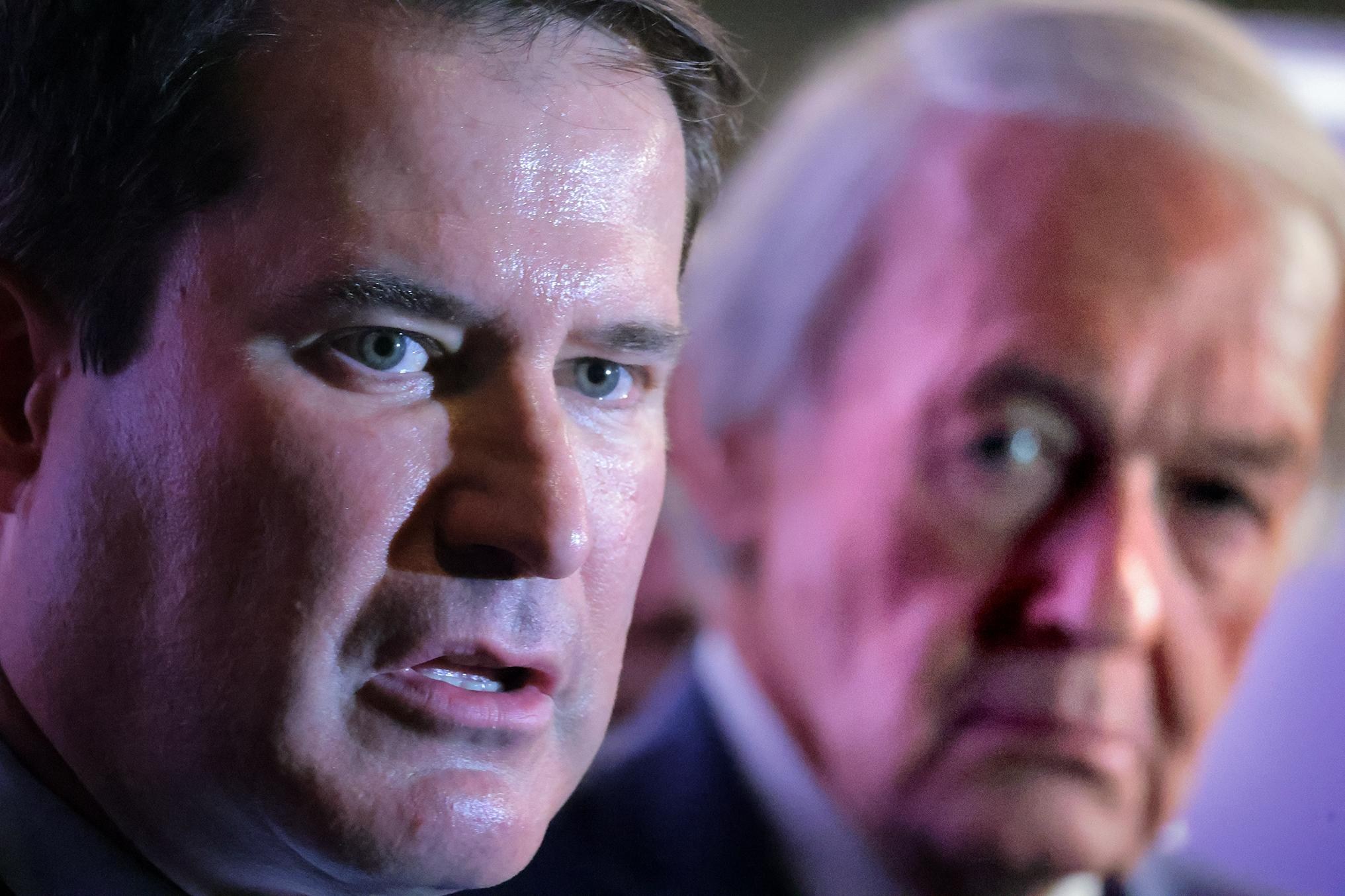
Massachusetts Sen. Ed Markey, a seasoned progressive champion, finds himself in a surprising primary battle that defies the typical mold of intra-party challenges. At 80 years old and with five decades of congressional service, Markey embodies the “old guard” often seen as vulnerable. However, his staunch advocacy for progressive causes, including his prominent role in championing the Green New Deal, has rallied key figures on the left, such as Senators Bernie Sanders and Elizabeth Warren, to his defense. This dynamic has inverted the usual narrative, where incumbents are typically targeted by more left-leaning challengers.
Markey himself has acknowledged the age factor, quipping, “It’s not your age, it’s the age of your ideas. And in this race, I’m the youngest guy.” This statement underscores his strategy to lean into his progressive credentials, framing his opponent as the one out of step with the evolving Democratic agenda. His challenger, 47-year-old Marine Corps veteran Rep. Seth Moulton, presents a different kind of insurgent. While Moulton is younger and a veteran, his challenge to Markey is notable for its divergence from the typical “moderate vs. progressive” primary contest. Traditionally, “moderate” and “establishment” are often conflated, with challengers from the left seeking to unseat long-serving, perceived centrist figures.
A Scramble of Archetypes
The Massachusetts race is a fascinating study in political archetypes. The conventional wisdom for Democratic primaries often points to older, entrenched lawmakers facing threats from a younger, more ideologically pure left. This year, however, the script has been flipped. Sen. Markey, a progressive icon, is being defended by the very voices that often spearhead challenges to the status quo. This is largely due to Markey’s consistent voting record and legislative efforts aligning with the progressive movement’s core tenets. His deep roots in the party and his alignment with key progressive policies have made him a surprising target for an insurgent who doesn’t fit the usual profile of a left-wing challenger.
Rep. Moulton’s campaign, while not explicitly framed as a moderate takeover, represents a different kind of challenge. His background as a veteran and his prior history of pushing back against the Democratic establishment, even on issues aligned with progressives, sets him apart. This creates a complex dynamic where the lines between “progressive,” “moderate,” and “establishment” become blurred. Voters are left to weigh Markey’s decades of progressive advocacy against Moulton’s distinct approach and perceived ability to appeal to a broader, perhaps less ideologically rigid, segment of the electorate.
Implications for the Democratic Party
This primary in Massachusetts offers valuable insights into the evolving landscape of the Democratic Party. It highlights that ideological purity is not the sole determinant of a challenger’s success. Factors such as generational appeal, a candidate’s perceived effectiveness, and even personal biography can play significant roles. The race also underscores the internal debates within the party regarding its future direction and the balance between experience and fresh perspectives. While Markey has the backing of the party’s progressive leadership, Moulton’s challenge suggests a segment of the electorate may be looking for a different kind of representation, one that perhaps prioritizes a blend of experience and a more assertive, potentially pragmatic, approach to governance. The outcome will likely be closely watched for its implications on how future Democratic primaries are contested and what qualities voters ultimately prioritize in their elected officials.
Based on materials: Vox



