
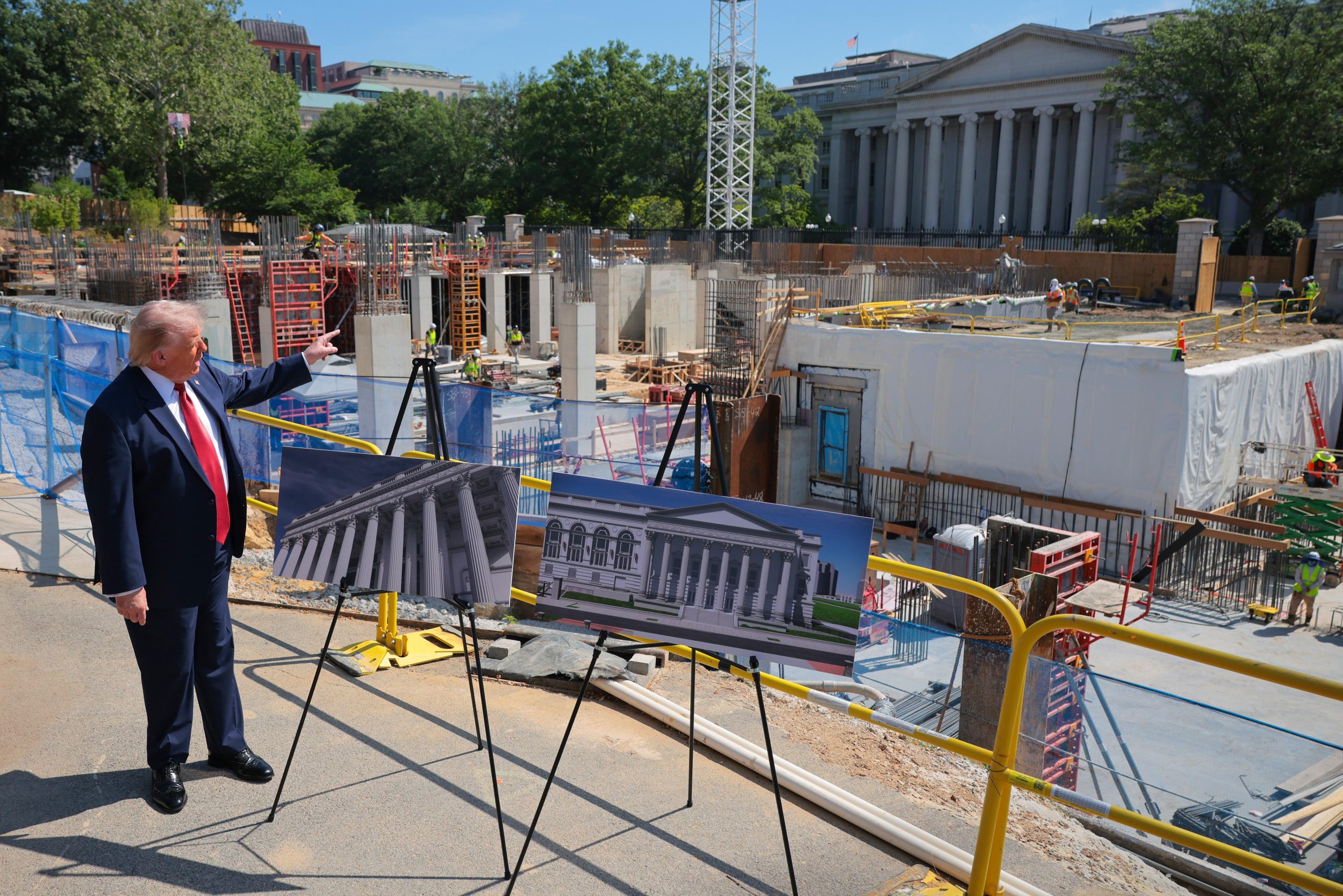
The U.S. Supreme Court is set to decide a case that, while seemingly focused on a controversial White House renovation project, could have far-reaching implications for environmental law. At the heart of the matter is former President Donald Trump’s plan to construct a large ballroom at the White House, a project that has drawn significant opposition and legal challenges. The core legal question is whether federal agencies, under presidential direction, can bypass established environmental review processes for such endeavors.
A Historic Building, A Controversial Plan
The controversy began last fall when construction crews, acting on orders from the Trump administration, demolished the East Wing of the White House. This action was presented as the initial phase of a grand vision to replace parts of the historic structure with an expansive ballroom. However, the National Trust for Historic Preservation, a conservationist group, swiftly filed a lawsuit, arguing that the demolition and subsequent construction violated federal preservation laws and environmental protection statutes. Lower courts have, to date, sided with the National Trust, deeming the ballroom project illegal.
The Trump administration’s legal team then escalated the matter, formally requesting the Supreme Court to allow the ballroom’s construction to proceed while the legal challenges are adjudicated. This plea has placed the nation’s highest court in a position to interpret the boundaries of executive authority and the robustness of environmental regulations. The case, identified as National Park Service v. National Trust for Historic Preservation, now hinges on how the justices interpret statutes that govern federal projects impacting historic sites and the environment.
Beyond the Ballroom: Broader Legal Ramifications
While the physical manifestation of a new ballroom may seem localized, the legal principles at stake are anything but. Critics argue that allowing the executive branch to circumvent environmental impact assessments and public comment periods for a project of this nature could set a dangerous precedent. This could empower future administrations to weaken or disregard environmental protections across a wide spectrum of federal actions, from infrastructure development to resource management. Environmental advocacy groups are closely watching the proceedings, fearing that a favorable ruling for the former administration could significantly erode the power of laws like the National Environmental Policy Act (NEPA), which mandates rigorous review of federal projects that may affect the environment.
The Supreme Court’s decision will not only determine the fate of the White House ballroom but will also serve as a critical indicator of the judiciary’s willingness to uphold environmental safeguards against executive discretion. The justices will need to balance the executive’s asserted need for swift action against the public’s interest in a protected environment and historically significant sites. The outcome could reshape how federal agencies approach environmental reviews for years to come, impacting everything from national park management to energy projects.
Conclusion: A Test for Environmental Stewardship
The Supreme Court’s involvement in the White House ballroom case elevates a dispute over architectural plans into a high-stakes legal battle for environmental law. The decision will undoubtedly be scrutinized for its potential to either reinforce or undermine the existing framework designed to protect the nation’s natural resources and historic heritage. As the justices deliberate, the nation waits to see how they will interpret the balance of power between executive ambition and the enduring necessity of environmental stewardship.
Based on materials: Vox



