
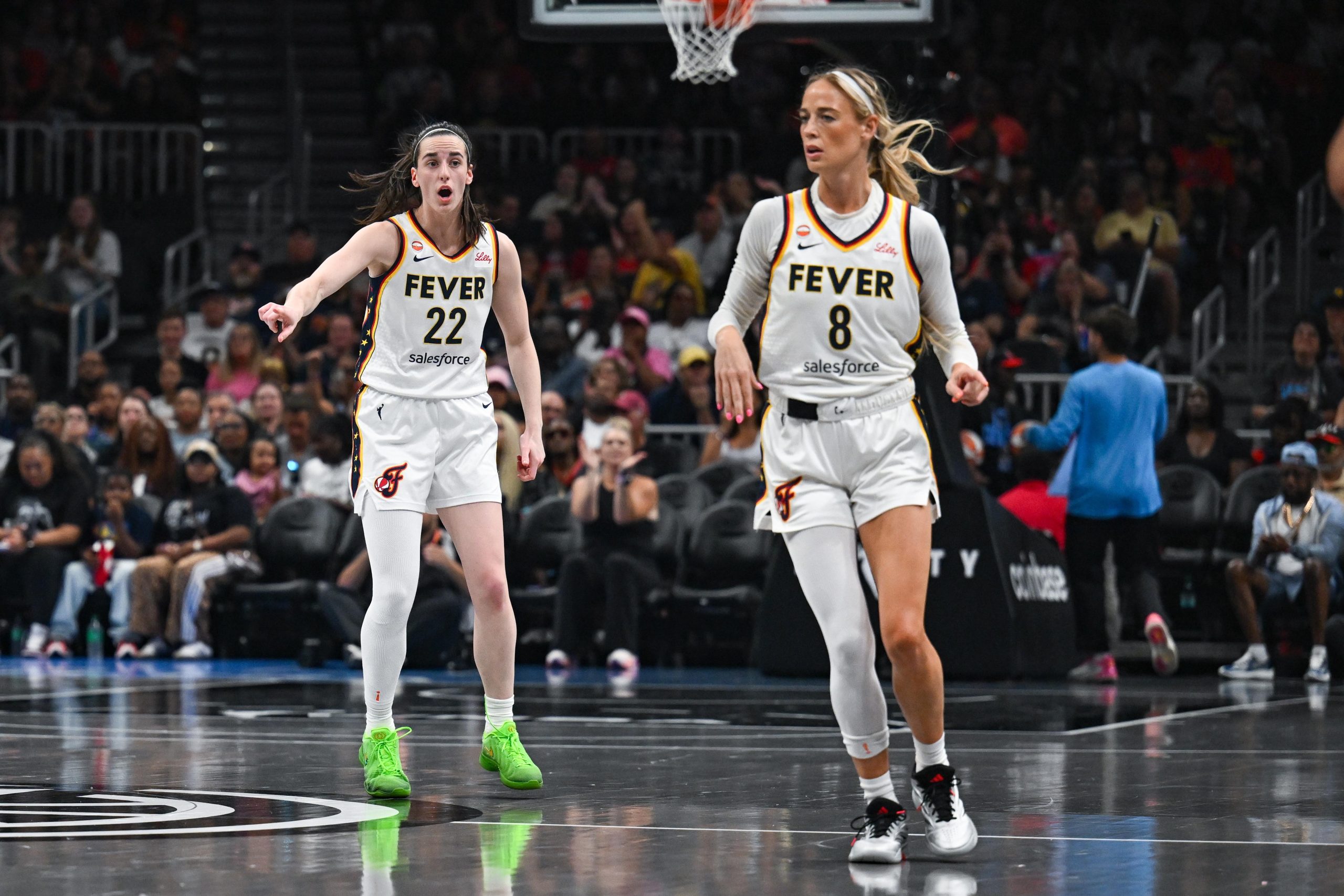
The WNBA is experiencing a golden era on the court, marked by unprecedented financial gains and increased media exposure. After three decades, players are set to receive historic payouts, and a significant new TV distribution deal promises more games and, optimistically, a larger fanbase. However, this surge in attention has also brought the league into the crosshairs of broader societal debates, most notably the contentious issue of transgender athletes in women’s sports.
This off-court spotlight has illuminated a cultural clash, with Indiana Fever guard Sophie Cunningham recently becoming a focal point in the discussion. Cunningham, known for her role in supporting star teammate Caitlin Clark, voiced her perspective to ESPN in July. She articulated a belief in extending “love” alongside “truth” and emphasized a desire to safeguard young girls within the sport. Her comments, while framed within a personal interpretation of protective principles, have been interpreted by some as aligning with a more restrictive view on inclusivity in women’s athletics, thus placing her and the league at the center of a national conversation.
Navigating the Storm
The WNBA’s burgeoning popularity, driven in large part by emerging stars like Caitlin Clark, has naturally amplified its visibility. This increased scrutiny means that any player’s public statement, particularly one touching upon sensitive social issues, can quickly escalate into a national debate. Cunningham’s remarks, intended or not, tapped into a pre-existing cultural fissure concerning gender identity and athletic competition. While the league has historically strived for inclusivity, the current political climate has intensified the pressure on sports organizations to navigate these complex issues with extreme care. The WNBA’s commitment to its athletes and the integrity of women’s sports is now being tested by these external cultural pressures.
The Broader Implications
The WNBA’s entanglement in the culture wars is not an isolated incident but a reflection of wider societal tensions playing out across various platforms. As the league attracts a more diverse and engaged audience, it also inherits the responsibility of addressing the expectations and concerns of this broader demographic. The debate around transgender athletes in women’s sports is multifaceted, involving considerations of fairness, inclusion, and the definition of women’s sports itself. For the WNBA, finding a path forward that upholds its competitive integrity while remaining true to its inclusive values will be a critical challenge. The league’s ability to manage these delicate discussions will undoubtedly shape its public perception and future trajectory, potentially impacting its hard-won gains in popularity and financial stability. The coming months will reveal how effectively the league can bridge these divides and maintain its momentum.
Based on materials: Vox



