
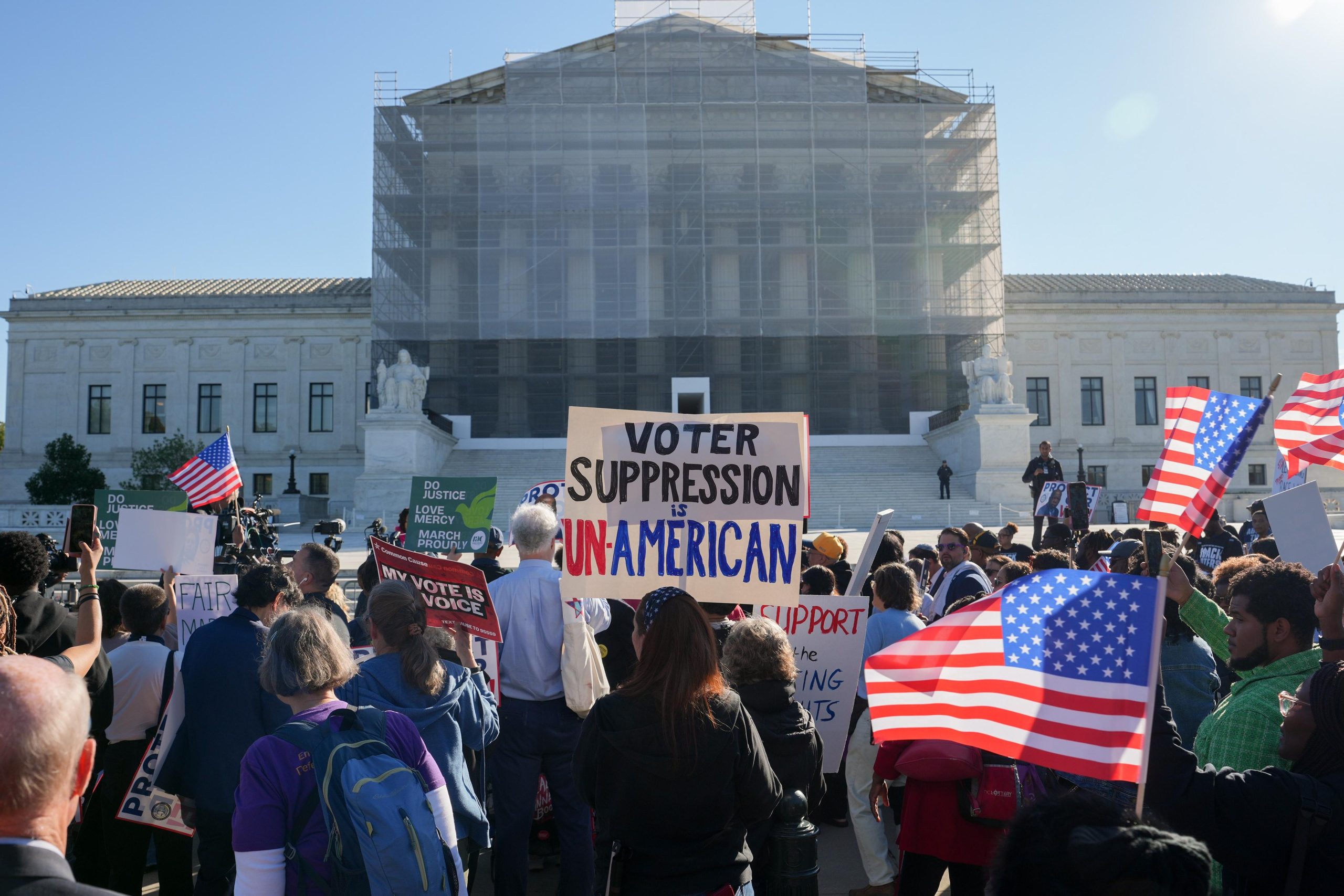
The Supreme Court is poised to grapple with a novel challenge to voter access, stemming from a South Carolina law that creates a two-tiered system for mail-in voting based on age. A federal appeals court recently ruled that the state’s provision, which grants an automatic right to vote by mail for individuals over 65 while imposing stricter requirements on younger voters, infringes upon the 26th Amendment. This landmark decision sets the stage for a potentially far-reaching interpretation of a constitutional amendment that has, until now, seen limited judicial scrutiny.
A Question of Age and Equal Access
The case,
Grant v. Belangia
, heard by the United States Court of Appeals for the Fourth Circuit, centered on a South Carolina law that offered a blanket allowance for mail-in voting to citizens aged 65 and older. In contrast, younger voters could only cast their ballots by mail if they met a specific list of criteria, such as being out of town on election day or having a disability. The appeals court found this disparity to be a direct violation of the 26th Amendment, which explicitly states that the right to vote for U.S. citizens 18 years or older “shall not be denied or abridged by the United States or by any State on account of age.” This ruling highlights a growing legal tension surrounding voting rights and how age-based distinctions might be viewed under constitutional law.
Precedent and the Uncharted Territory of the 26th Amendment
While the 26th Amendment, ratified in 1971, was largely enacted to lower the voting age from 21 to 18, its application in cases of age-based voting restrictions for older or younger adults remains an area of relatively undeveloped jurisprudence. Legal experts note that the amendment’s wording provides a broad shield against age discrimination in voting. The Fourth Circuit’s decision aligns with a developing trend in federal courts, as other circuits have also begun to examine similar laws. For instance, the Fifth Circuit previously addressed a comparable Texas statute, observing that the 26th Amendment “has yet to be interpreted in any significant depth.” The increasing number of challenges suggests that courts are moving towards a more robust examination of how age can lawfully factor into election administration.
Implications for Future Voting Rights
The Supreme Court’s eventual ruling in this case could have significant implications for how states design their election laws and manage absentee or mail-in voting procedures. If the Court upholds the Fourth Circuit’s decision, it could set a powerful precedent against any voting regulations that create age-based disparities, potentially impacting a wide range of election practices beyond just mail-in ballots. This case underscores the ongoing legal battles over voting access and the critical role of the judiciary in safeguarding the right to vote for all eligible citizens, regardless of their age. The outcome will be closely watched by voting rights advocates, state election officials, and the public alike, as it promises to clarify the constitutional boundaries of age discrimination in the electoral process.
Based on materials: Vox



