
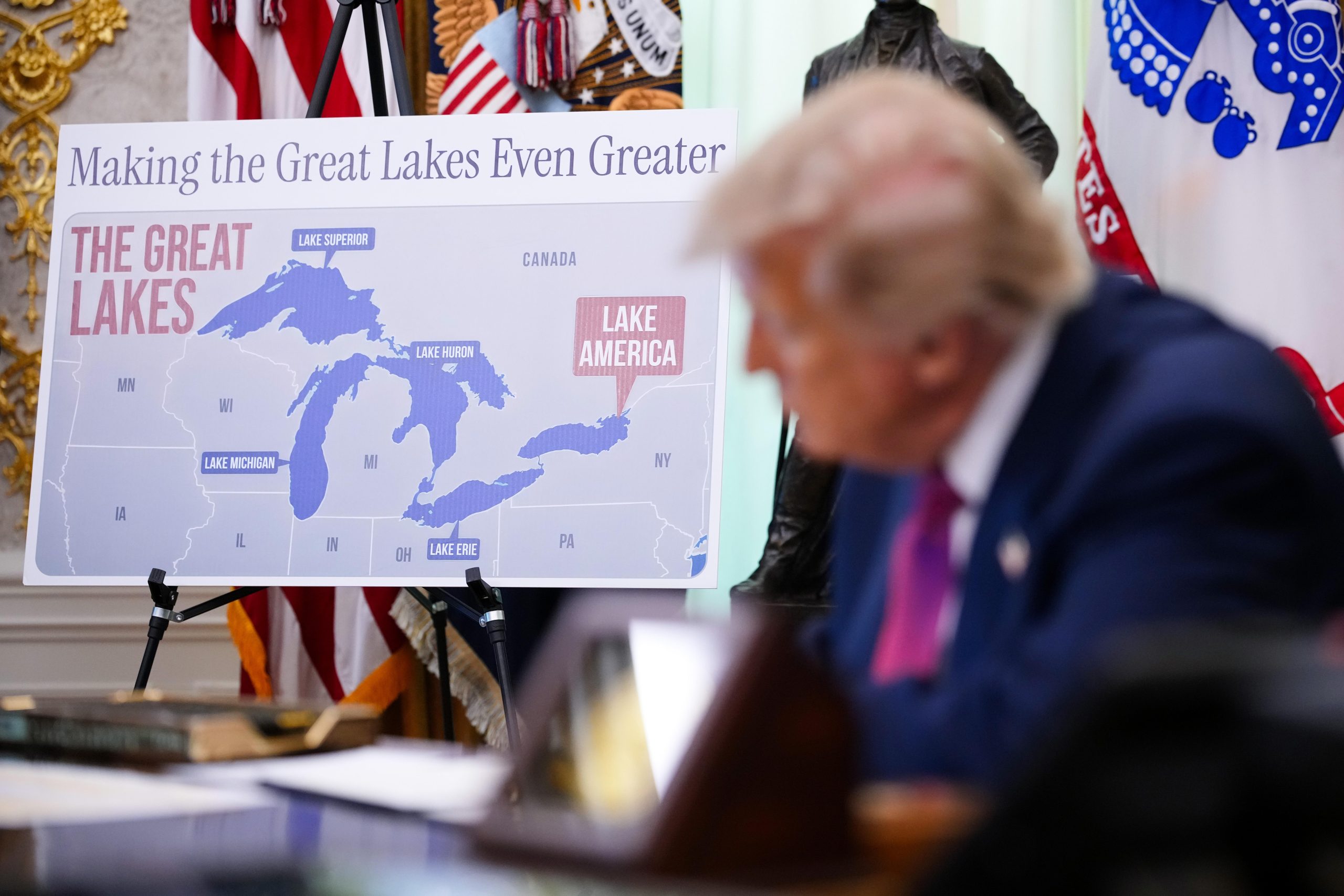
In a move that has sparked both bewilderment and debate, President Donald Trump has officially ordered the renaming of Lake Ontario to “Lake America.” The directive, signed in the Oval Office on August 27, 2026, mandates that the U.S. Geographic Names Information System update the lake’s designation. While the practical implications remain to be seen, the decision has drawn sharp criticism, particularly from New York Governor Kathy Hochul, who has stated her state will not adopt the new name. This action raises questions about presidential authority, the symbolic power of place names, and the underlying motivations behind such a directive.
Presidential Authority and Public Opinion
The executive order directs the Interior Department to implement the change, a move that technically falls within the purview of presidential authority over federal systems. However, the real test will be in public adoption and recognition. Geographic names are deeply ingrained in local identity and historical context, and a top-down decree often struggles to supplant established nomenclature. Governor Hochul’s swift rejection signals a potential divide between federal directives and state-level autonomy, particularly when it comes to matters of local significance. The sentiment among many New Yorkers and those who regularly interact with the lake is likely to mirror the governor’s, suggesting “Lake America” may remain a purely symbolic, and largely unheeded, appellation. The decision also begs the question of whether such a directive is the most effective use of presidential energy, especially when faced with pressing national and international issues.
Symbolism and Political Messaging
The renaming of a significant natural landmark like Lake Ontario is not merely an administrative change; it carries potent symbolic weight. The choice of “Lake America” taps into a nationalist sentiment, aiming to imbue the lake with a patriotic identity. This move can be interpreted as a political strategy to rally a specific base of supporters, emphasizing themes of national pride and unity under a particular vision of American identity. For critics, however, the act may be seen as an unnecessary and divisive assertion of power, attempting to overwrite existing geographical identity with a politically charged label. The timing of this announcement, coupled with the inherent controversy, suggests a deliberate attempt to generate headlines and engage in a public discourse that amplifies the President’s brand and political agenda.
Beyond the Name: Implications and Future Outlook
The long-term impact of this renaming remains uncertain. While official government systems might eventually reflect the change, the everyday usage of “Lake Ontario” is unlikely to disappear without significant cultural and historical shifts. The ensuing public debate could also highlight broader conversations about the intersection of politics, geography, and national identity. This instance serves as a case study in how executive actions, even those with seemingly minor practical outcomes, can ignite significant political discourse and reveal underlying societal divisions. Whether “Lake America” gains traction or becomes a footnote in the annals of political theater, the episode underscores the complex relationship between power, place, and perception.
Based on materials: Vox



