
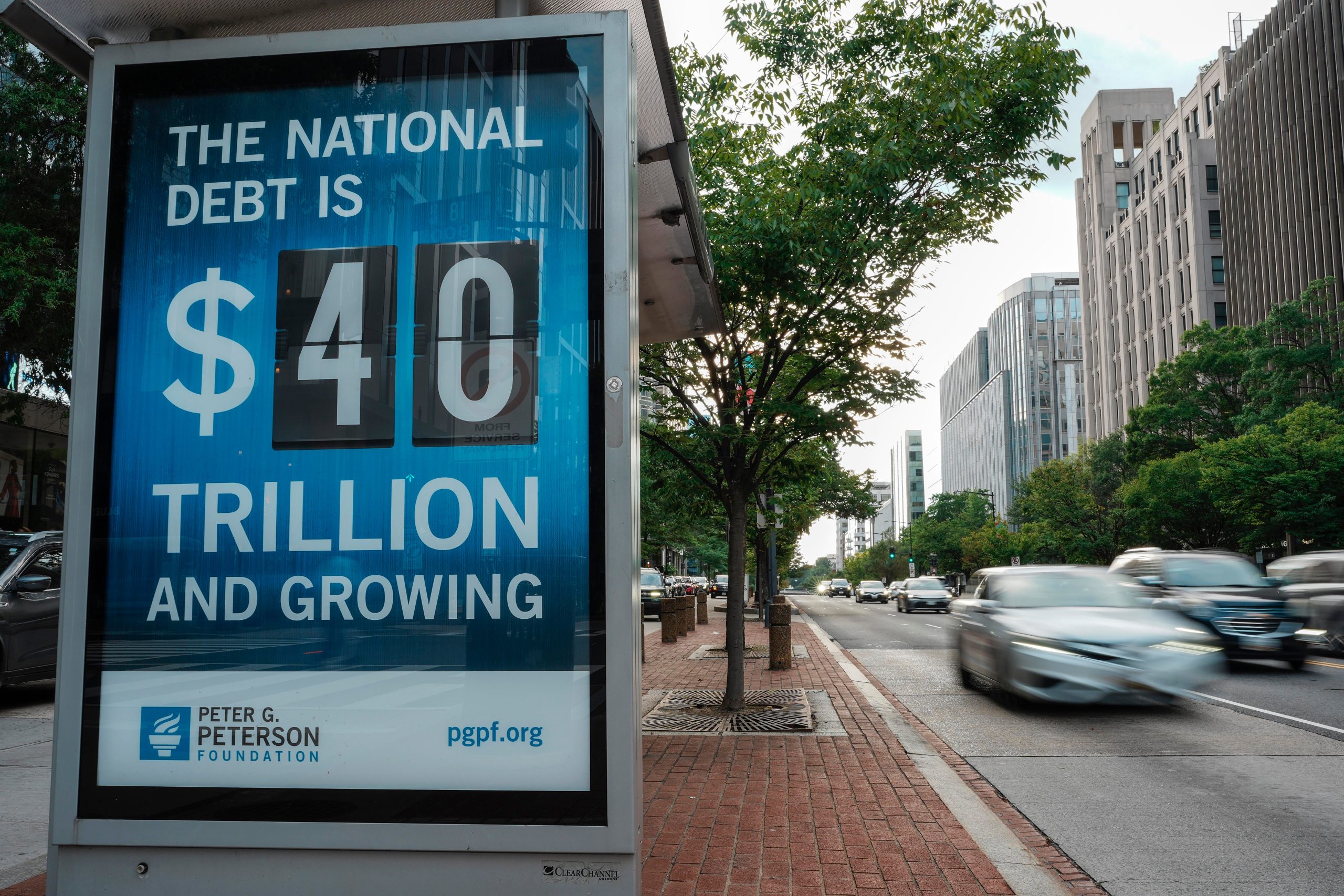
The United States has quietly crossed a staggering financial threshold, with the national debt now standing at an eye-watering $40 trillion. This monumental sum, equivalent to roughly $116,000 for every American citizen, is starting to prick the conscience of even those who have historically downplayed its significance. The issue, once a perennial concern in political discourse, has largely receded from the forefront of recent election cycles, but a growing chorus of economists suggests it’s time to pay closer attention.
Shifting Perspectives on a Growing Burden
For years, the prevailing economic wisdom, championed by figures like Jared Bernstein, chair of the US Council of Economic Advisers, has been that the national debt is a manageable concern as long as the cost of servicing that debt—essentially, paying the interest—remains within a country’s fiscal capacity. This perspective often argued that focusing on the sheer number was a distraction from more pressing economic realities and that the benefits of government spending often outweighed the long-term implications of debt accumulation.
However, recent developments appear to have prompted a re-evaluation. Bernstein himself, speaking after the nation hit the $40 trillion mark, acknowledged a shift in his perspective. While still labeling the headline figure a “big distraction,” he has pointed to two key factors that are now fueling his concern: the persistent inaction from Congress regarding fiscal policy and the increasing cost of servicing this colossal debt. This subtle but significant change in tone from a prominent economic advisor signals a potential turning point in how the national debt is perceived and addressed at the highest levels.
The Double-Edged Sword of Inaction and Interest
The concern articulated by Bernstein and others stems from a confluence of factors. Firstly, the ongoing political gridlock surrounding budgetary matters means that there’s a lack of decisive action to curb spending or implement sustainable revenue-generating strategies. This inertia allows the debt to continue its upward trajectory unchecked. Secondly, as global interest rates fluctuate, the cost of borrowing for the U.S. government can escalate. When interest payments on the national debt become a significant portion of the federal budget, it leaves less room for essential public services, investments in infrastructure, or responses to unforeseen crises.
Economists now grapple with the uncomfortable reality that a debt of this magnitude, coupled with potential interest rate hikes, could create a fiscal drag, slowing economic growth and potentially impacting the nation’s financial stability. The debate is no longer just about the abstract number, but about its tangible consequences for future generations and the government’s ability to function effectively in a dynamic global economy.
Navigating the Fiscal Storm Ahead
The $40 trillion debt is more than just a statistic; it’s a complex challenge with far-reaching implications. As the United States confronts this fiscal reality, the conversation needs to move beyond partisan divides and focus on developing a comprehensive, long-term strategy. This will likely involve difficult conversations about government spending, taxation, and the delicate balance between fiscal responsibility and economic stimulus. Ignoring the mounting debt could lead to a future where the cost of servicing it cripples opportunities for growth and prosperity, making proactive and informed decision-making more critical than ever.
SOURCE INFORMATION:
TITLE: How to survive a national debt scare
DESCRIPTION: The national debt hasn’t been a major issue in the 2026 midterms. But perhaps it should be. As of last month, the United States is in debt to the tune of $40 trillion. That’s 12 zeros, which averages out to about $116,000 per American. It’s enough that even economists like Jared Bernstein, the chair of […]
CONTENT: An electronic billboard on a bus stop in Washington, DC, displays the current US national debt on August 30, 2026. | Jemal Countess/Getty Images for the Peter G. Peterson Foundation The national debt hasn’t been a major issue in the 2026 midterms. But perhaps it should be. As of last month, the United States is in debt to the tune of $40 trillion. That’s 12 zeros, which averages out to about $116,000 per American. It’s enough that even economists like Jared Bernstein, the chair of the US Council of Economic Advisers under President Joe Biden, is starting to worry. Bernstein has long argued that the national debt is nothing to worry about too seriously as long as servicing it — that is, paying the interest on it — remains manageable. Bernstein has since changed his tune. He told Today, Explained co-host Sean Rameswaram after last month’s debt milestone that while the number itself is “a big distraction,” two factors have him worried: Congress’s inaction and
SOURCE: Vox
Based on materials: Vox



