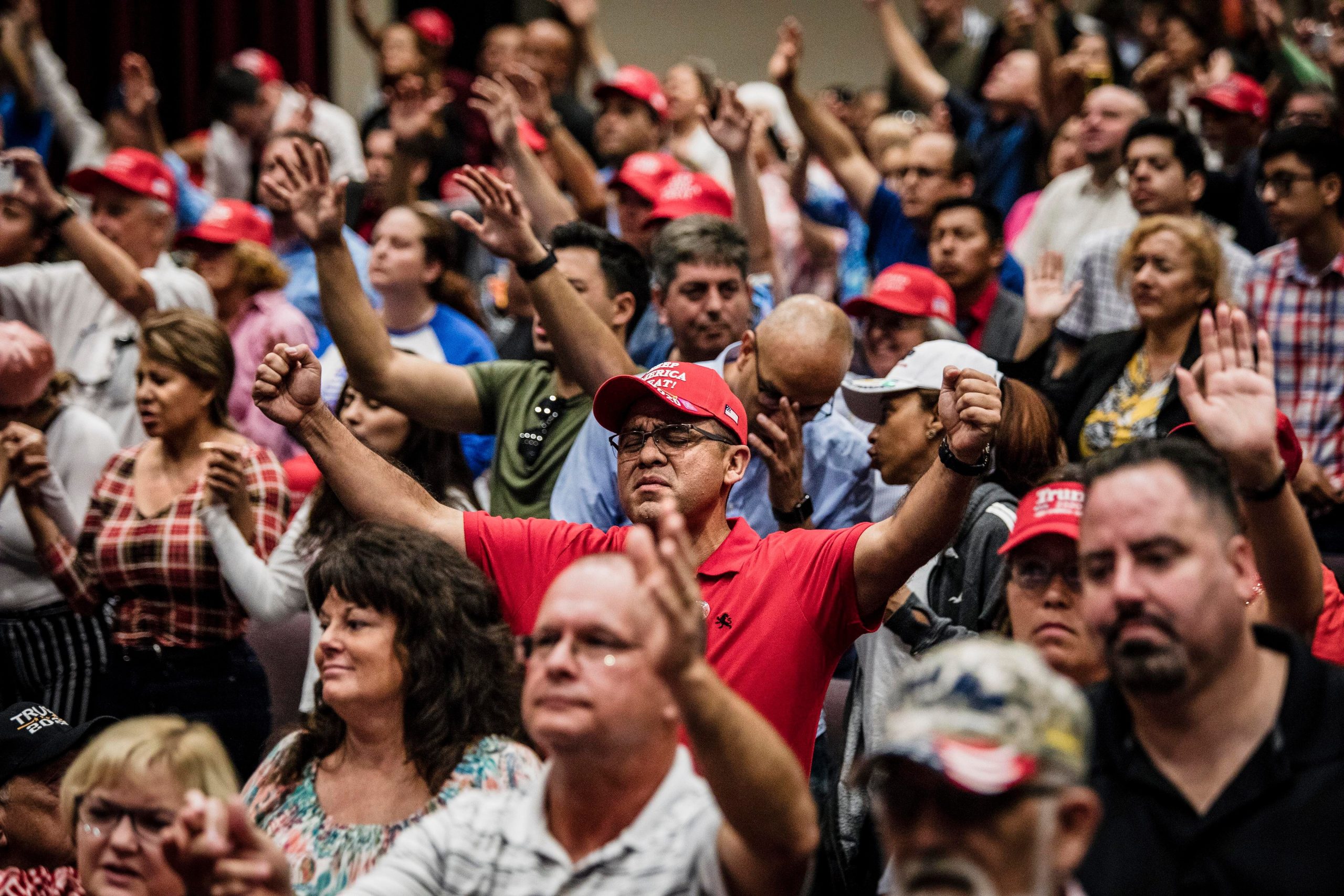
The enduring image of evangelical Christians in American politics is often one of unwavering support for Donald Trump, a perception amplified by media coverage and political discourse. However, this portrayal frequently overlooks the nuanced reality and diverse perspectives within this significant demographic. Bonnie Kristian, a deputy editor at
Chri
, offers a critical examination of common misconceptions surrounding her faith, arguing that the evangelical movement is far more complex than its public image suggests.
Challenging the Monolithic Narrative
For years, polling and election data have consistently shown a strong alignment between evangelical Christians and the Republican party, particularly during the Trump presidency. This consistent voting bloc has led many outside the faith to view evangelicals as a homogenous group, united in their political allegiances and often characterized by intolerance and blind devotion to specific leaders. Kristian contends that this simplification erases the rich tapestry of beliefs and motivations that truly define evangelicalism. She suggests that focusing solely on political affiliation obscures the deeper theological underpinnings and personal convictions that guide individuals within the faith.
Kristian’s perspective implies that reducing evangelicalism to a political identity ignores the theological foundations that are central to the faith. This includes a commitment to the Bible as the ultimate authority, the belief in Jesus Christ as the son of God and savior, and a call to live out one’s faith in the world. When these core tenets are sidelined in favor of political commentary, the public understanding of the faith becomes distorted. The author’s work aims to recenter the conversation on these essential elements, urging a more informed and less judgmental approach to understanding evangelical identity.
Reclaiming Nuance and Diverse Voices
The perception of evangelicals as a monolithic entity is further complicated by the way media and elite circles often frame discussions about the faith. Kristian’s insights suggest that this framing can lead to a caricature of evangelicals as “bigoted, Trump-worshipping hypocrites,” as she puts it. This broad-brush approach fails to acknowledge the internal debates, differing interpretations of scripture, and varied social and political stances that exist within evangelical communities. Many evangelicals, while holding core beliefs, grapple with complex societal issues and may not always align with a singular political agenda.
Kristian’s analysis serves as a call for a more sophisticated understanding of how faith intersects with public life. It encourages looking beyond superficial political labels to appreciate the diverse ways individuals live out their beliefs. By highlighting the discrepancies between public perception and internal realities, she invites a broader dialogue that respects the complexity of religious identity and its multifaceted expression in contemporary society. This shift in perspective is crucial for fostering more productive conversations about faith, politics, and the values that shape American culture.
CONCLUSION:
The persistent stereotype of the unwavering, politically uniform evangelical Christian risks diminishing the profound and diverse nature of the faith. As the political landscape continues to evolve, the insights offered by figures like Bonnie Kristian are vital. They remind us that understanding any religious group requires looking beyond simplistic labels and engaging with the rich theological heritage and individual consciences that truly shape belief and action. This nuanced approach is not only fairer but also essential for a more accurate and empathetic understanding of American society.
Based on materials: Vox