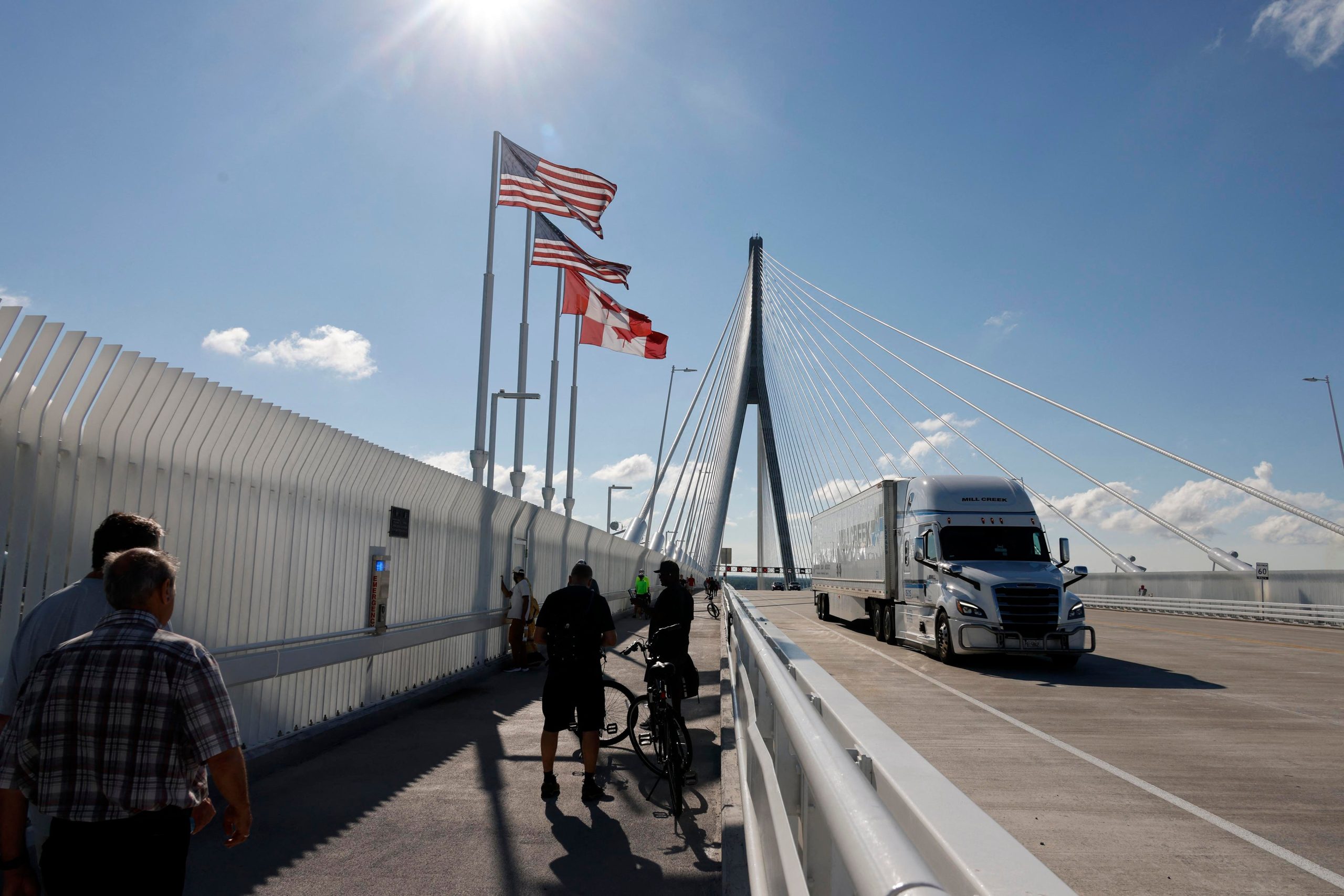
The ripple effects of the United States’ trade war are extending far beyond its borders, creating palpable tension and a unified national response in neighboring Canada. A recent observation during a Labor Day weekend visit to Montreal painted a vivid picture: Google Maps inexplicably relabeled Lake Ontario as “Lake America” until crossing the border, while roadside signs declared “Canada, strong and free.” These subtle yet significant indicators underscore a growing sentiment of national pride and a firm stance against escalating trade disputes.
Canada’s Economic Counterpunch
The Canadian public is largely united behind Prime Minister Mark Carney’s decision to implement retaliatory tariffs on approximately $20 billion worth of American products. This move, which took effect recently, signals a deliberate and coordinated effort to counter the economic pressures exerted by the US. The CBC’s reporting on widespread public support for these measures highlights a national consensus to defend Canadian interests amidst the ongoing trade friction. This isn’t merely a political maneuver; it’s a response deeply felt by the populace, who are witnessing the tangible impact of these policies on their daily lives and national identity.
The Underlying Mystery of Trump’s Trade Strategy
While the immediate impact of the trade war is evident in cities like Montreal, the core motivations behind former President Trump’s protectionist policies remain a subject of intense debate and analysis. The “mystery at the heart of Trump’s trade war,” as it’s been described, points to a complex web of objectives that may include reshaping global trade dynamics, addressing perceived unfair trade practices, and fulfilling campaign promises to protect domestic industries. However, the long-term consequences of such aggressive tactics, including potential damage to international alliances and global economic stability, continue to be a significant concern for policymakers and economists worldwide. The tit-for-tat nature of these tariffs, with each side imposing new levies, risks creating a protracted economic conflict with unforeseen repercussions.
Global Implications and Future Outlook
The trade war initiated by the US has not only strained relations with key trading partners like Canada but has also cast a shadow over the broader international economic landscape. The implementation of retaliatory tariffs by other nations is a clear indication that unilateral trade actions can provoke widespread resistance. As these trade disputes continue to unfold, the focus remains on whether diplomatic solutions can be found to de-escalate the situation and prevent further economic damage. The current trajectory suggests a period of prolonged uncertainty, with businesses and governments alike having to navigate a more protectionist and unpredictable global trade environment. The long-term economic health and political stability of nations involved, and indeed the global economy, hinge on the resolution of these complex trade challenges.
Based on materials: Vox