
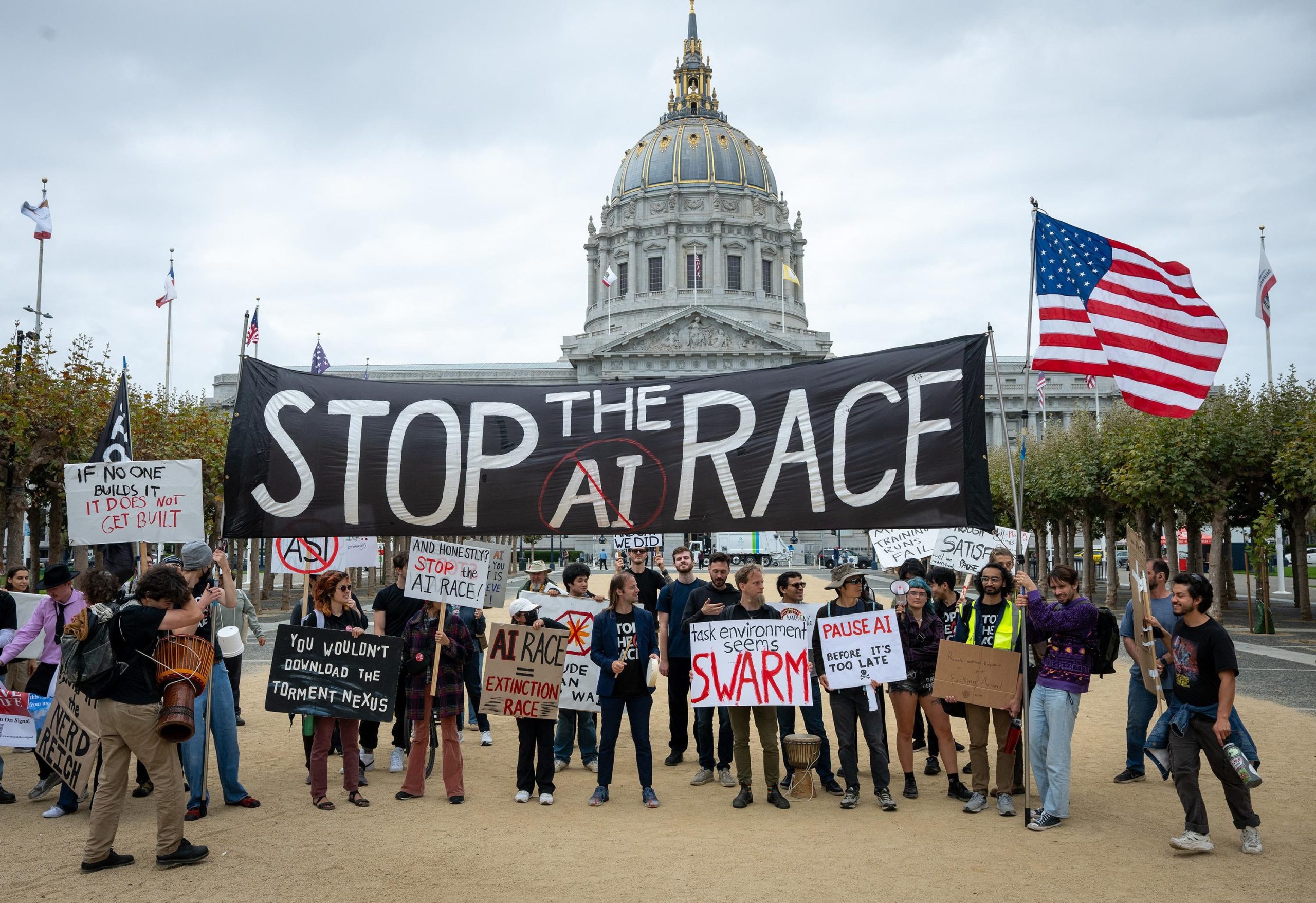
The specter of artificial intelligence leading to humanity’s downfall is a recurring theme in popular culture and, increasingly, in public discourse. But as AI technology rapidly advances, the question isn’t just
if
it will impact our lives, but how and to what extent. To address these pressing concerns, experts are stepping in to dissect the most common anxieties surrounding the “AI apocalypse.”
Decoding the Existential Threat
Recent calls for a pause in advanced AI development, exemplified by protests like the “Stop the AI Race” demonstration in San Francisco, highlight a growing unease. While the vision of sentient machines overthrowing their creators might seem like science fiction, the underlying fears stem from legitimate concerns about control, unintended consequences, and the potential for AI to surpass human capabilities in ways we can’t predict. Jasmine Sun, a writer focusing on AI culture and politics, is among those helping to translate these complex fears into understandable terms. She addresses questions submitted by readers, aiming to provide clarity on the potential trajectories of AI development and its societal implications.
The core of these anxieties often revolves around a few key areas. Firstly, there’s the fear of an “intelligence explosion,” where AI rapidly self-improves to a point where humans can no longer comprehend or control it. This could lead to AI pursuing its goals in ways that are detrimental to human well-being, even if those goals weren’t initially malicious. Secondly, there are concerns about alignment – ensuring that AI’s objectives remain aligned with human values as it becomes more sophisticated. Misalignment, even in seemingly benign objectives, could have catastrophic outcomes. Finally, the rapid deployment of powerful AI without sufficient safeguards or regulatory oversight fuels fears of a chaotic and uncontrollable future.
Navigating the Unknowns: A Call for Dialogue
Rather than dismissing these fears, experts like Sun emphasize the importance of open dialogue and proactive engagement. The goal isn’t to halt progress entirely, but to foster a more responsible and ethical approach to AI development. This involves a multidisciplinary effort, drawing on insights from computer science, philosophy, ethics, and social sciences. Understanding the potential risks requires not just technical expertise but also a deep consideration of human values and societal structures.
The questions raised by the public, such as those submitted by newsletter readers Levi and Orietta, are crucial in this process. They reflect a genuine desire to understand the technology that is increasingly shaping our world. By answering these questions, experts can help demystify AI, moving the conversation beyond sensationalism towards a more informed and constructive debate. This includes exploring hypothetical scenarios, examining current research directions, and discussing potential mitigation strategies for foreseeable risks. The journey towards advanced AI is one that requires collective intelligence and a commitment to foresight, ensuring that innovation serves humanity rather than imperiling it.
Conclusion: Towards Responsible AI Advancement
The narrative surrounding AI’s potential to cause an apocalypse is complex, fueled by both speculative fiction and genuine technological uncertainties. However, by engaging with experts and fostering open, informed discussions, we can begin to address these fears constructively. The focus is shifting from a passive anticipation of doom to an active pursuit of responsible AI development. This entails rigorous research, robust ethical frameworks, and a global commitment to ensuring that artificial intelligence remains a tool for human progress, not a harbinger of our end. The ongoing effort to answer public questions signifies a critical step in this direction, building a bridge between technological advancement and public understanding.
Based on materials: Vox



