
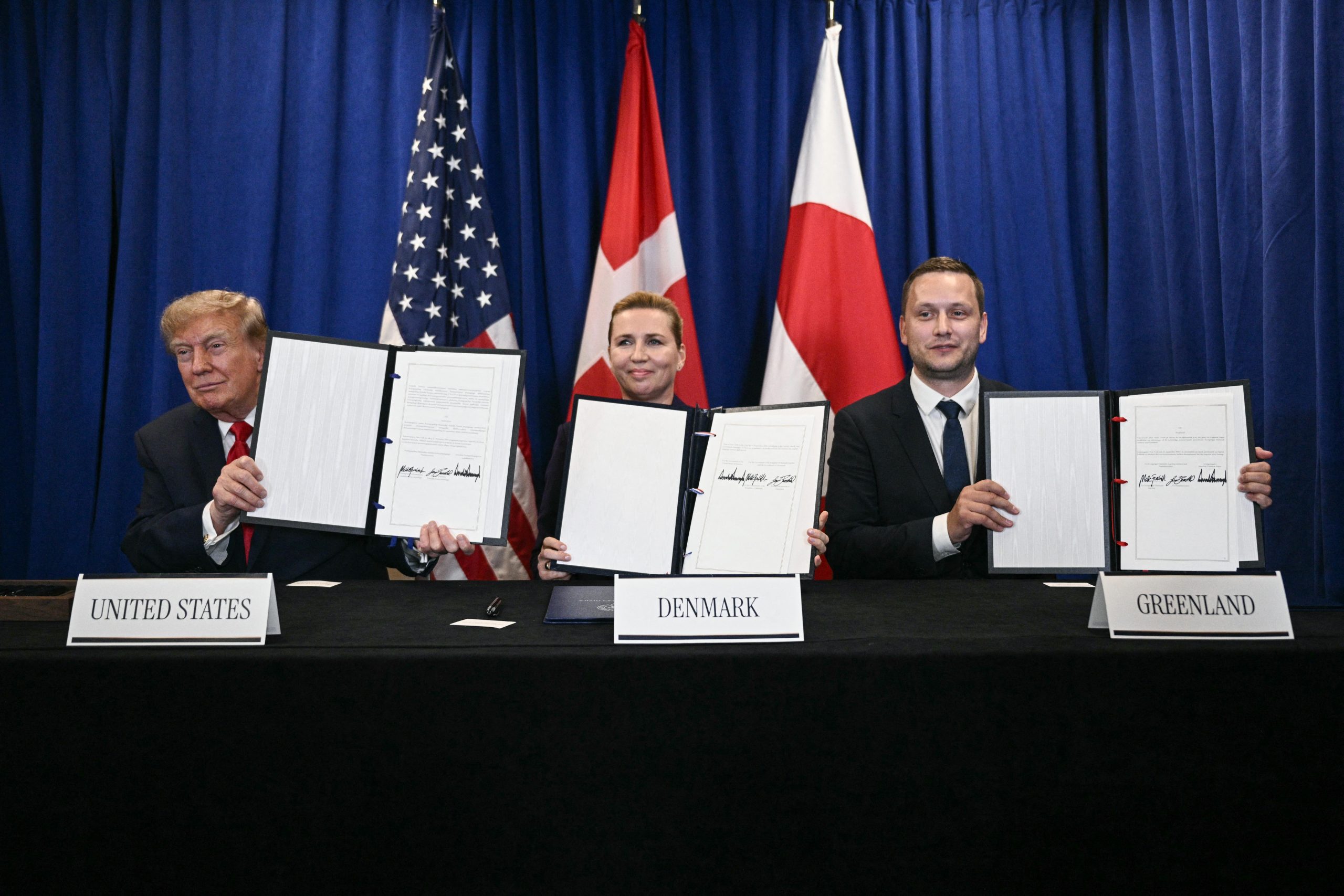
President Donald Trump has concluded a significant diplomatic maneuver, signing a new trilateral security agreement with Denmark and Greenland during his attendance at the 81st United Nations General Assembly in New York City. The accord, reached on September 22, 2026, marks a pivotal moment in the ongoing dialogue concerning an enhanced United States military presence on the strategically vital Arctic island.
This agreement represents a de-escalation and formalization of President Trump’s long-standing interest in Greenland, a campaign that has previously generated considerable international discussion. The negotiations, which have spanned several months, involved intricate discussions between the United States, the Kingdom of Denmark, and its semi-autonomous territory of Greenland. The newly signed pact serves to solidify existing security arrangements and outlines a framework for future cooperation, particularly in bolstering the U.S. military’s operational capabilities in the region.
Strategic Implications in the Arctic
The security deal underscores Greenland’s growing geopolitical significance, situated as it is in the rapidly thawing Arctic. With increased accessibility and potential for new shipping routes, the region has become a focal point for international strategic planning. The expanded U.S. military footprint, as outlined in the agreement, is likely intended to enhance surveillance, response capabilities, and overall security in this increasingly important part of the world. Analysts suggest this move reflects a broader strategy by the Trump administration to assert American influence and maintain a strategic advantage in the Arctic, a region experiencing heightened interest from various global powers.
A Diplomatic Resolution, For Now
The signing of the security agreement at the UN General Assembly provides a diplomatic resolution to the administration’s assertive pursuit of a stronger security relationship with Greenland. While the exact terms of the expanded military presence are not fully detailed in the initial reports, the commitment from all three parties suggests a mutual understanding of the strategic imperatives. This development is being closely watched by other nations with Arctic interests, as it could set precedents for future security collaborations and influence the broader geopolitical landscape of the Arctic region. The agreement, therefore, not only addresses immediate security concerns but also signals a long-term commitment to the strategic importance of Greenland within the U.S.’s foreign policy agenda.
In conclusion, President Trump’s successful negotiation of this security pact with Denmark and Greenland signifies a notable diplomatic achievement. The agreement, formalized amidst global discussions at the UN, aims to strengthen the U.S. military’s role in the Arctic, a region of increasing strategic importance. While the immediate focus is on enhanced security, the long-term implications for regional stability and international relations in the Arctic will undoubtedly be a subject of continued observation and analysis.
SOURCE: Vox
Based on materials: Vox



