
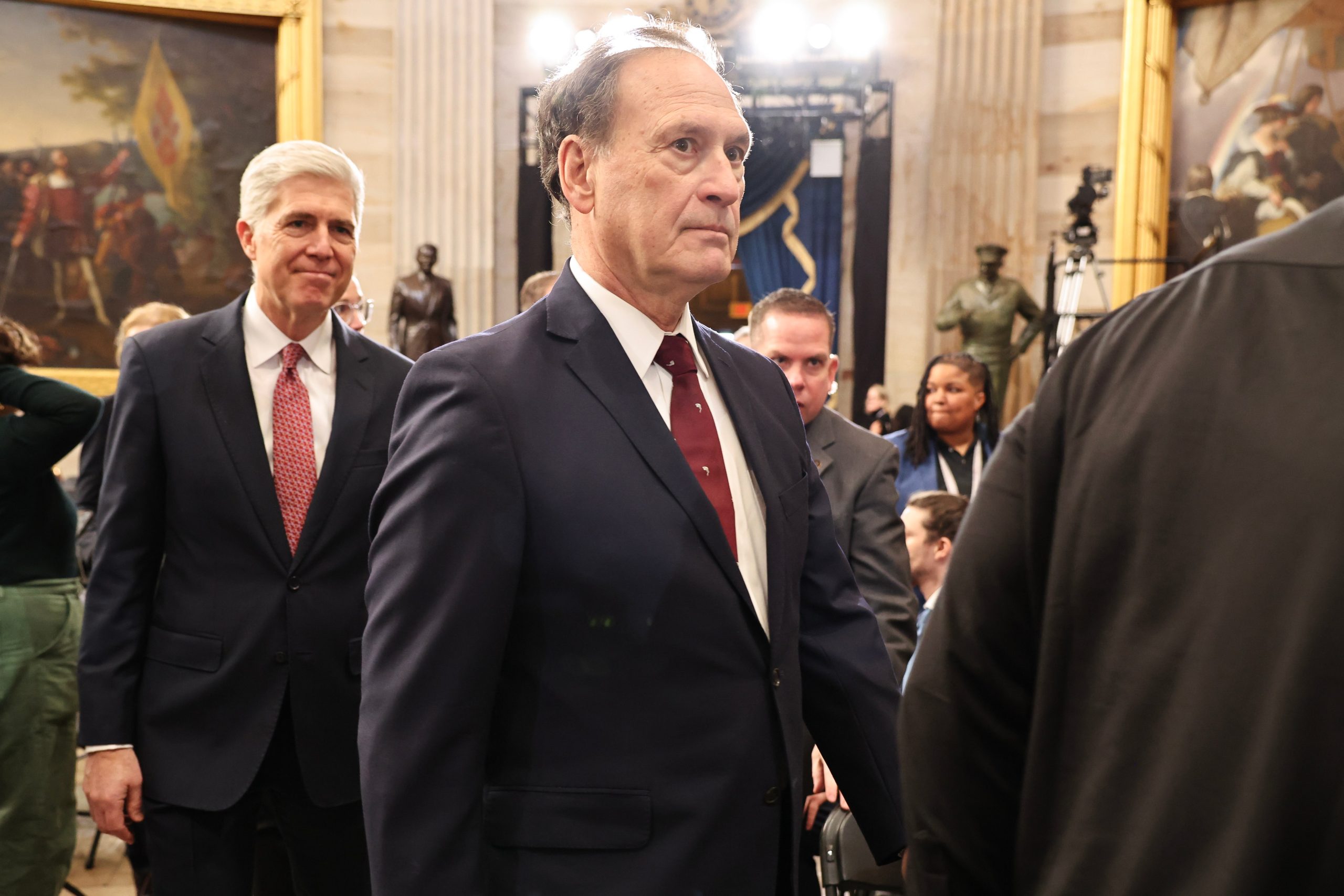
The Supreme Court has delivered a significant blow to Republican redistricting efforts, twice ruling against Missouri’s attempt to implement a newly drawn congressional map for the 2026 elections. This decisive action, however, offers a stark preview of the partisan battles likely to define the court’s future, especially as the composition of federal lower courts continues to shift rightward.
A Clear Message on Gerrymandering
In a series of rulings, the Supreme Court has unequivocally stated that Missouri cannot proceed with its Republican-backed gerrymandered map for the upcoming 2026 congressional elections. The most recent decision, handed down on Friday, echoed an earlier ruling made just two weeks prior, demonstrating a consistent judicial stance against the state’s redistricting plans. Adding to this consensus was Justice Brett Kavanaugh, who, acting independently under a rarely invoked process for cases deemed exceptionally straightforward, also dismissed the gerrymander. This triple rejection underscores the court’s apparent consensus that the proposed map crossed a legal or ethical line.
The significance of these rulings lies not only in their immediate impact on Missouri but also in the broader implications for electoral integrity. Gerrymandering, the practice of manipulating electoral district boundaries to favor one party, has long been a contentious issue in American politics. By intervening so directly and repeatedly, the Supreme Court has sent a clear message that such partisan manipulations, at least in this instance, will not stand.
The Shadow of Partisan Appointments
While the Supreme Court’s recent decisions have offered a temporary reprieve for fair representation, the underlying currents suggest a more complex and potentially partisan future. The article alludes to the lower federal courts being “filled with people who make this guy look like a model of nonpartisan rectitude,” a pointed observation about the ideological leanings of judges appointed in recent years. This statement hints at a broader trend of conservative judicial appointments, particularly during the Trump administration, which has reshaped the landscape of federal judiciary.
The implication is that even if the Supreme Court itself acts with apparent nonpartisanship in specific cases, the lower courts may be predisposed to favor one political ideology. This can lead to a fragmented legal landscape where rulings are inconsistent, and cases are increasingly filtered through a partisan lens. As the current Supreme Court justices age and new appointments are made, there is a growing concern that the court itself will become more overtly partisan, further entrenching political divisions within the judicial branch.
Looking Ahead: A Shifting Legal Terrain
The Missouri gerrymandering case, therefore, serves as a microcosm of larger debates surrounding the judiciary’s role in a polarized America. While the immediate outcome is a win for those advocating for fair electoral practices, the long-term outlook remains uncertain. The continued appointment of judges with strong ideological affiliations, combined with the potential for future Supreme Court vacancies, raises questions about the court’s ability to maintain its perceived impartiality.
As the nation looks towards future elections and legal challenges, the composition and decision-making of the judiciary will undoubtedly be under intense scrutiny. The hope is that the Supreme Court can continue to act as an arbiter of justice, independent of political pressures. However, the current climate suggests that the “next generation” of Republican justices, and indeed judges across the federal system, may well be even more inclined to reflect partisan viewpoints, setting the stage for continued legal and political battles over the very foundation of American democracy.
Based on materials: Vox



