
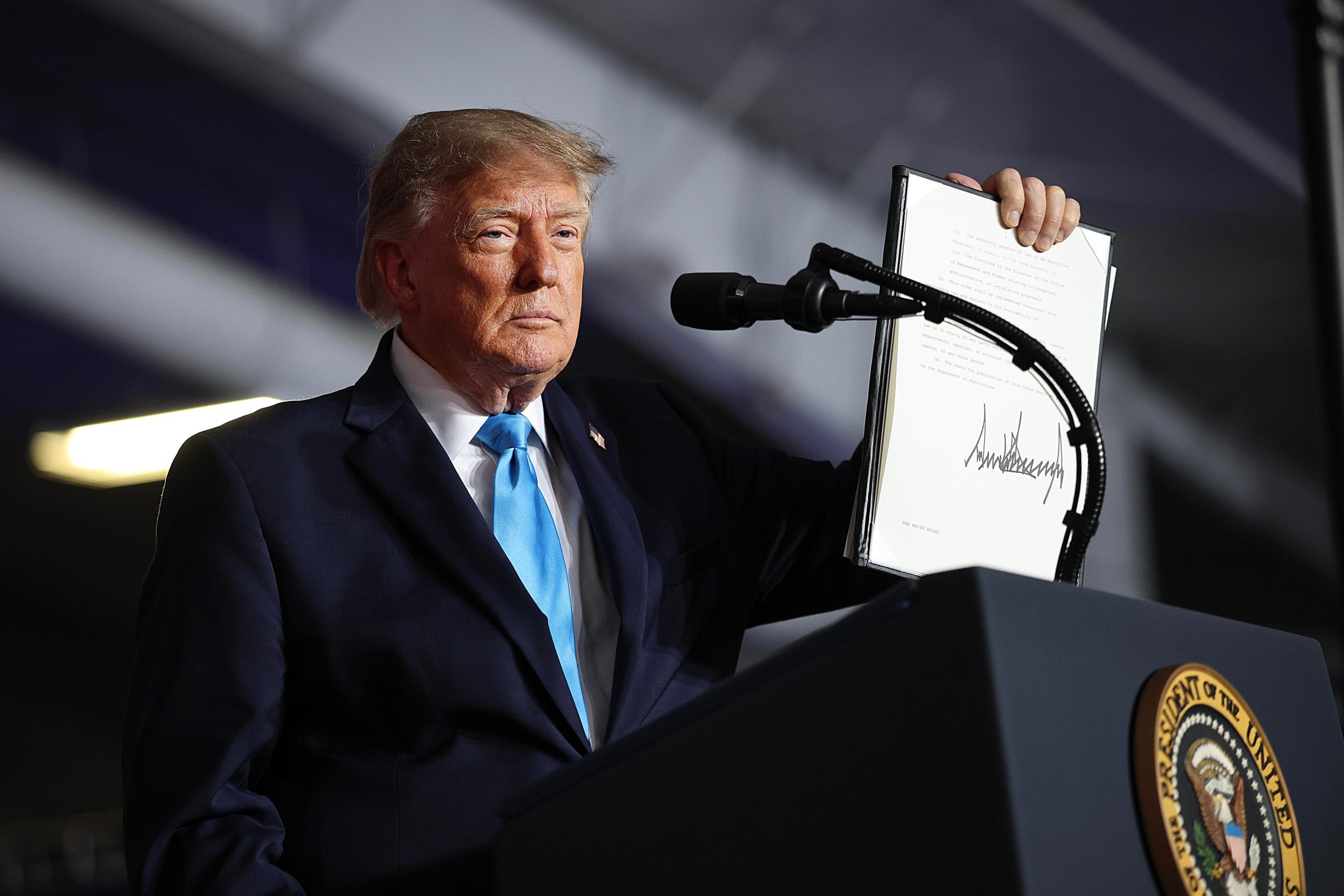
In a move widely seen as a pre-election maneuver, former President Donald Trump has signed an executive order aimed at alleviating rising diesel prices. The order, announced Monday evening, seeks to temporarily expand access to “red-dye diesel,” a fuel typically reserved for agricultural and construction equipment, in an effort to reduce overall fuel costs.
This initiative arrives as the midterm elections loom, prompting questions about the order’s potential impact and its underlying motivations. Red-dye diesel, easily identifiable by its characteristic red tint, is generally exempt from federal road taxes. This tax-free status makes it a cheaper alternative to standard diesel fuel. However, its use is strictly regulated and typically prohibited for vehicles operating on public roads.
Unpacking the Red-Dye Diesel Strategy
The core of Trump’s executive order lies in temporarily loosening these restrictions. By allowing broader access to this tax-advantaged fuel, the administration hopes to inject more affordable diesel into the market, thereby driving down prices for consumers and businesses alike. The rationale is straightforward: increased supply and a cheaper alternative should naturally lead to lower costs at the pump. This could have a significant ripple effect, as diesel powers a substantial portion of the nation’s transportation and logistics, from long-haul trucking to agricultural machinery and construction vehicles. The potential for cost savings is substantial for industries that rely heavily on diesel.
Analysis: Economic Relief or Political Ploy?
Critics, however, are quick to question the long-term efficacy and political timing of this executive order. While the immediate goal is clear – to offer tangible economic relief to voters – the sustainability of such a measure is debatable. Temporarily expanding access to a tax-exempt fuel could create a short-term dip in prices, but it may not address the underlying global factors contributing to high energy costs. Furthermore, altering fuel tax regulations, even temporarily, can introduce complexities and potential unintended consequences for the broader fuel market and tax revenue streams. The decision to implement such a policy just weeks before a critical election cycle naturally invites speculation about its primary purpose: genuine economic intervention or a strategic play to boost voter confidence and support.
Navigating the Road Ahead
The true impact of Trump’s diesel order will become clearer in the coming weeks and months. Will this move provide meaningful, lasting relief at the pump, or will it be a fleeting measure with limited long-term benefits? The administration’s focus on this specific fuel source suggests a targeted approach to a critical economic pain point. However, the broader energy landscape is influenced by a multitude of factors, including global supply and demand, geopolitical events, and domestic production policies. The effectiveness of this executive order will ultimately be judged by its ability to navigate these complexities and deliver on its promise of lower diesel prices without creating new economic challenges.
Based on materials: Vox



