
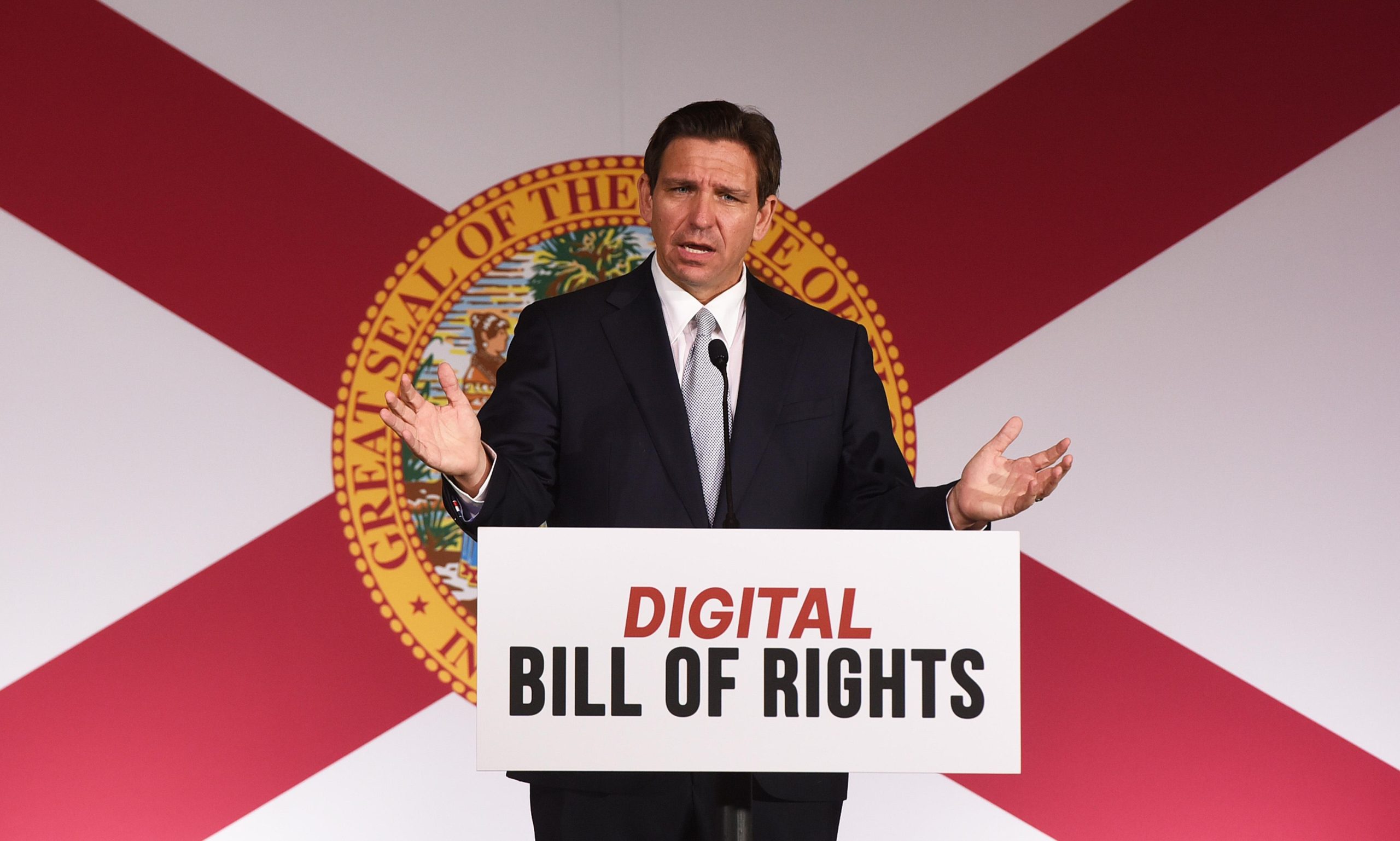
Florida’s Republican Party is charting a decidedly cautious course regarding the burgeoning field of artificial intelligence, a stance that contrasts sharply with former President Donald Trump’s enthusiastic embrace of “super intelligence.” While Trump has positioned the GOP as a champion of AI advancement, a prominent faction within the party, particularly in the Sunshine State, is prioritizing regulation and risk mitigation over unfettered innovation.
At the forefront of this movement is term-limited Florida Governor Ron DeSantis. Throughout his final year in office, DeSantis dedicated significant energy to advocating for an “AI bill of rights.” This legislative push aimed to establish stricter guidelines for AI development and deployment, with a particular focus on safeguarding children and addressing broader societal concerns. DeSantis has publicly voiced strong apprehension about the potential downsides of AI, warning of an “age of darkness and deceit” and criticizing “tech oligarchs” for allegedly jeopardizing public safety. His critique extended to specific AI models, like Anthropic’s, with DeSantis expressing disquiet over explorations into AI consciousness, labeling such endeavors as “very creepy.”
This regulatory-minded approach within Florida’s Republican leadership signals a significant divergence from a more pro-technology, less interventionist stance often associated with conservative politics. Instead of viewing AI as a purely economic or technological boon, these Florida Republicans are framing it as a powerful force that requires careful oversight and ethical consideration. Their concerns echo broader societal anxieties about job displacement, misinformation, and the potential for AI to be exploited for malicious purposes.
The implications of this growing regulatory sentiment within a key segment of the Republican Party could have a profound impact on the future trajectory of AI development and policy in the United States. If this cautious, rights-focused approach gains wider traction, it could lead to a more fragmented regulatory landscape, with states like Florida taking the lead in imposing stricter rules. This might create a complex environment for AI companies, forcing them to navigate a patchwork of differing state-specific regulations. Furthermore, it highlights a growing bipartisan concern about the ethical dimensions of AI, even as the political approaches to addressing these concerns may vary. The debate in Florida underscores that the future of AI is not solely a technological or economic question, but also a deeply political and societal one.
CONCLUSION:
The actions and rhetoric emanating from Florida’s Republican leadership suggest a clear shift in how a significant part of the party views artificial intelligence. Moving beyond a simple embrace of technological progress, figures like Governor DeSantis are championing a vision where AI’s development is tempered by robust regulatory frameworks and a deep consideration for potential societal risks. This approach, while potentially slowing down rapid innovation, prioritizes ethical development and public safety, setting a precedent that could influence national AI policy debates for years to come.
Based on materials: Vox



