
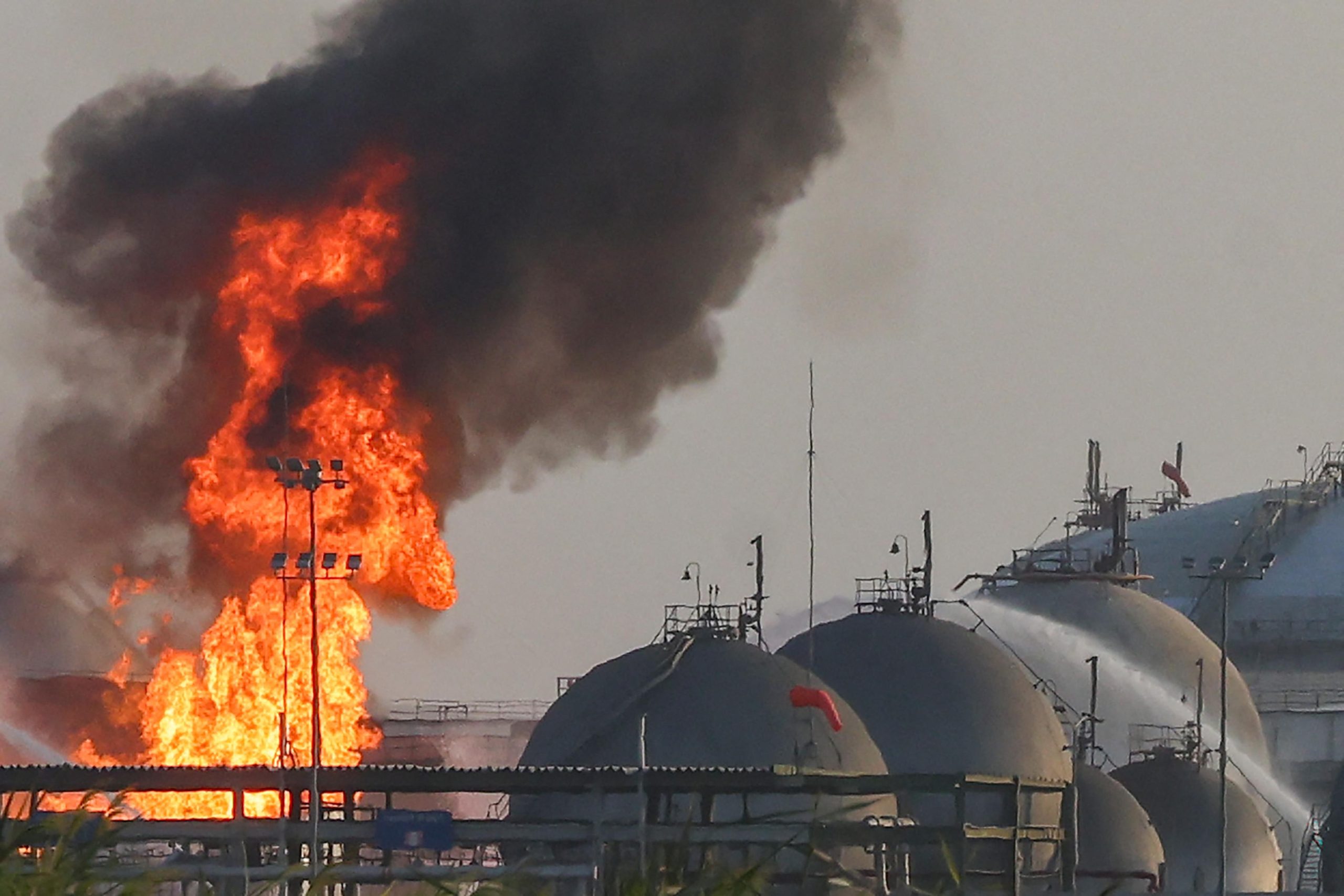
The escalating conflict involving Iran is casting a long shadow over Saudi Arabia’s strategic ambitions, with recent attacks highlighting the region’s precarious security landscape. A devastating strike on Riyadh’s airport, attributed to Yemen’s Iran-backed Houthi militia, marks the most severe assault on the Saudi capital in over a decade, underscoring the widening ripple effects of the ongoing US-Iran war. The attack claimed the lives of at least 13 individuals and left over 300 injured, prompting a swift retaliatory response from Saudi Arabia, including missile strikes on Yemeni oil facilities. This escalation, however, has been met with further Houthi aggression, targeting key Saudi oil infrastructure.
A Resurfaced Regional Conflict
This latest wave of violence signals a significant resurgence of the decade-long confrontation between Saudi Arabia and the Houthis, a powerful political and military entity controlling swathes of northern Yemen. While a 2022 ceasefire had brought a temporary lull to the hostilities, the current resurgence is intrinsically linked to the broader US-Iran war. The Houthis’ affiliation with Iran’s extensive network of proxy groups means that the conflict transcends the immediate Yemeni theater, carrying profound implications for regional stability and international stakeholders, particularly the United States. The attacks are not merely localized skirmishes but are increasingly viewed as calibrated actions within a larger geopolitical chess game, designed to exert pressure and disrupt the economic and strategic interests of Saudi Arabia and its allies.
Economic and Strategic Repercussions
The targeting of Saudi oil infrastructure is a particularly concerning development. For Saudi Arabia, a nation whose economic prosperity and global influence are heavily reliant on its oil exports, these strikes represent a direct assault on its core interests. The disruption of oil production and export capabilities not only impacts Saudi Arabia’s revenue streams but also sends shockwaves through global energy markets, potentially leading to price volatility and supply concerns. This economic vulnerability is compounded by the strategic implications. Saudi Arabia has been actively pursuing an ambitious economic diversification agenda, Vision 2030, aiming to reduce its dependence on oil and position itself as a global investment hub. The persistent threat of regional instability and direct attacks on critical infrastructure can deter foreign investment and undermine the confidence necessary for such large-scale economic transformation.
Geopolitical Fallout and Future Trajectories
The intensifying conflict underscores the complex web of proxy warfare and geopolitical maneuvering in the Middle East. The Houthi attacks, while seemingly originating from Yemen, are widely perceived as a manifestation of Iran’s regional strategy to project power and counter its adversaries. This dynamic poses a significant challenge for the United States, which seeks to maintain regional stability while navigating its complex relationship with both Iran and Saudi Arabia. The ongoing violence could further entrench existing alliances, potentially leading to a more polarized regional landscape. As the US-Iran war continues, the economic and strategic plans of nations like Saudi Arabia remain vulnerable, with the possibility of further escalation and unforeseen consequences shaping the future of the Middle East. The region’s stability hinges on a de-escalation of these proxy conflicts and a renewed focus on diplomatic solutions to address the underlying tensions.
Based on materials: Vox



