
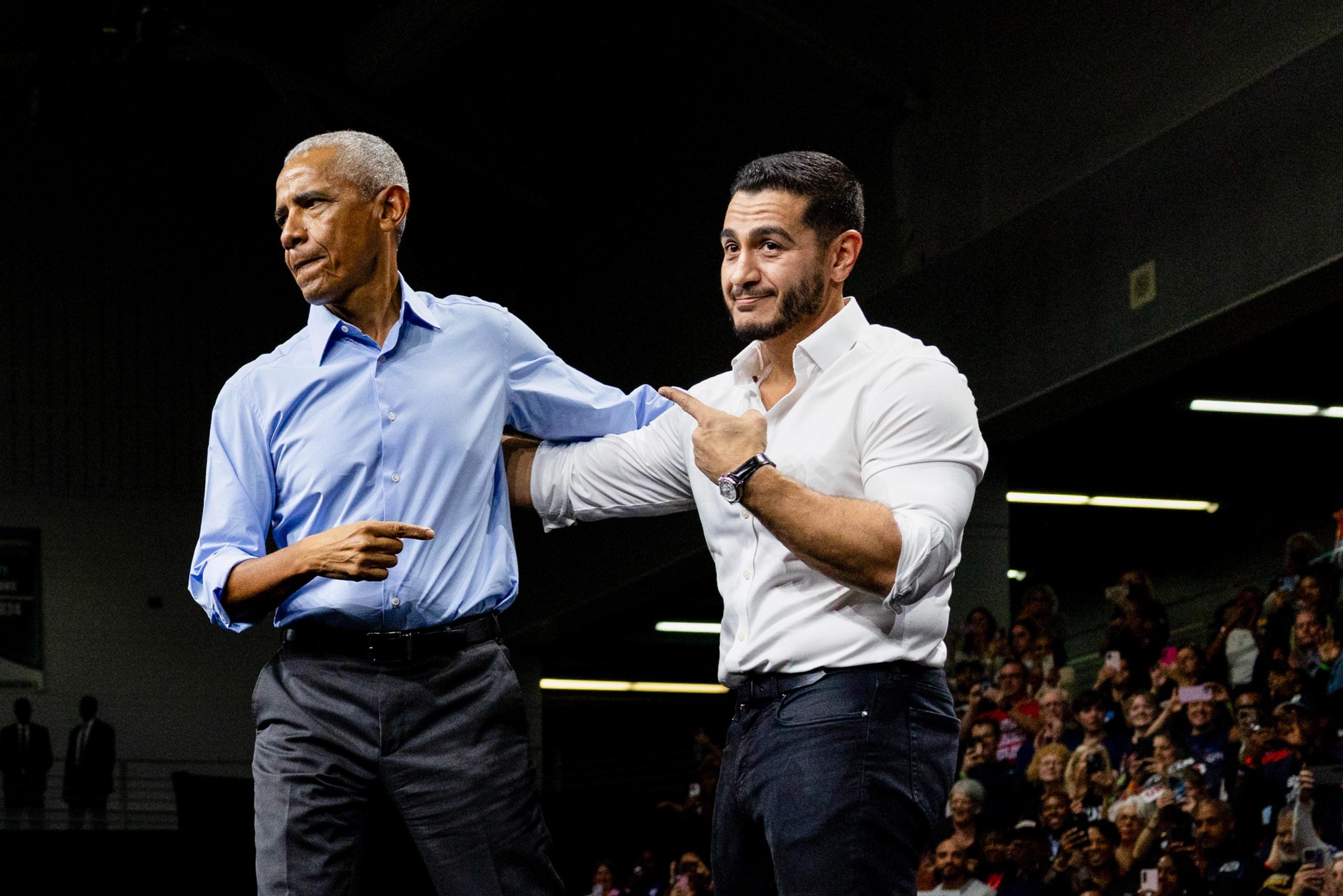
Donald Trump’s midterm campaign trail in Michigan took a sharp turn towards divisive rhetoric this past Sunday, as the former President targeted Democratic Senate candidate Abdul El-Sayed with strong anti-Muslim attacks. Speaking at a rally in Port Huron, Trump painted El-Sayed, a Muslim, as a dangerous figure, suggesting he should be barred from entering the Capitol and warning of dire consequences should he and the Democratic party gain power.
The former President’s remarks came just a day after former President Barack Obama and El-Sayed held a joint campaign event in Detroit, a stark contrast in political messaging. Trump’s speech at the Port Huron rally, however, focused on what he termed El-Sayed’s alleged ties to “jihadists,” a deliberate attempt to stoke fear and prejudice among his supporters. He warned that a Democratic victory would lead to an influx of individuals he characterized as a threat to national security.
A Pattern of Divisive Language
This latest barrage of attacks against El-Sayed is not an isolated incident, but rather appears to be part of a broader strategy by Trump to employ divisive language in his political engagements. Critics argue that by leveraging religious and ethnic stereotypes, Trump aims to mobilize his base through fear and animosity, a tactic that has been a hallmark of his political career. The timing of these remarks, so close to a critical election, intensifies concerns about the impact of such rhetoric on the democratic process and social cohesion. Political analysts suggest that this approach seeks to distract from policy discussions and instead focus voters’ attention on perceived external threats, often amplified through inflammatory language.
The Stakes for Michigan and Beyond
The former President’s choice of Michigan for this particularly charged rhetoric is significant. As a key battleground state, Michigan’s electoral outcomes often play a crucial role in national elections. El-Sayed’s candidacy, representing a progressive voice within the Democratic party and a Muslim American, presents a symbolic target for Trump’s base. The former President’s efforts to characterize El-Sayed as an extremist underscores a larger political narrative that seeks to define certain groups as inherently untrustworthy or dangerous. This strategy not only impacts the specific race but also contributes to the broader national discourse on identity, religion, and political inclusion. The outcome of this election, therefore, carries implications not just for Michigan’s representation but for the tenor of political debate across the country.
Conclusion: A Campaign Defined by Controversy
The rally in Port Huron highlights the increasingly contentious nature of contemporary political campaigning. Donald Trump’s closing message in Michigan, characterized by its aggressive and religiously charged attacks, underscores a willingness to employ divisive tactics in pursuit of electoral advantage. As voters head to the polls, the impact of such rhetoric on their decisions and on the broader political landscape remains a significant point of concern for observers of American politics. The former President’s strategy appears to be one of maximizing polarization, a method that has proven effective for him in the past but also raises questions about the long-term health of democratic discourse.
Based on materials: Vox



