
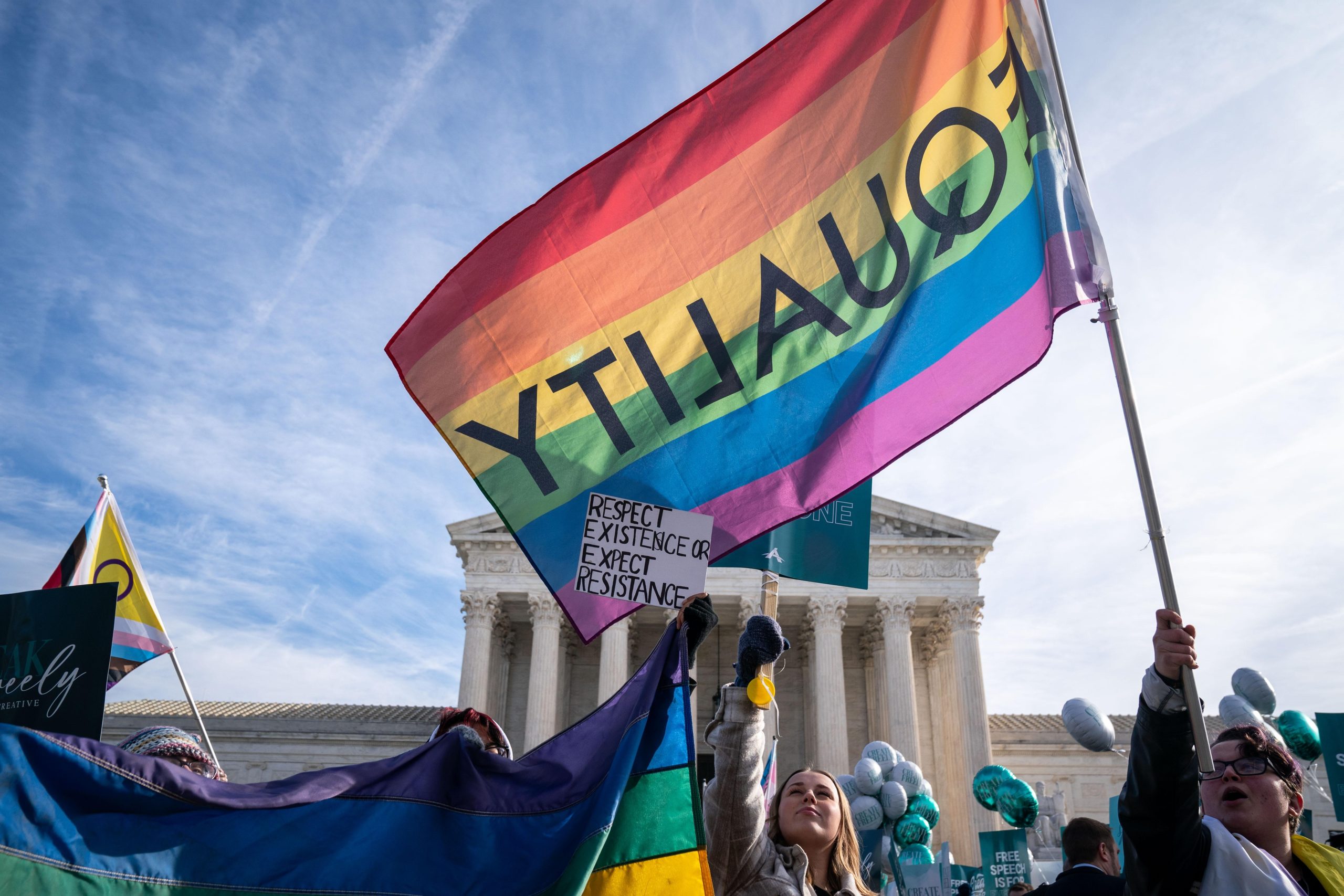
The Supreme Court is set to hear a pivotal case that could redefine the boundaries of religious freedom and civil rights, potentially allowing religious institutions to discriminate against LGBTQ+ individuals. The upcoming hearing in
St. Mary Catholic Parrish v. Roy
on November 3rd brings to the forefront a long-simmering tension between constitutional protections for religious practice and laws prohibiting discrimination.
For years, the nation’s highest court has grappled with whether religious conservatives can sidestep anti-discrimination statutes. While the Court’s conservative majority has often sided with businesses and organizations that refuse service to gay and transgender people, these rulings have frequently employed specific, case-by-case reasoning. This approach has allowed for victories for religious conservatives without definitively settling the broader legal question: do individuals with anti-LGBTQ+ religious beliefs possess an unfettered right to disregard civil rights laws?
St. Mary Catholic Parrish v. Roy
promises to address this head-on.
The Core of the Legal Battle
At the heart of the
St. Mary Catholic Parrish
case is the question of whether religious schools can, under the Constitution, discriminate based on sexual orientation or gender identity. This case presents a more direct challenge than previous ones, moving beyond whether a business can refuse service to a potential conflict involving employment within a religious institution. The implications are significant, as a ruling in favor of the religious school could establish a broad precedent that allows religious organizations to claim exemptions from secular anti-discrimination laws, even in contexts that are not purely ministerial.
Critics argue that such a ruling could have far-reaching consequences, potentially impacting not only employment but also access to education and other services provided by religious institutions. They contend that this could effectively create a loophole for discrimination, undermining decades of progress in LGBTQ+ rights. The concern is that taxpayers, through various forms of indirect support or tax exemptions for religious institutions, could end up indirectly funding entities that actively discriminate.
Balancing Religious Freedom and Civil Rights
Legal scholars and civil rights advocates are closely watching this case, recognizing its potential to reshape the legal landscape for LGBTQ+ individuals. The outcome will hinge on how the Court interprets the Free Exercise Clause of the First Amendment and balances it against the Equal Protection Clause. The plaintiff in the case, represented by the Jackpackers, argues that religious schools should have the autonomy to hire and fire staff in accordance with their religious tenets, even if those tenets conflict with non-discrimination laws. Conversely, the defendants argue that such discrimination violates their fundamental right to equal protection under the law.
The Supreme Court’s decision in
St. Mary Catholic Parrish v. Roy
will undoubtedly be a landmark one, setting a critical precedent for the future of religious exemptions and civil rights in the United States. The nation awaits the Court’s determination on whether religious freedom can be used as a shield for discrimination, and what the ultimate cost might be for those seeking equal treatment under the law.
SOURCE: Vox
Based on materials: Vox



