
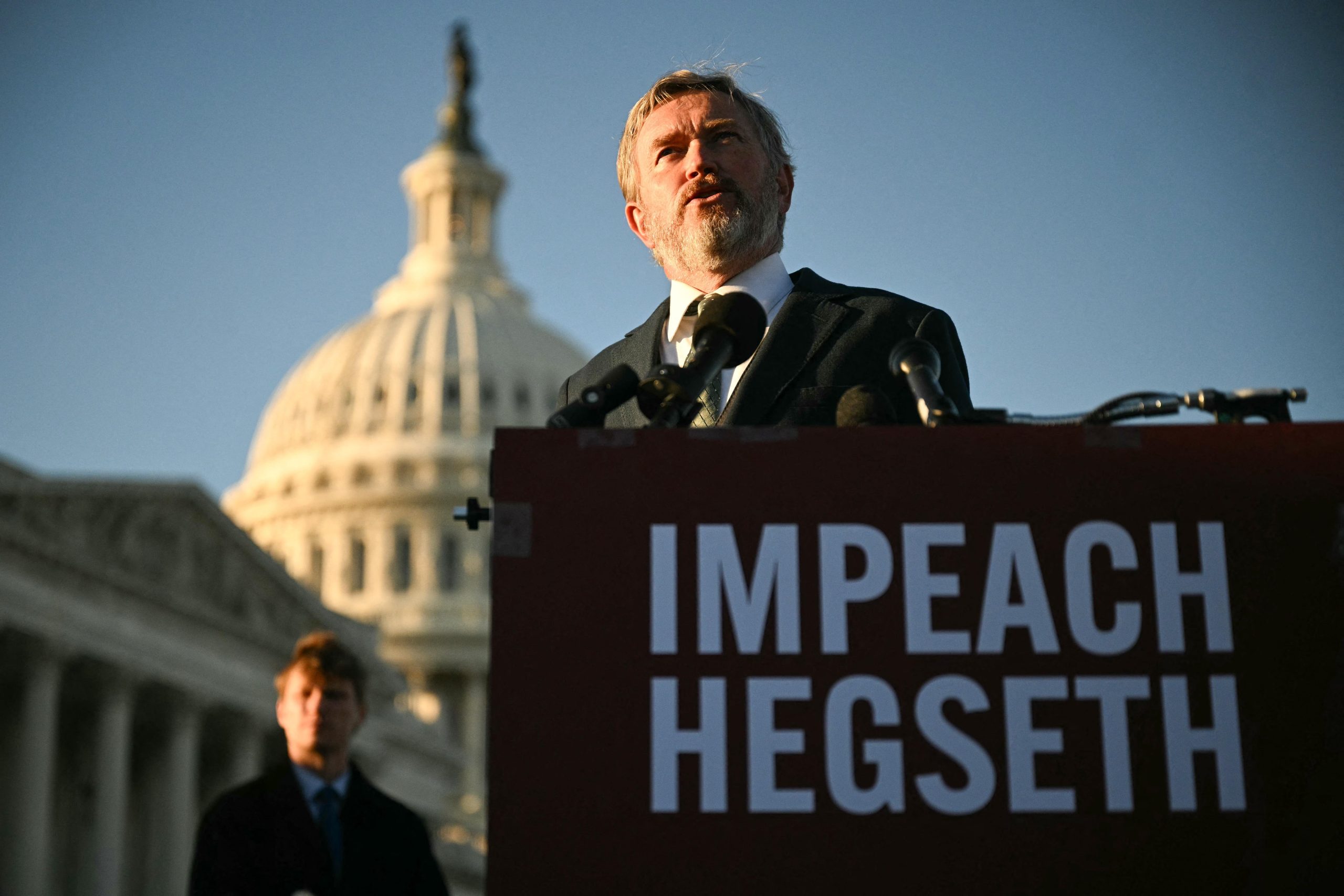
Washington D.C. – Defense Secretary Pete Hegseth is facing a significant political challenge as Republican Representative Thomas Massie has introduced eight articles of impeachment against the Pentagon chief. This move could potentially make Hegseth only the third Cabinet member in U.S. history to be impeached, a stark indication of the deep divisions and scrutiny surrounding the current administration’s foreign policy decisions.
The articles of impeachment, which broadly accuse Hegseth of “high crimes and misdemeanors,” delve into a range of controversial actions taken during his tenure. A central focus of these accusations centers on Hegseth’s conduct concerning the Iran war, specifically allegations of engaging in military operations without the constitutionally mandated authorization from Congress. This particular charge taps into a long-standing debate about the executive branch’s war-making powers and the role of legislative oversight.
Beyond the Iran conflict, the impeachment articles also cite Hegseth’s directive of military strikes against vessels identified as carrying suspected drug traffickers in both the Caribbean and Pacific regions. Further accusations include the suppression of free speech, the alleged kidnapping of former Venezuelan President Nicolás Maduro, and the initiation of what is described as unlawful warfare in Yemen. These diverse charges highlight a broad spectrum of concerns raised by Representative Massie and his supporters regarding the Defense Secretary’s leadership and decision-making on the global stage.
The speed at which these articles are progressing through the House of Representatives underscores the urgency and political momentum behind this impeachment effort. A procedural vote is scheduled for Tuesday evening, signaling a swift advancement of the process. This rapid development means that the House will soon be compelled to deliberate and vote on the articles, potentially setting the stage for a historic impeachment trial in the Senate. The outcome will not only impact Hegseth’s career but could also set precedents for future executive actions and congressional accountability in matters of national security and foreign intervention.
The implications of such an impeachment extend far beyond the immediate political theater. It raises critical questions about the balance of power between the executive and legislative branches, particularly in the realm of foreign policy and military engagement. The accusations of waging war without congressional approval and conducting operations deemed unlawful by some members of Congress are particularly resonant, echoing historical debates about presidential overreach. As the House prepares to vote, the nation will be watching closely to see how these profound issues of governance and accountability will be addressed. The potential impeachment of Secretary Hegseth serves as a potent reminder of the checks and balances inherent in the American system of government and the intense scrutiny that accompanies high-level public service.
Based on materials: Vox



