
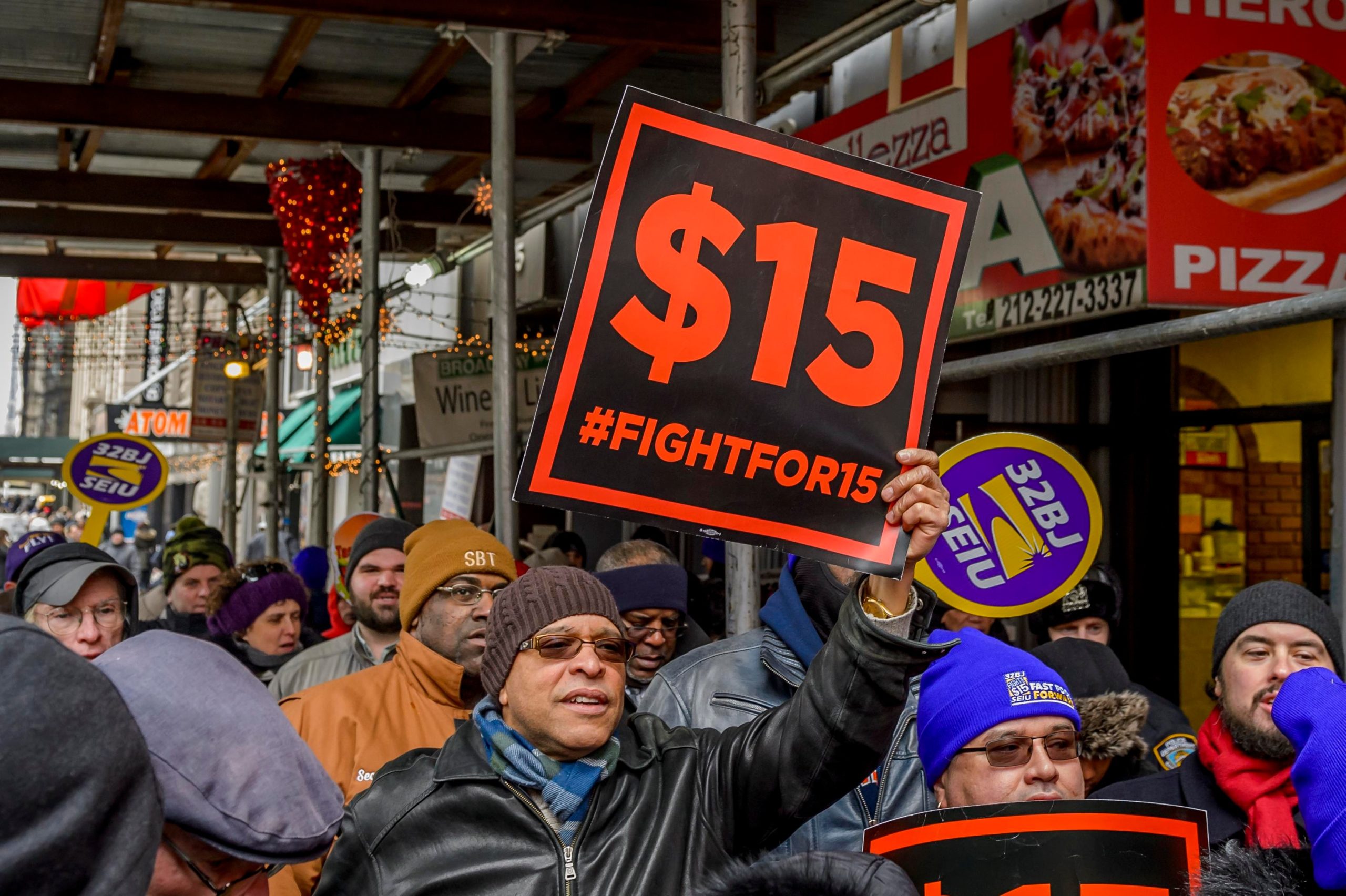
The Democratic Party is facing a pivotal economic question following their midterm election victories: how high should the federal minimum wage climb, and how quickly? With control of both the House and Senate secured, a chorus of politicians and activists is urging Congress to capitalize on the momentum and enact the first federal minimum wage increase in 17 years. This push comes as Democrats aim to address escalating living costs, a central theme of their recent campaigns.
The “Living Wage” Mandate Takes Center Stage
For years, the “Fight for 15” movement has advocated for a $15 per hour minimum wage. Now, with a renewed mandate on affordability, Democrats and their allies see raising the current federal minimum of $7.25 per hour to a level that truly supports basic needs – rent, food, and healthcare – as a logical next step. The argument is that a full-time worker earning the minimum wage should be able to cover essential expenses without constant financial strain. This focus on a “living wage” seeks to directly address the economic pressures faced by millions of American workers.
The political calculus of a minimum wage increase is also a significant factor. Unlike direct government spending programs, the burden of a higher minimum wage falls primarily on businesses. This characteristic makes it an attractive policy option for lawmakers concerned about the national deficit, as it doesn’t directly impact government spending. Furthermore, proponents argue that a higher minimum wage can stimulate the economy by putting more disposable income into the hands of low-wage workers, who are more likely to spend it immediately on goods and services.
Economic Implications and Business Concerns
The debate over the minimum wage is not without its complexities and potential economic repercussions. Businesses, particularly small businesses operating on thin margins, often express concerns about the impact of significant wage increases. They argue that higher labor costs could lead to reduced hiring, increased prices for consumers, or even business closures. Economists are divided on the extent of these effects, with some studies suggesting minimal negative impacts while others point to potential job losses and inflation.
The speed of implementation also plays a crucial role. A gradual increase allows businesses more time to adjust their budgets, pricing strategies, and staffing levels. Conversely, a rapid jump could create more immediate challenges. Policymakers are therefore grappling with finding a balance that supports workers without unduly harming businesses and the broader economy. The discussion is likely to involve intense negotiations and a deep dive into economic data to inform the final decision.
Looking Ahead: A Defining Economic Battle
As Democrats prepare to take the reins, the minimum wage debate is shaping up to be a defining economic battle of their new majority. The outcome will have a tangible impact on the financial well-being of millions of American workers and will test the party’s ability to deliver on its promises of economic relief. The coming year will likely see significant debate and deliberation as lawmakers weigh the competing interests of workers, businesses, and the overall health of the U.S. economy. The question of “how high” and “how fast” will be central to shaping the future of work and economic fairness in America.
Based on materials: Vox



