
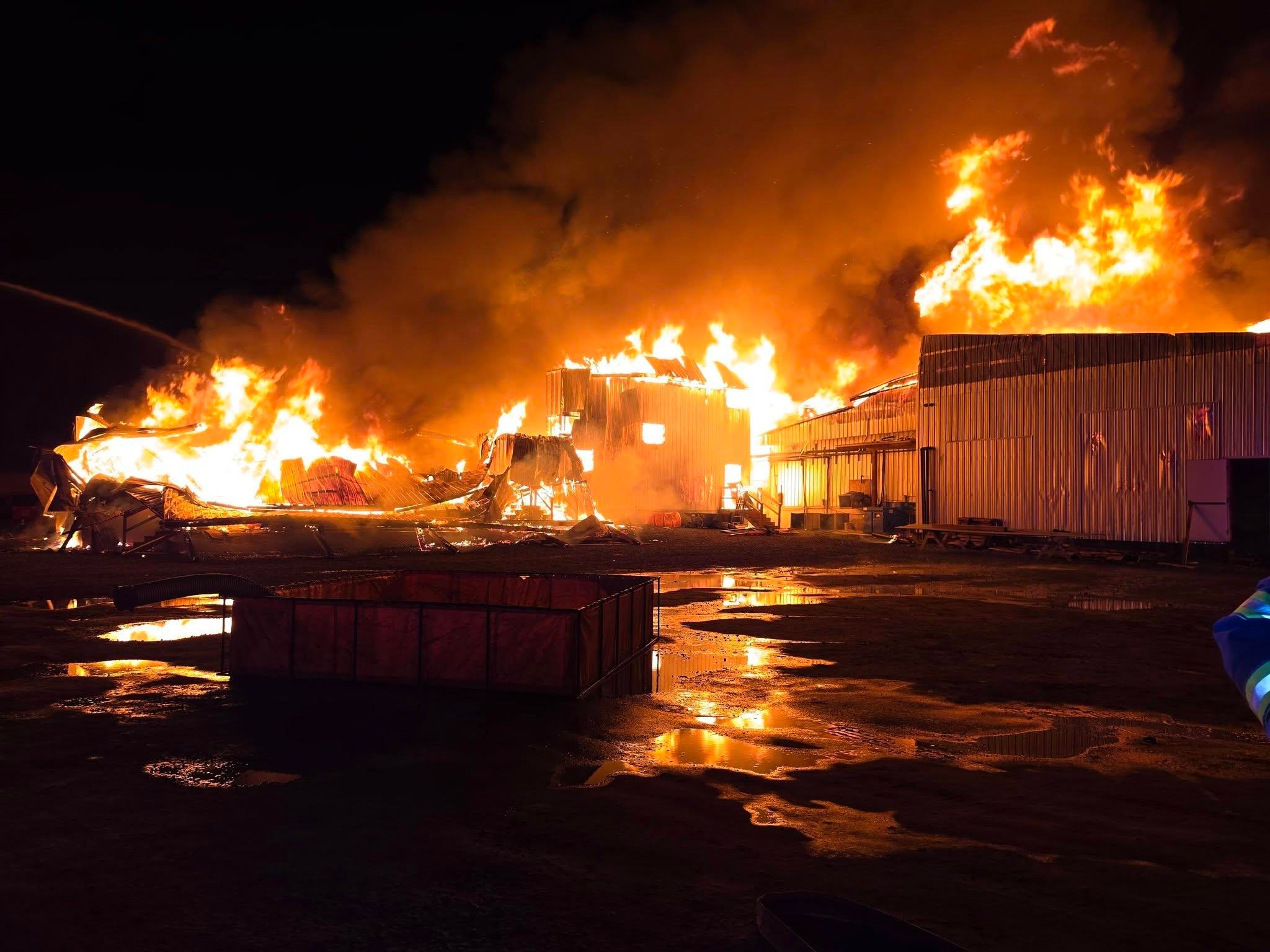
A catastrophic fire has ravaged multiple barns at Hudson Valley Foie Gras, the nation’s largest producer of the controversial delicacy. The blaze, which erupted in the early hours of Thursday morning in upstate New York, has raised questions about the fate of thousands of birds and the future of the company’s operations.
Devastating Blaze at a Controversial Producer
The fire, reported by the Monticello Fire Department, consumed several structures on the Hudson Valley Foie Gras premises. While the exact number of casualties among the young ducks and geese remains undetermined, fire officials noted the rapid spread of the flames made intervention impossible. “The fire took off so fast, there was no way to get inside to stop the spread,” stated Charlie Kalinowski, chief of the Smallwood/Mongaup Valley Fire Department, in comments to Radio Catskill. The incident drew a massive response, with approximately 200 first responders from 37 fire departments battling the inferno. Thankfully, no human injuries were reported.
Hudson Valley Foie Gras is the leading American producer of foie gras, a dish derived from the enlarged liver of a duck or goose, often produced through a process known as gavage, or force-feeding. This method has long been a focal point of animal welfare debates, with critics condemning it as inhumane. The company has faced significant opposition from animal rights organizations over the years, making this incident a flashpoint for further discussion on the ethical implications of its production methods.
Uncertainty Amidst the Ashes
The scale of the destruction is significant, with commercial duck farms typically housing thousands of birds, some facilities exceeding 10,000 animals per barn. The loss of multiple barns means a substantial impact on the company’s breeding and production capacity. While hundreds of young birds reportedly survived, the full extent of the loss will likely become clearer in the coming days as assessments are completed. The incident raises immediate concerns about animal welfare and the logistical challenges of managing a large-scale agricultural operation in the aftermath of such a disaster.
The economic implications for Hudson Valley Foie Gras are also considerable. As the largest producer, any disruption to their operations could have ripple effects throughout the niche market for foie gras. The company has been a prominent player in the industry, navigating a landscape marked by both culinary appreciation and ethical scrutiny. This fire adds a new layer of complexity to their ongoing challenges.
A Lingering Debate
This unfortunate event thrusts the contentious topic of foie gras production back into the spotlight. For years, animal rights groups have campaigned against the practice, highlighting the welfare concerns associated with gavage. The destruction of the farms, while a tragedy for the business and the animals involved, may also reignite debates about the sustainability and ethics of this particular food industry. As the company grapples with the aftermath, the broader conversation about animal agriculture and consumer choices is likely to continue.
Based on materials: Vox



