
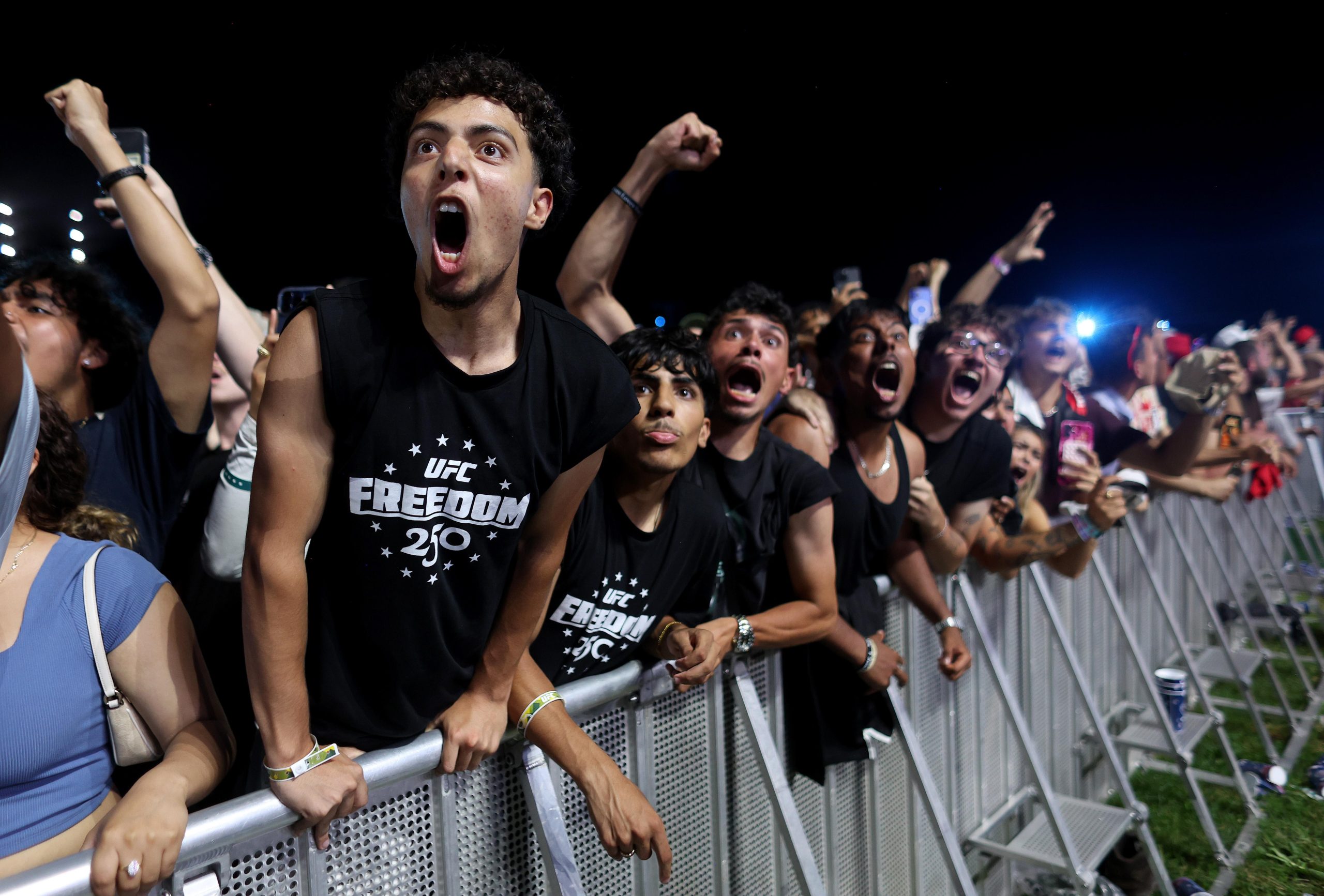
President Donald Trump’s political standing appears to be experiencing a significant downturn, with a notable decline in approval among demographics that were once crucial to his electoral success. While Trump secured a narrow victory over Vice President Kamala Harris among men under 30 in the 2024 election – a slim margin but a positive sign for Republicans historically challenged with young voters – his support within this same demographic has now dramatically eroded. Recent polling indicates a staggering 55-point deficit in approval for Trump among this key age group.
To better understand this evolving political landscape, an examination of the underlying shifts in sentiment among young men is warranted. The recent UFC Freedom 250 Fan Fest held on the White House’s South Lawn on June 14, 2026, presented a unique opportunity to gauge the pulse of this demographic. The event itself seemed intentionally curated to foster a direct connection between the White House and young men, a strategy perhaps amplified by President Trump’s known affinity for combat sports like the UFC.
Shifting Sentiments and Evolving Priorities
The core question emerging from this trend is what factors are contributing to this noticeable departure from previous support. For a cohort that previously showed a willingness to engage with Trump’s platform, a significant reevaluation appears to be underway. This shift suggests that the initial appeal, which may have been rooted in specific policy promises, a sense of disruption, or a perceived alignment with certain cultural values, is no longer resonating as strongly.
Several potential explanations are emerging. Economic anxieties, the evolving social and cultural landscape, and the broader political discourse are all likely playing a role. For young men who may have previously felt overlooked or disenfranchised, Trump’s populist message might have initially offered a compelling alternative. However, as their own life experiences and perspectives mature, their priorities and expectations from political leadership may also be changing. The focus might be shifting from broad promises to tangible policy outcomes, or perhaps a greater emphasis on social issues and inclusivity.
The Impact of Cultural Cues and Political Messaging
Furthermore, the cultural signals and political messaging emanating from the Trump campaign and its supporters could be contributing to this alienation. The “MAGA” hats, once a potent symbol of a particular political movement, may now be perceived differently by a younger generation that is increasingly attuned to issues of social justice and identity. The confluence of political rhetoric and cultural symbols can create a powerful narrative, and it appears that this narrative is no longer uniformly appealing to young men.
The UFC event, while intended to connect with this demographic, also highlighted the potential disconnect. While the sport itself might hold some appeal, the broader political context and the specific audience in attendance may not fully represent the diverse opinions and evolving priorities of all young men. This suggests that a one-size-fits-all approach to engaging with this demographic is increasingly insufficient. Political strategies will need to be more nuanced, adaptive, and reflective of the complex motivations and concerns of this crucial voting bloc.
In conclusion, the decline in President Trump’s approval among young men is a significant development with potential ramifications for future elections. This trend underscores the dynamic nature of political allegiances and the importance of understanding the evolving priorities of key demographics. As young men continue to shape their own perspectives, political campaigns will need to adapt their strategies to effectively connect with their concerns and aspirations, moving beyond past appeals to address the contemporary challenges and opportunities they face.
Based on materials: Vox



