
The Supreme Court, often seen as the ultimate arbiter of American law, is facing a profound challenge: an apparent inability to articulate a clear and consistent vision of the Constitution. As the nation approaches its 250th anniversary, the highest court in the land is grappling with a fractured understanding of its foundational document, a situation that mirrors the broader political discourse and raises serious questions about the future of constitutional interpretation.
The Priesthood of Law and the Silence of the Gods
The legal profession, much like religious orders, often operates through interpretation. Lawyers and theologians alike delve into sacred texts – be it the Bible, the Quran, the Gita, or the U.S. Constitution – seeking meaning within established commentaries. This deeply ingrained practice, however, can lead to a peculiar predicament when the interpreters themselves seem to lose sight of the divine. The author draws a striking parallel between the spiritual and the legal, suggesting that when the “gods” of constitutional law falter, their supplicants are left adrift.
This sentiment is particularly relevant as the Supreme Court concludes a recent term marked by what is described as a “bizarrely haphazard celebration” of America’s upcoming milestone. The court’s struggles to present a unified and coherent interpretation of the Constitution are not occurring in a vacuum. They are happening against a backdrop of a nation grappling with its identity and its founding principles. The implication is that when the court, the supposed guardian of these principles, appears to be adrift, it exacerbates existing societal divisions and uncertainties.
A Fractured Foundation: Beyond Trump’s Pool
The analogy extends to the perceived struggles of former President Donald Trump to maintain the National Mall’s reflecting pool during the nation’s anniversary preparations. While seemingly an unrelated detail, it serves as a potent metaphor for a broader theme of decay and difficulty in maintaining foundational structures. Just as a neglected pool detracts from the grandeur of a national monument, a fractured and unclear constitutional interpretation by the Supreme Court undermines the very bedrock of American governance.
The article suggests that the court is “no less” struggling than the former president in his task. This bold assertion underscores the gravity of the situation, implying that the court’s foundational role in maintaining legal and constitutional order is currently as compromised as the physical upkeep of a national landmark. The power wielded by the Supreme Court is immense, making its inability to provide consistent guidance on constitutional matters a significant concern for the stability and predictability of American law. This lack of clarity can have far-reaching consequences, impacting everything from individual rights to the balance of power between government branches.
The Erosion of Authority and the Path Forward
The implications of the Supreme Court’s struggle for clarity are profound. When the institution tasked with interpreting the nation’s highest law cannot speak with a unified voice, it erodes public trust and can lead to increased legal uncertainty. This can embolden partisan interpretations and make it harder for citizens and legal professionals alike to understand their rights and obligations. The article doesn’t offer solutions, but the critique itself serves as a call to attention. The legal profession, and the court itself, must find ways to move beyond fragmented interpretations and re-establish a coherent and accessible understanding of the Constitution, ensuring its continued relevance and authority in a rapidly evolving nation.
SOURCE INFORMATION:
TITLE: The Supreme Court can no longer explain itself
DESCRIPTION: The legal profession is much like a priesthood; both lawyers and theologians interpret a central text, be it the Bible, the Quran, the Gita, or the Constitution. We bury ourselves in canonical commentaries on that text. And we are all supplicants to beings much more powerful than ourselves. Which explains why I’ve spent the past […]
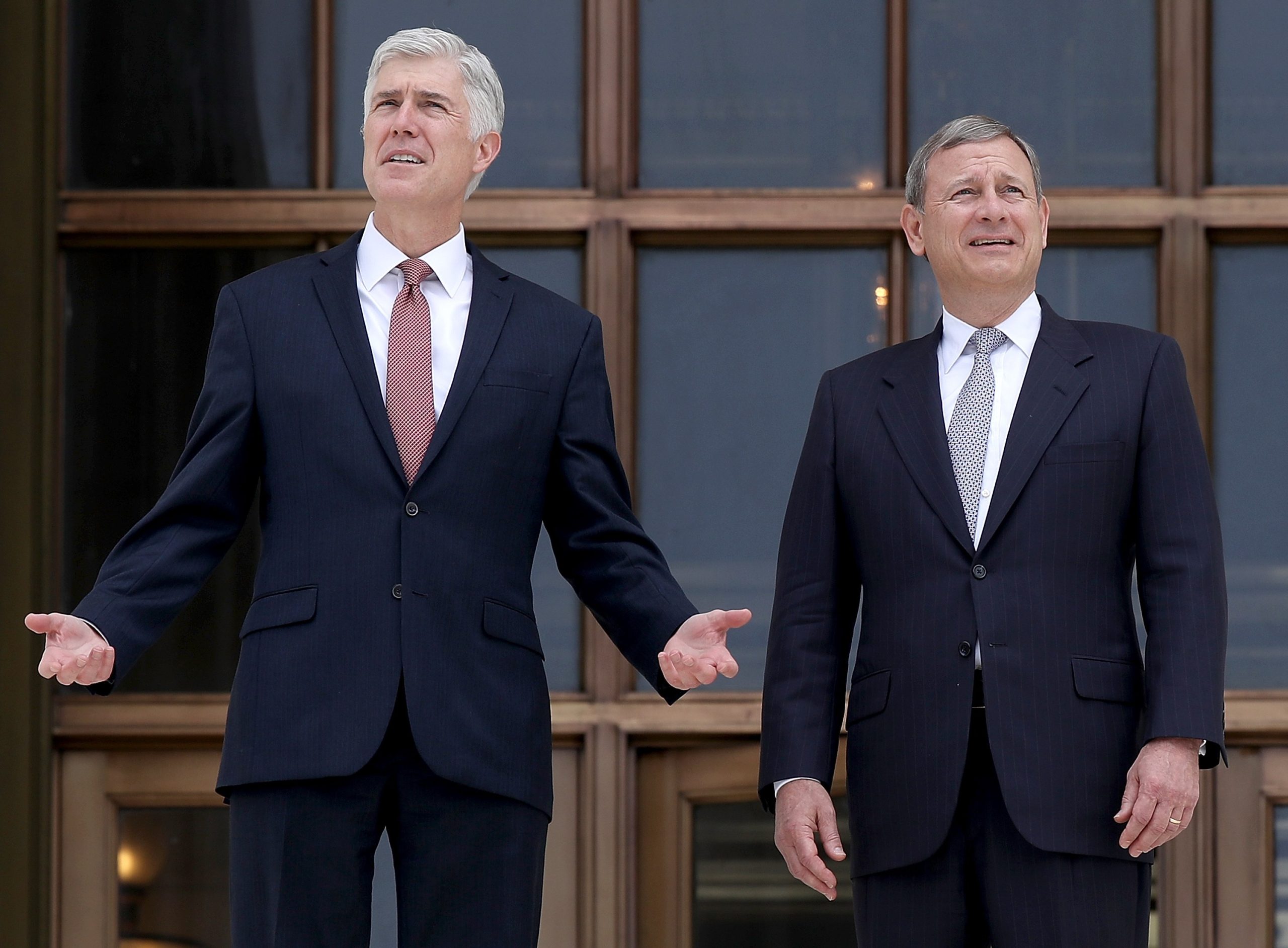
CONTENT: Supreme Court Justice Neil Gorsuch (L) talks with Chief Justice John Roberts (R) on the steps of the Supreme Court following his official investiture at the Supreme Court June 15, 2017 in Washington, DC. | Win McNamee/Getty Images The legal profession is much like a priesthood; both lawyers and theologians interpret a central text, be it the Bible, the Quran, the Gita, or the Constitution. We bury ourselves in canonical commentaries on that text. And we are all supplicants to beings much more powerful than ourselves. Which explains why I’ve spent the past few years contemplating what happens when God goes mad. The Supreme Court wrapped up its most recent term during a bizarrely haphazard celebration of the United States’ 250th birthday. And it has struggled to articulate a coherent vision of the Constitution no less than President Donald Trump has struggled to keep the National Mall’s reflecting pool clear during that celebration. The Court isn’t just the most powerful institut
SOURCE: Vox
Based on materials: Vox



