
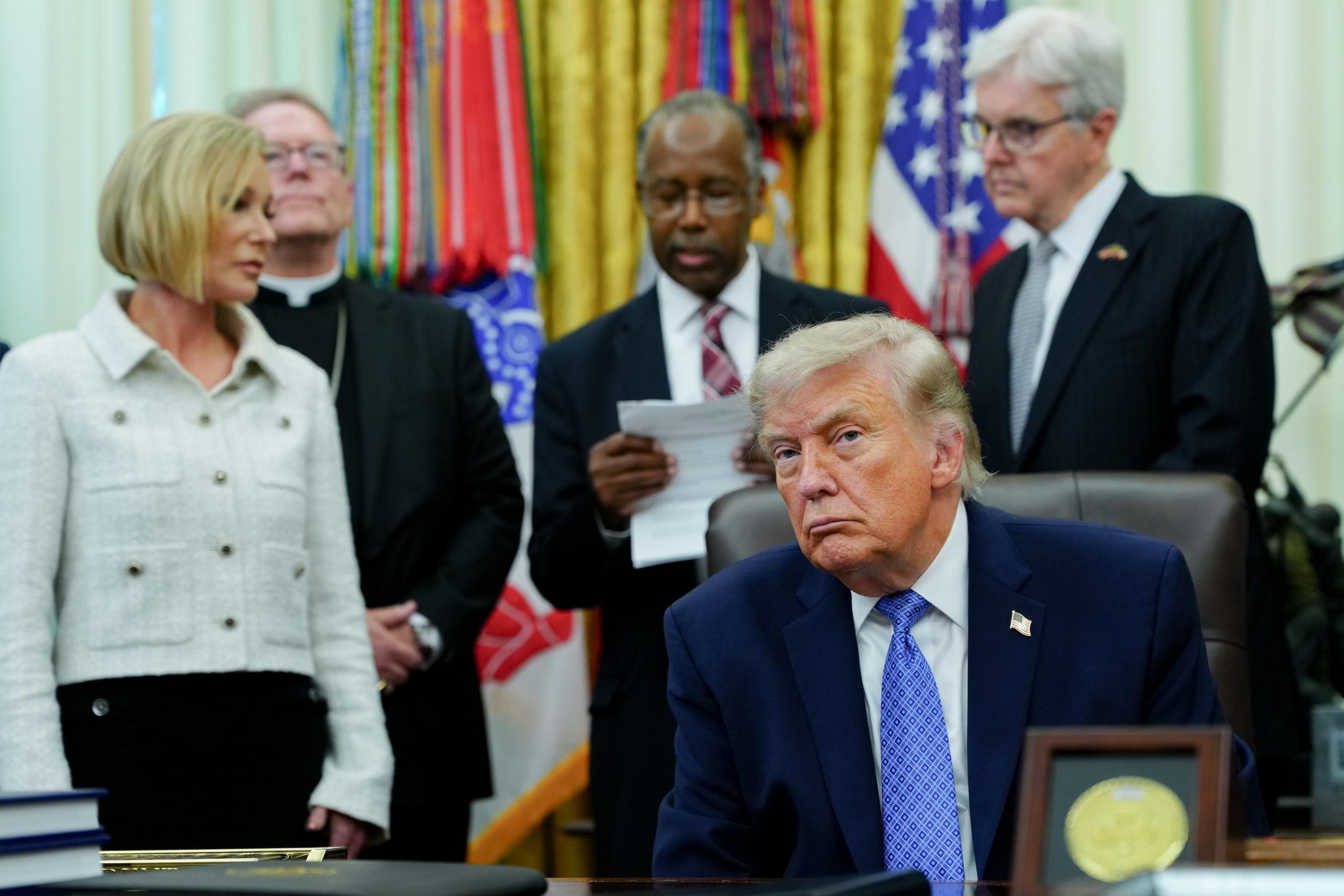
The Trump administration has embarked on a significant redefinition of religious freedom, drawing upon a historical narrative that diverges sharply from the nation’s founding realities. This strategic reinterpretation aims to align with a contemporary vision of religious liberty, one that increasingly emphasizes the rights of specific religious groups and their integration into public life.
A Nation of Founders, A Different Landscape
When the United States was in its nascent stages, the religious tapestry of the colonies was vastly different from the diverse “marketplace of ideas” that characterizes America today. Mainline Protestant denominations, including Anglicans, Presbyterians, Congregationalists, Puritans, Quakers, and Lutherans, were the dominant forces. Protestant Christianity was deeply intertwined with the fabric of public life. Discussions around religious liberty at that time primarily concerned how these various Protestant factions could coexist without resorting to oppression or violence. The presence of Catholics and Jewish people was minimal, and the concept of religious pluralism as we understand it was largely absent. This historical context, often selectively invoked, forms the bedrock of the administration’s evolving stance on religious freedom.
Shifting Interpretations and Modern Implications
The current administration’s approach appears to extend beyond the historical protection of minority faiths or the separation of church and state. Instead, it leans towards a framework where religious expression is actively promoted and protected in the public square, often favoring particular interpretations of religious practice. This shift has been evident in policy decisions and public statements, suggesting a move towards greater accommodation of religious observances in areas traditionally seen as secular. Critics argue that this redefinition risks marginalizing those with differing beliefs or no religious affiliation, potentially creating a less inclusive society. The emphasis on certain religious freedoms, while seemingly aimed at empowerment, could inadvertently lead to a narrowing of what constitutes acceptable religious practice in the public sphere.
The Administration’s Vision and Future Considerations
By leveraging a curated historical perspective, the Trump White House is actively shaping the discourse around religious freedom. This strategy aims to resonate with a segment of the population that feels their religious values are under threat or not adequately represented in public life. The administration’s focus on religious liberty, as articulated through its actions and pronouncements, suggests a desire to embed faith-based considerations more deeply into policy and societal norms. As this reinterpretation takes hold, ongoing scrutiny will be crucial to assess its long-term impact on the pluralistic nature of American society and the delicate balance between religious freedom and the rights of all citizens. The debate over religious liberty is far from settled, and the administration’s efforts to redefine its contours will undoubtedly continue to be a focal point of political and social discussion.
Based on materials: Vox



