
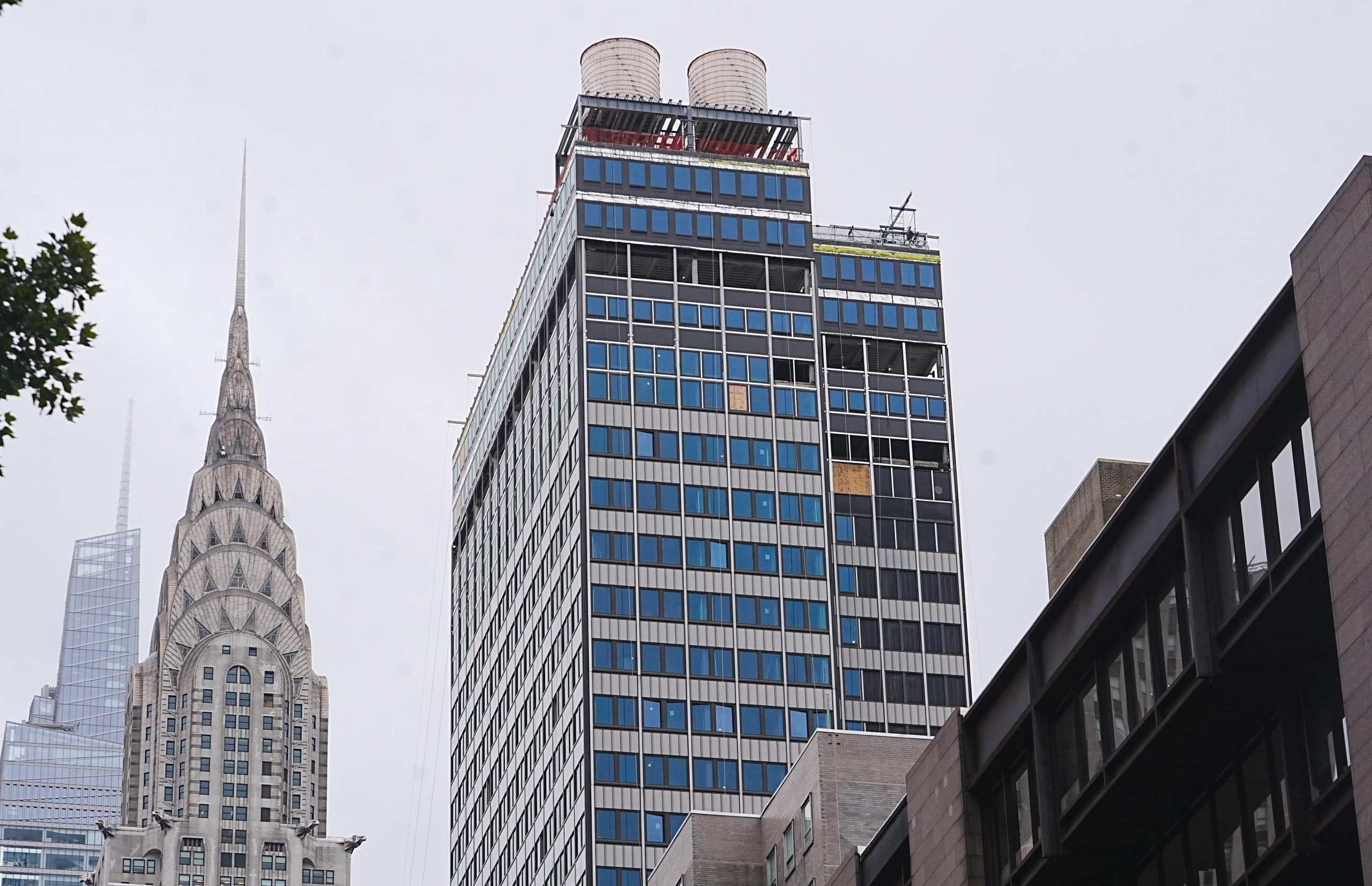
New York City’s skyline, a symbol of ambition and urban density, is currently grappling with a stark visual metaphor for a broader national dilemma: the complex challenges of converting obsolete office towers into much-needed housing. A recent incident involving the sagging upper floors of the former Pfizer building in Midtown Manhattan, where steel beams reportedly began to bend, has drawn public attention and underscored the difficulties inherent in this seemingly straightforward solution to the nation’s housing crisis.
The sight of the teetering skyscraper, cordoned off by police barricades as onlookers gawked, serves as a potent reminder that transforming vast, empty office spaces into residential units is far from a simple feat. For years, the idea of repurposing these often underutilized commercial buildings into apartments has been touted as a common-sense approach to address a dual crisis: a surplus of vacant office space exacerbated by the pandemic-induced shift to remote work, and a critical shortage of affordable homes. Yet, the reality on the ground is proving to be significantly more intricate.
The Promise and Perils of Conversion
The appeal of converting office towers into residential units is undeniable. In cities like New York, where real estate is at a premium, maximizing the utility of existing structures seems like a logical and potentially lucrative endeavor. Proponents argue that these conversions can inject new life into commercial districts, create vibrant mixed-use neighborhoods, and crucially, expand housing stock without the extensive land acquisition and lengthy construction timelines associated with new builds. However, the structural and financial hurdles are substantial. Older office buildings often lack the necessary infrastructure, such as plumbing and ventilation systems suitable for residential living, and the sheer scale of renovation required can be prohibitively expensive. Furthermore, zoning regulations and the complexities of building codes designed for commercial use present additional layers of difficulty.
A Broader Economic Context
The incident in Midtown is more than just a localized construction mishap; it’s a symptom of larger economic shifts impacting urban centers across America. As businesses continue to embrace hybrid or fully remote work models, the demand for traditional office space has dwindled, leading to record vacancy rates in many metropolitan areas. This economic pressure is forcing property owners and city planners to reconsider the future of these iconic structures. While conversions offer a potential lifeline, the financial viability of such projects remains a significant question mark. The cost of retrofitting these buildings, combined with the potential for lower per-square-foot rental income compared to newly constructed residential buildings, can make these conversions a risky proposition for investors.
Lessons for the Future
The challenges faced by the former Pfizer building serve as a critical cautionary tale for urban development strategies nationwide. While the urgency to address the housing shortage is paramount, a one-size-fits-all approach to converting office towers may not be feasible or sustainable. Successful conversions often require significant public-private partnerships, streamlined regulatory processes, and careful consideration of the specific architectural and economic characteristics of each building. As cities grapple with the evolving landscape of work and living, the lessons learned from these ambitious — and sometimes precarious — conversion projects will be crucial in shaping the future of urban housing and the very fabric of our cityscapes.
SOURCE: Vox
Based on materials: Vox



