
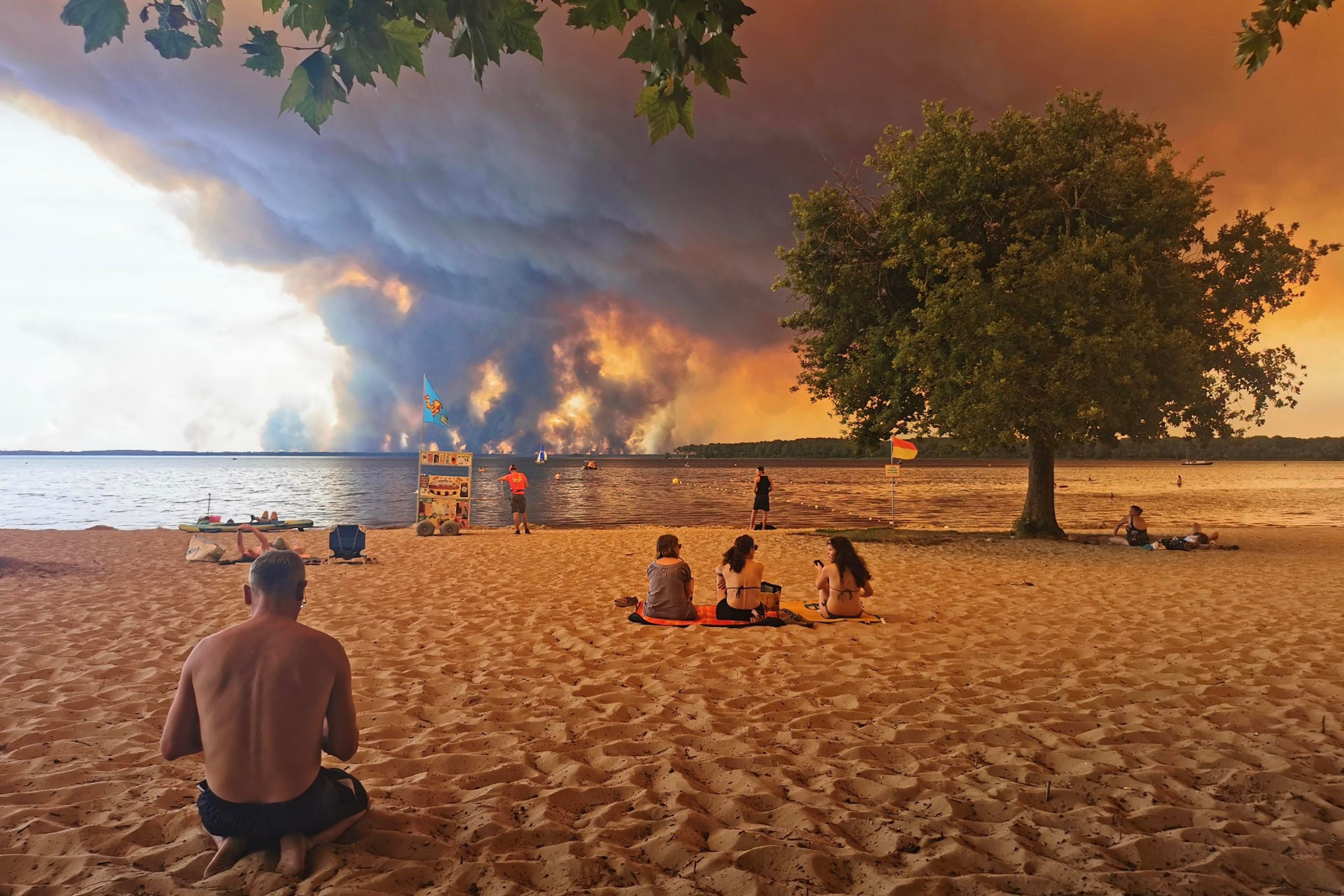
Europe is grappling with an unprecedented climate crisis, experiencing warming at double the global average. This alarming trend is manifesting in devastating wildfires, extreme heatwaves, and widespread evacuations, painting a stark picture of a continent on the front lines of climate change.
Record-Breaking Heat and Wildfires Grip the Continent
Recent weeks have seen France and Spain battling some of the largest wildfires in their modern history. These infernos, fueled by scorching temperatures exceeding 100 degrees Fahrenheit, have forced the evacuation of hundreds of thousands of residents. In southwestern France, near Bordeaux, over 250,000 people have been displaced. Meanwhile, in Spain, approximately 100,000 residents have been ordered to relocate as fires rage through rural and wooded areas west of Madrid. This isn’t an isolated incident; the narrative of record-breaking heatwaves and intensifying fire seasons has become a disturbingly familiar refrain across the globe, but the intensity in Europe is particularly acute.
The Scientific Context: A Warming Hotspot
Scientists have long warned that certain regions of the world are more susceptible to the impacts of climate change than others. Europe, due to its specific geographical and atmospheric conditions, is proving to be a significant hotspot. The accelerated warming rate in Europe is a complex phenomenon, influenced by factors such as the reduction in Arctic sea ice, which alters atmospheric circulation patterns, and the continent’s proximity to the Arctic. This amplified warming not only exacerbates heatwaves but also creates drier conditions, making landscapes more vulnerable to ignition and the rapid spread of wildfires. The current events serve as a stark, real-time illustration of these scientific predictions.
Beyond the Flames: A Wider Impact
The immediate threat of wildfires is only one facet of Europe’s climate challenge. The relentless heatwaves are placing immense strain on infrastructure, agriculture, and public health. Water resources are dwindling, impacting everything from farming to daily life. The economic repercussions are substantial, with significant costs associated with firefighting, disaster relief, and the long-term recovery efforts. Furthermore, the psychological toll on communities forced to flee their homes and the uncertainty surrounding future living conditions are profound social issues. As Europe experiences this amplified warming, the urgency for robust climate adaptation and mitigation strategies becomes increasingly apparent. The continent’s experience is a critical warning for the rest of the world about the localized and intensified impacts of a warming planet.
Conclusion: A Call for Urgent Action
The escalating climate crisis in Europe is a wake-up call. The “déjà vu” of ever-worsening extreme weather events is a symptom of a planet in distress. As Europe confronts these unprecedented challenges, the need for immediate and decisive global action on climate change cannot be overstated. Investing in renewable energy, implementing sustainable land management practices, and developing resilient infrastructure are no longer optional but essential steps to safeguard communities and ecosystems from the escalating impacts of a warming world.
Based on materials: Vox



