
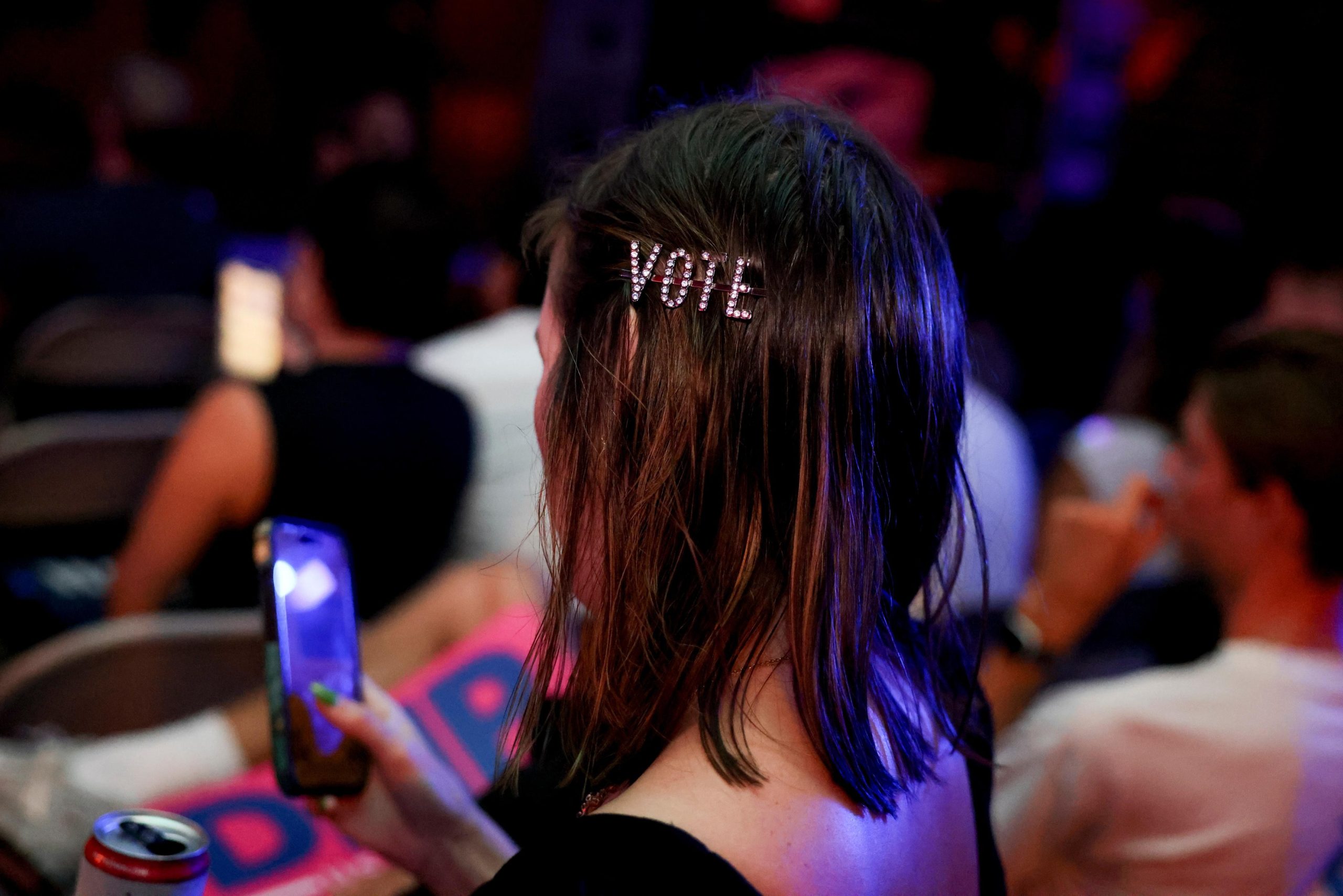
As Donald Trump prepares to step away from the national political spotlight after 2028, the future direction of American politics remains a significant question mark. However, one demographic poised to wield considerable influence is Generation Z. Many of whom were mere children when Trump first entered the political arena, this cohort will undoubtedly play a crucial role in shaping what comes next. Yet, the precise contours of their political leanings and the path they will forge are less certain.
A recent collaboration between Vox and the polling firm Murmuration has shed some light on this evolving electorate, revealing a generation that defies easy categorization. A striking finding from the Murmuration survey indicates a high degree of political independence among Gen Z. Nearly 30 percent of respondents opted for “none of the above” when asked to identify their political label, suggesting a departure from traditional party affiliations. This aversion to strict ideological boxes hints at a more nuanced and perhaps pragmatic approach to political engagement.
Furthermore, the economic realities faced by Gen Z are a significant factor shaping their worldview. The Murmuration data points to a cohort grappling with economic insecurity, with only 28 percent of respondents expressing confidence in their financial future. This vulnerability, likely exacerbated by factors such as student loan debt, rising housing costs, and a competitive job market, could translate into a political agenda focused on economic stability and opportunity. Their policy priorities may lean towards solutions that address systemic inequalities and provide greater financial security for young adults navigating a complex economic landscape.
The implications of Gen Z’s independent streak and economic concerns are far-reaching. As they mature into their electoral power, their influence could lead to a significant realignment of political discourse and policy priorities. Traditional partisan divides may become less relevant as Gen Z seeks out candidates and platforms that offer tangible solutions to their pressing challenges, regardless of party affiliation. This could foster a more issue-driven political environment, where pragmatic problem-solving takes precedence over ideological purity. Understanding and engaging with these emerging political sentiments will be critical for any party or candidate looking to connect with this influential demographic in the years to come.
The departure of a figure like Donald Trump from the forefront of politics creates a vacuum, but it also presents an opportunity for new voices and perspectives to emerge. Gen Z, with its distinct experiences and evolving political identity, is well-positioned to fill that void and redefine the political conversation. Their journey beyond traditional labels and their focus on economic realities will undoubtedly be a defining narrative in the unfolding political future of the United States.
Based on materials: Vox



