
The rising tide of Christian nationalism is prompting urgent calls from within religious communities for a proactive defense of democratic values. Religion scholar Robert P. Jones, author of a recent book, draws a stark parallel between contemporary America and 1933 Germany, a pivotal year that saw the erosion of democracy and the rise of Nazi ideology. Jones argues that the groundwork for such a shift is being laid, and that the complicity or silence of some Christians in the face of encroaching nationalist sentiment is deeply concerning.
This alarming comparison, while unsettling, is rooted in Jones’s extensive study of religion and its intersection with political power. He points to the historical role of certain Christian figures in both resisting and enabling oppressive regimes. The reference to Martin Niemöller, a German Lutheran pastor who initially resisted Nazi rule before being imprisoned, serves as a poignant reminder of the courage required to stand against authoritarianism. However, Jones’s concern lies not just with the potential for overt authoritarianism, but with the subtler ways in which religious identity can be co-opted to serve nationalist agendas, potentially undermining the very principles of pluralism and equality that many faiths espouse.
A Call for Faithful Resistance
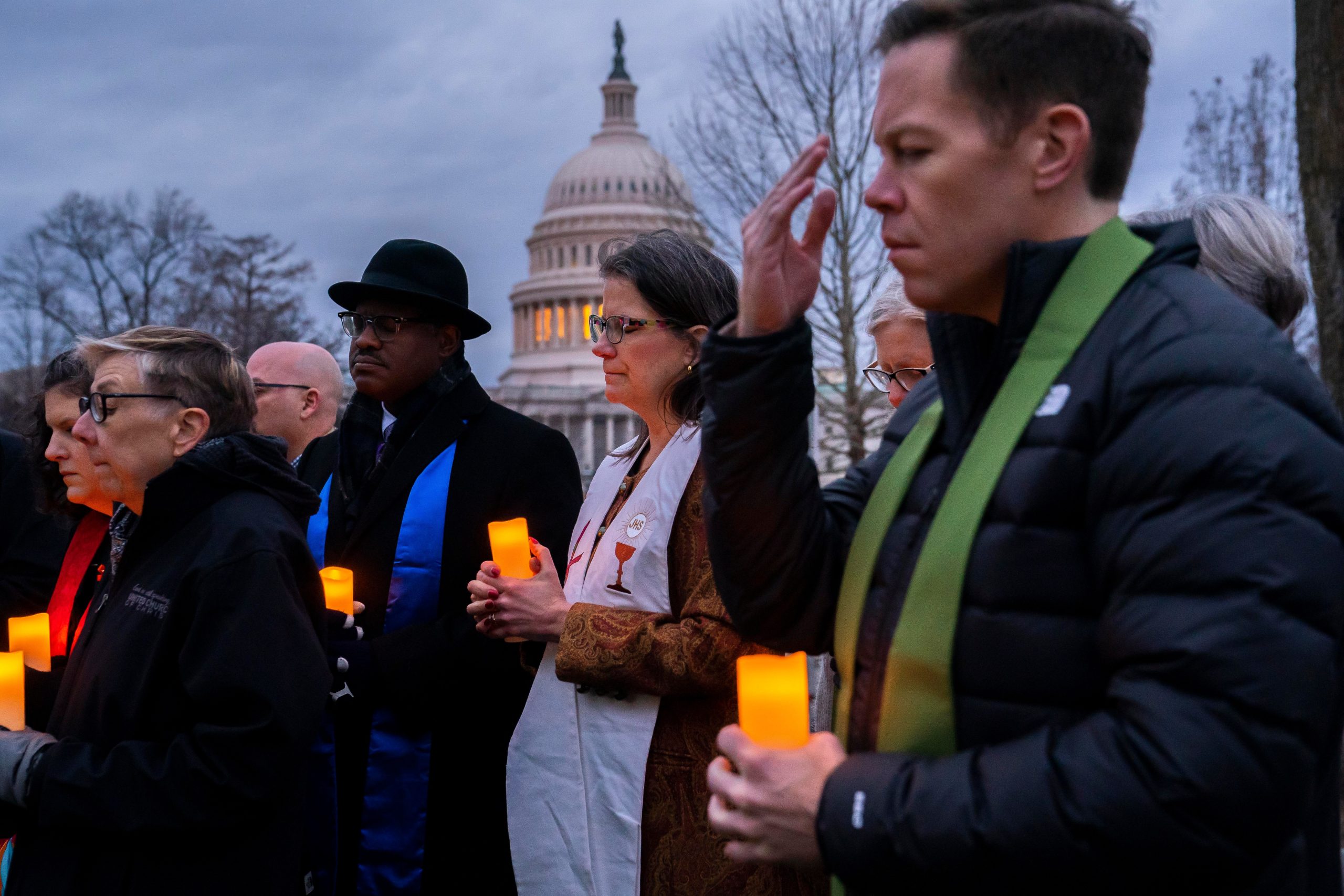
In response to these concerns, a growing movement of faith leaders and concerned Christians is emerging. Recent events, such as a prayer vigil held on the second anniversary of the January 6th Capitol attack, highlight a deliberate effort to reclaim the narrative and distance Christian identity from nationalist ideologies. Speakers at such gatherings have unequivocally denounced political violence and called for an end to the conflation of Christian faith with a specific political agenda. This burgeoning resistance emphasizes that true Christian values, as understood by many, are antithetical to the exclusivity, xenophobia, and authoritarian tendencies often associated with Christian nationalism.
These faith-based initiatives are not merely symbolic. They represent a strategic effort to engage congregations, educate members about the dangers of nationalism, and foster a renewed commitment to civic engagement that upholds democratic principles. By drawing on theological traditions that champion justice, compassion, and the inherent dignity of all individuals, these leaders aim to provide an alternative vision for Christian involvement in public life—one that is inclusive and restorative, rather than divisive and exclusionary. The goal is to empower individuals to recognize and resist the seductive allure of nationalist rhetoric when it masqueraves as religious truth.
Reclaiming Faith’s True Promise
The debate surrounding Christian nationalism is not just a political one; it is a deeply theological and moral struggle for the soul of both faith and nation. Jones and the growing chorus of dissenting voices are essentially arguing that the essence of Christianity, with its emphasis on love, service, and the common good, is fundamentally incompatible with the “us versus them” mentality inherent in nationalism. They contend that a movement seeking to establish a dominant Christian political identity risks alienating vast segments of society and betraying the universal message of its faith.
Ultimately, the fight against Christian nationalism, as framed by these scholars and faith leaders, is a call to action for Christians to actively embody their beliefs in a way that strengthens democratic institutions and promotes social cohesion. It is an appeal to remember the lessons of history, to engage in critical thinking, and to prioritize the ethical imperatives of their faith over partisan allegiances. By fostering dialogue, promoting education, and advocating for policies that reflect inclusive values, these efforts aim to ensure that faith serves as a force for good and unity in a diverse society, rather than a tool for division and domination.
Based on materials: Vox



