
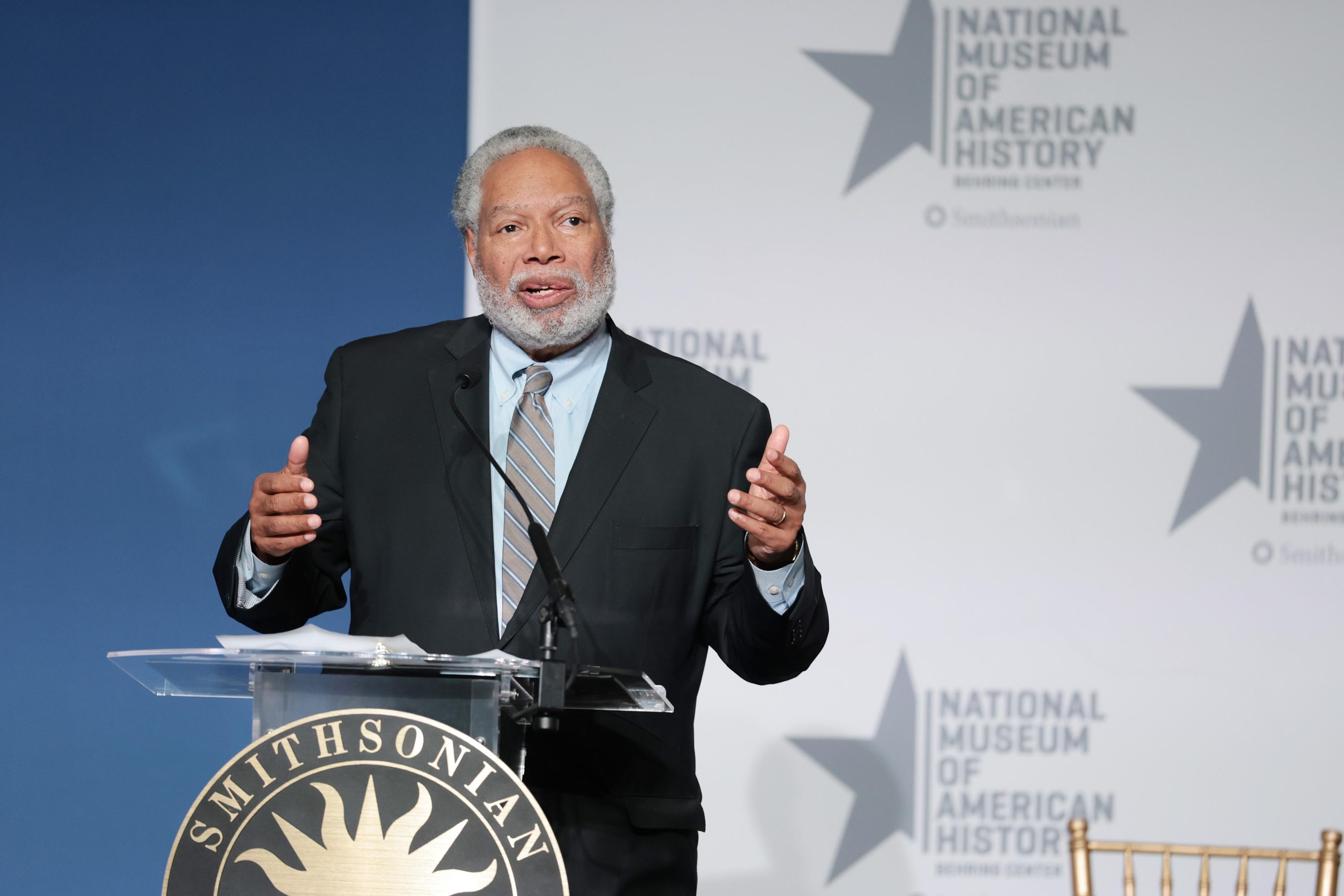
The leader of the esteemed Smithsonian Institution, Lonnie G. Bunch III, has announced his departure, bringing an end to a tenure marked by significant achievements and, more recently, persistent pressure from the Trump administration. Bunch’s decision to step down at the close of 2026, after over seven years at the helm, coincides with nearly two years of what sources describe as a “relentless campaign” by the White House against the institution’s programming.
While Bunch, at 73, has served longer than his immediate predecessors and his retirement is not solely attributed to external pressures, the timing and nature of the criticisms have undoubtedly cast a shadow. The White House, under President Donald Trump, had frequently accused the Smithsonian of promoting “improper, divisive” content, a critique often leveled against exhibits and initiatives perceived as focusing on or highlighting historical injustices and marginalized narratives. This has been interpreted by many as an attempt to reframe or control the historical discourse presented by a national institution dedicated to American history and culture.
A Legacy Under Scrutiny
Bunch’s tenure began with ambitious goals, including expanding the reach and relevance of the Smithsonian. He oversaw the highly anticipated opening of the National Museum of African American History and Culture, a landmark achievement that garnered widespread acclaim and underscored his commitment to a more inclusive representation of American history. However, this very inclusiveness, particularly in how historical narratives were presented, appears to have drawn the ire of the Trump administration. Critics of the administration’s stance argue that the attacks on the Smithsonian represent a broader pattern of challenging institutions and narratives that do not align with a specific, often nationalistic, interpretation of American identity.
The pressure extended beyond rhetoric. The administration reportedly expressed concerns and criticisms regarding specific exhibitions and educational programs, suggesting a desire to influence the curatorial direction of the Smithsonian. This dynamic raises significant questions about the independence of national cultural and historical institutions and the potential for political interference in their operations. The Smithsonian, as a beacon of historical preservation and public education, plays a crucial role in shaping collective memory and understanding, making such scrutiny particularly sensitive.
The Broader Implications
Bunch’s resignation is likely to be viewed through the lens of larger political and cultural battles over historical interpretation and the role of public institutions. The Trump administration’s engagement with the Smithsonian can be seen as part of a wider effort to challenge established narratives and promote an alternative vision of American heritage. This approach often involves questioning the motives and perceived biases of cultural gatekeepers and advocating for a more “patriotic” or traditionalist presentation of history.
The departure of a respected leader like Bunch, especially following a period of intense criticism, could signal a challenging future for institutions seeking to maintain their intellectual freedom and engage with complex or sensitive historical topics. It underscores the ongoing debate about how history should be taught, preserved, and presented in a diverse and evolving society, and the potential for political forces to attempt to shape that discourse. The Smithsonian will now face the task of selecting a new leader who can navigate these complex challenges and uphold the institution’s mission in an increasingly polarized environment.
Based on materials: Vox



