
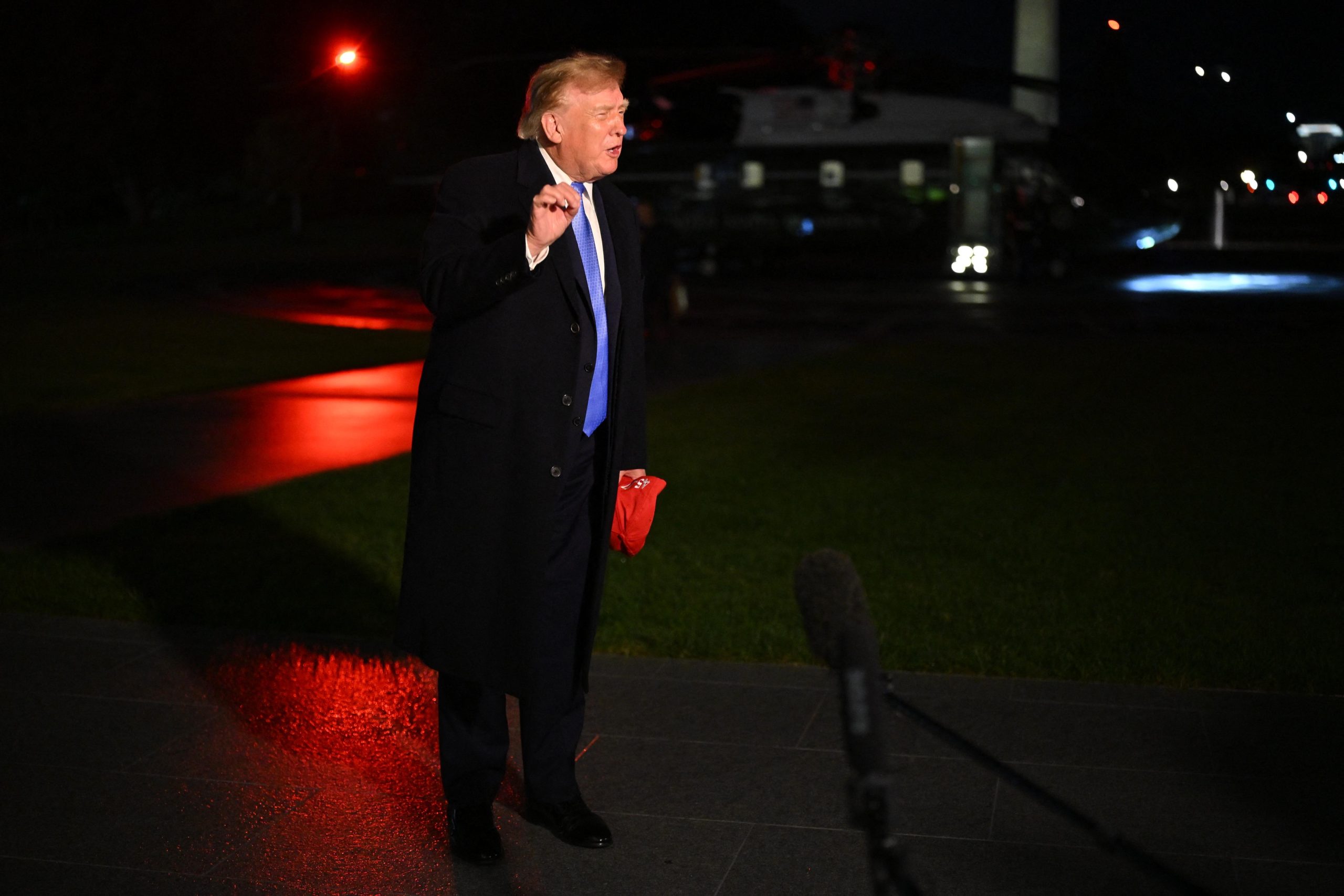
The Trump administration has launched a new wave of taxpayer-funded advertising, raising concerns about the use of public funds for what critics are labeling as political propaganda. Recent weeks have seen the airing of a 30-second spot featuring President Trump delivering a fiery speech, vowing to “demolish the deep state, expel the warmongers from our government,” and “cast out the communists, Marxists, and fascists.” The ad, characterized by stark black-and-white footage of the president, concludes with a clear disclaimer: “Paid for by the U.S. Government.”
This marks the third such advertisement in a short period to prominently feature the President and carry the official government funding tag. While the administration has not explicitly detailed the purpose or strategic intent behind these ads, their content and prominent placement have sparked significant debate. Critics argue that using government resources to broadcast messages that appear to align with Trump’s political rhetoric blurs the lines between official governmental communication and campaign messaging, potentially leveraging public funds for partisan gain.
Strategic Messaging or Political Ploy?
The strategy behind these ads is a subject of considerable discussion. Proponents might argue that the messaging aims to rally public support for the administration’s agenda or to highlight perceived threats to national stability, thereby justifying government action. The inclusion of phrases like “demolish the deep state” and “expel the warmongers” could be interpreted as attempts to connect with a specific segment of the electorate that feels disenfranchised or distrustful of established institutions. The visual style, reminiscent of historical propaganda films, further amplifies the assertive and potentially divisive tone.
However, opposition voices are quick to point out the ethical implications. The use of taxpayer money for what appears to be politically charged messaging raises questions of fairness and accountability. In a democratic society, the allocation of public funds is expected to serve the broader public interest, not to bolster the political standing of incumbent officials. The timing of these ads, potentially preceding or coinciding with significant political events, further fuels speculation about their ultimate objective.
The Fine Line of Government Communication
The distinction between legitimate government communication and political propaganda can be subtle, but the content and presentation of these recent ads appear to lean heavily towards the latter. Official government advertisements typically focus on public service announcements, health advisories, or information about government programs and services. The highly personalized and ideologically charged rhetoric in these Trump-centric spots deviates significantly from these norms.
The “Paid for by the U.S. Government” disclaimer, while technically accurate, does little to assuage concerns when the content itself is perceived as partisan. This practice could set a precedent for future administrations, potentially normalizing the use of government resources for political messaging. As these ads continue to air, the conversation is likely to intensify, focusing on transparency, the responsible stewardship of public funds, and the critical importance of maintaining a clear separation between governmental functions and political campaigning. The implications for public trust and the democratic process remain a significant point of concern for many observers.
CONCLUSION:
The recent surge in taxpayer-funded advertisements featuring President Trump’s strong rhetoric has ignited a debate about the boundaries of government communication and the potential for political exploitation of public funds. While the administration has not offered a definitive explanation for the campaign, critics are vocal in their concerns, labeling the ads as propaganda. The ongoing discussion highlights the delicate balance between informing the public and engaging in partisan messaging, with significant implications for accountability and democratic principles.
Based on materials: Vox



